
Lighting Blog
How to Choose the Right 230W Compact Moving Heads for Mobile DJs

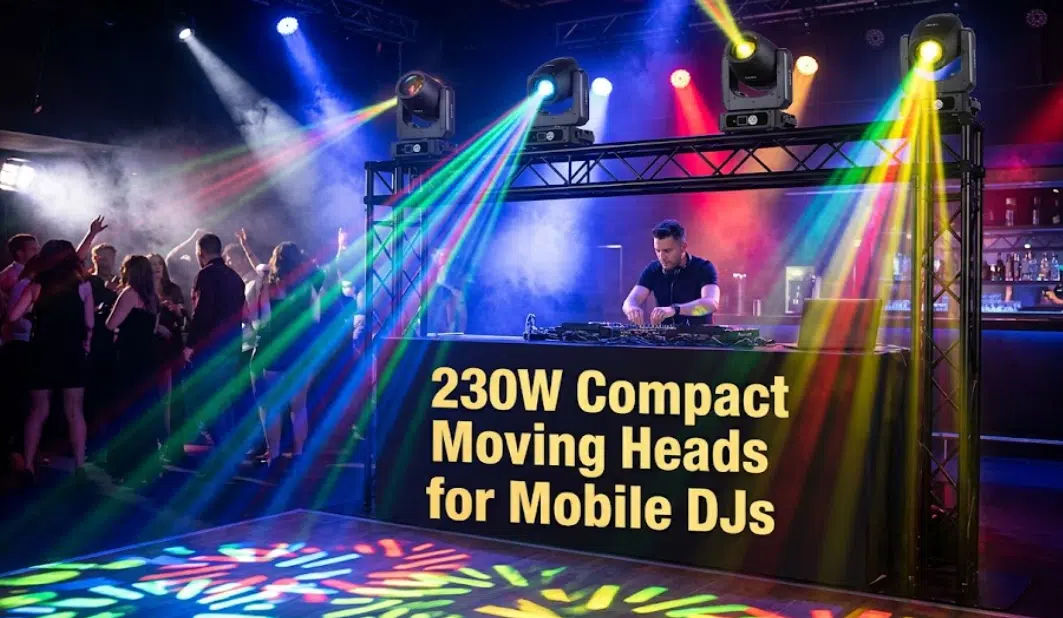
As a lighting designer with years of experience in the event industry, I truly understand the struggles of a mobile DJ.
In a mobile DJ setup, you don’t just need a beam with strong penetration; you need it to be lightweight enough to make your job easier. It should be compact enough to fit effortlessly into a pickup truck bed and light enough that moving it solo won’t strain your back.
Selecting the ideal 230W Compact Moving Heads for Mobile DJs involves more than just checking the wattage. Today’s 230W moving heads (commonly known in the industry as the 7R series) are rapidly evolving toward extreme lightweight and compact designs. However, this market can be tricky—choosing the wrong fixture is a quick way to waste money. Much like selecting budget LED lights for a floral stage, success lies in the details. Today, we aren’t just talking about brightness; I want to discuss the hidden details that actually determine the success of a performance.
Why are Compact Moving Heads So Vital for Mobile DJs?
In the mobile DJ industry, while the barrier to entry isn’t high, a higher level of visual production creates more room for premium pricing. When you set up two 230W compact beam lights, the professional “performance atmosphere” is instantly established, directly increasing your per-gig quote. This setup is a staple in any 2026 professional club and DJ lighting guide. Clients see more than just music; they see a complete show.
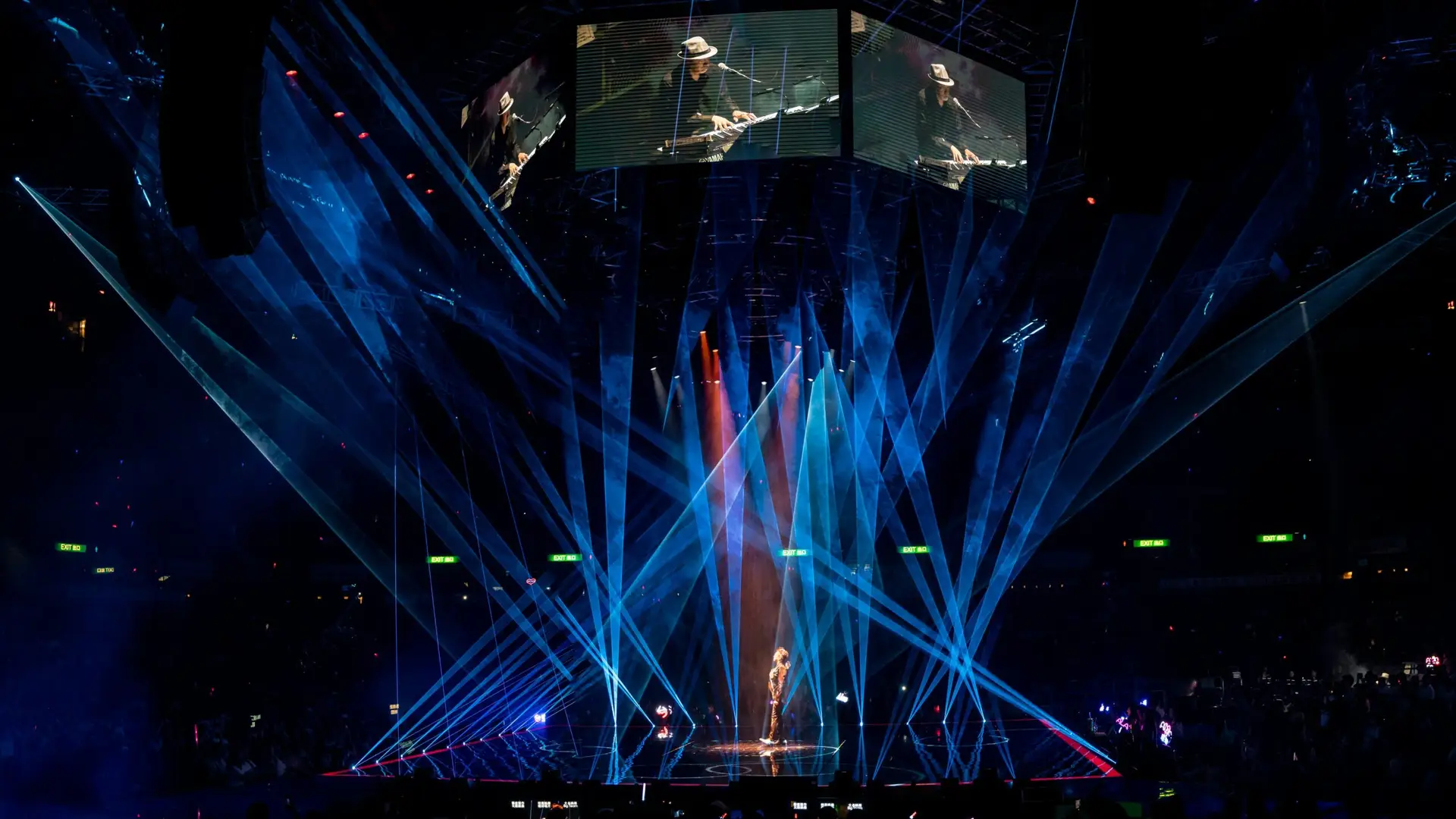
Furthermore, the atmosphere of an outdoor event is paramount. A moving head is the only equipment that can truly keep up with the energy of Electronic Dance Music (EDM). As the Drop hits, the moving head’s beam can instantly switch from a serene amber to a frantically sweeping white light, immediately electrifying the crowd. It forces the audience’s eyes to follow the beam, instinctively drawing people onto the dance floor.
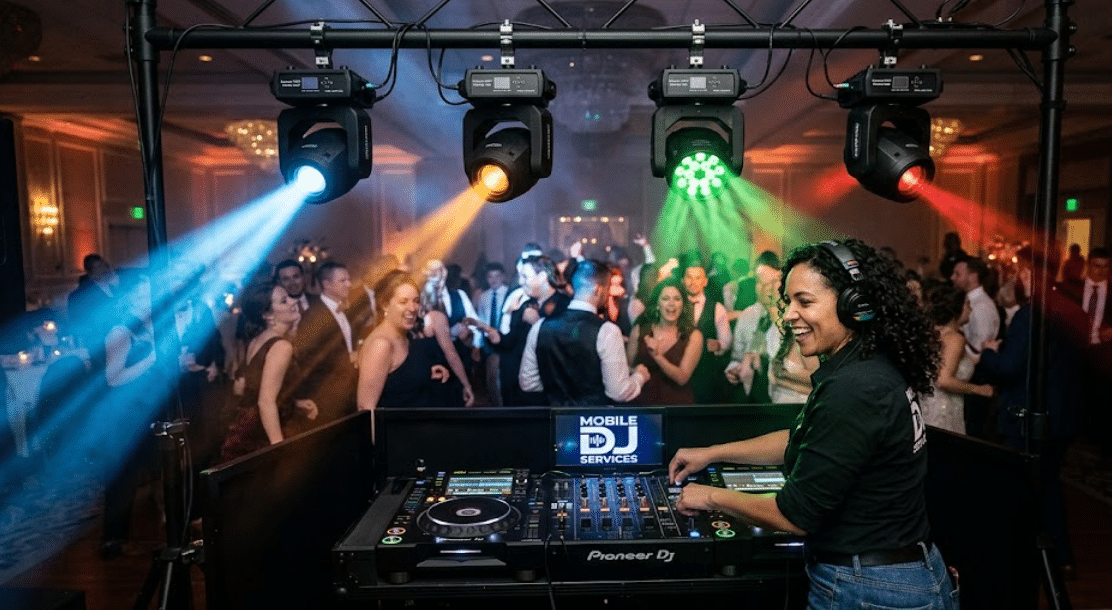
Buying Tips: 230W Compact Beam Lights for Mobile DJs
No fluff today—just the hardcore logic that will boost your reputation and help you avoid 90% of the common pitfalls.
1. The Golden Rule: Power-to-Weight Ratio
For a gigging DJ, weight directly translates to operational efficiency. Older 7R fixtures typically weighed between 18–20kg, whereas the new generation of 230W Compact Moving Heads for Mobile DJs has managed to drop to 12kg or less.
Older 7R fixtures typically weighed 18–20kg, making them a pain to transport. New-generation compact 230W units have managed to drop to 12kg or less, often with light output that exceeds their predecessors.While cool black housing moving heads are popular for their aesthetic, the internal weight-to-power ratio is what saves your back during load-out.
According to the Osram Sirius HRI Series Technical Data Sheets [1], a qualified compact 230W beam light should reach an illuminance of 160,000–200,000 Lux at a 10-meter distance. Never settle for anything below this range; it’s a clear sign of a cut-corner optical system—specifically regarding the large-diameter lens, which should be ≥130mm.
2. PWM Refresh Rate
At any wedding, party, or corporate event, the audience will likely be filming with their phones for TikTok or Instagram. Modern smartphone cameras, like those on the iPhone, capture high-definition footage with ease.
Following the recommendations of IEEE Standard 1789-2015 [2], professional 230W Compact Moving Heads for Mobile DJs must feature a PWM dimming frequency of ≥12,000Hz, especially for high-end weddings and 4K filming events. This ensures the beam remains flicker-free on camera, a standard that also explains why energy-efficient EU-certified LED wash moving heads are becoming mandatory for modern pros.
3. “Silent Etiquette” on Site
During grand events—such as cocktail hours, toasts, or the exchange of vows—the room often falls dead silent. If your fixtures overhead start buzzing like a helicopter while guests are listening to a speech, it becomes incredibly awkward. This is why many pros are looking into how silent moving heads enhance indoor concerts and applying those same standards to private events.
Mobile DJs should opt for professional compact fixtures equipped with intelligent temperature-controlled fans. In low-brightness or static atmosphere modes, the fan speed should decrease, keeping noise levels below 30dB.
Pro Tip: Before buying, take the light into a quiet room, set the brightness to 1%, and listen. If it’s loud while on standby, cross it off your list.
Mobile DJ Core Parameter Checklist
| Core Dimension | Expert Recommended Metric | Real Meaning for DJs |
| Weight | ≤13 KG | Easy for one person to rig; saves energy and time. |
| Dimming | 16-bit Linear [3] | Silky “breathing” transitions; no abrupt jumps. |
| Motors | Three-phase Stepper [4] | Fast sweeps, precise positioning, and quiet operation. |
| Light Source | Osram 230W (7R) [1] | Sharp beams, high saturation, and long-term stability. |
Expert Summary: Don’t Let “Cheap” Ruin Your Reputation
I’ve been burned by low-budget lights before: motors jamming mid-show, green-tinted beams, blurry spots… it’s a nightmare you only want to experience once.Beyond the raw output, you must understand why hidden parameters matter more than wattage to ensure long-term reliability.
For professional mobile DJs, your gear is a reflection of your professional standards. One last easily overlooked but highly practical tip: prioritize fixtures that support RDM (Remote Device Management) [5]. Being able to change DMX addresses from your console instead of climbing a ladder saves enough time for an extra coffee or a chat with a potential lead.
Choosing a light is never just about buying a piece of equipment; it’s about choosing a reliable partner that travels with you gig after gig. Professionalism, stability, and peace of mind are what keep the bookings coming.
Finally, consider the versatility of your inventory. Learning how many visual challenges silent moving heads can solve might convince you to invest in higher-end, multi-purpose gear that works for both high-energy sets and silent wedding ceremonies.
About the Author:
Eason (Yifan) Chen
Stage Lighting Expert & Digital Strategist
With 15+ years of industry expertise, Eason Chen is a leading authority in stage lighting and digital manufacturing.
Authoritative References:
[1] Osram Sirius HRI Series Technical Data Sheets. (Provides core physical parameters for 7R 230W lamps, including lumen output and lifespan.)
[2] IEEE Standard 1789-2015. (Industry standards for modulating LED/discharge lamp current to mitigate photography flicker.)
[3] ESTA Control Protocols. (Technical details on 16-bit resolution for precision dimming and motion control.)
[4] Motion Control and Motor Drive Standards for Stage Equipment. (Guidelines on stepper motor technology for precise and silent operation.)
[5] ANSI E1.20 – 2010 (R2021), RDM Over DMX512 Networks. (Standard for remote management, ensuring high efficiency in mobile setups.)