
Lighting Blog
400 W Moving‑Head vs. 230 W Moving‑Head: How Big Is the Gap in Brightness and Throw Distance?

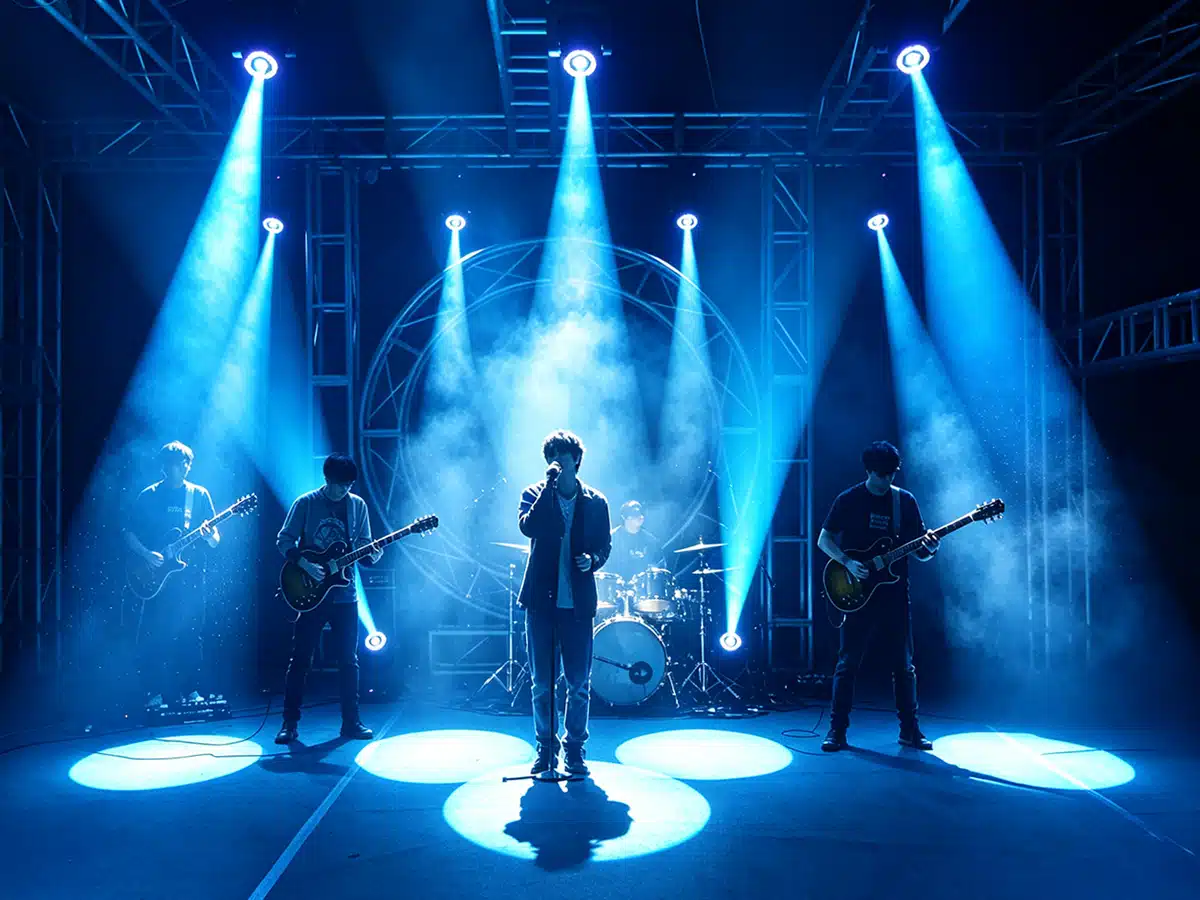
400 W Moving‑Head vs. 230 W Moving‑Head: How Big Is the Gap in Brightness and Throw Distance? Generally, with an identical beam angle, the centre illuminance (Lux) of a 400 W moving‑head fixture is roughly 1.8‑ to 2.2‑times that of a 230 W unit, delivering a 40%‑50% improvement in perceived visual throw range.
That said, if the 400 W fixture is a BSW hybrid (beam‑spot‑wash all‑in‑one), its spot‑illuminance at wide beam angles can actually be lower than that of a narrow‑angle 230 W pure‑beam moving‑head. The table below outlines the key comparison:
Key Performance Comparison: 230 W vs. 400 W Beam Moving‑Heads
| Performance Metric | 230 W Beam Moving‑Head (e.g. 7R) | 400 W Beam Moving‑Head (e.g. 20R / 400 W LED) |
|---|---|---|
| Luminous Flux | ~10,000 – 12,000 lm | ~20,000 – 26,000 lm |
| Centre Illuminance @ 10 m | ~50,000 – 80,000 Lux | ~120,000 – 180,000 Lux |
| Effective Clear Throw Range | 20 – 35 m | 45 – 70 m |
| Maximum Visible Reach in Dark Night Conditions | 80 – 100 m | 150 – 250 m |
| Output Aperture Optics | Typically 110 mm – 135 mm | Typically 150 mm – 180 mm |
| Typical Applications | Mid‑to‑small bars, wedding banquets, compact indoor stages | Large‑scale concerts, outdoor music festivals, arenas, major theatres |
400 W vs. 230 W Moving‑Heads: Three Factors That Determine Real‑World Brightness & Throw
Inverse‑Square Law of Illuminance: Illuminance decreases proportionally to the square of distance.
Lens Aperture and Beam Collimation: 400 W‑class fixtures usually feature larger front‑end optical lenses (150 mm+). These minimise beam divergence over long distances, preserving sharp beam edges even beyond 50 metres.
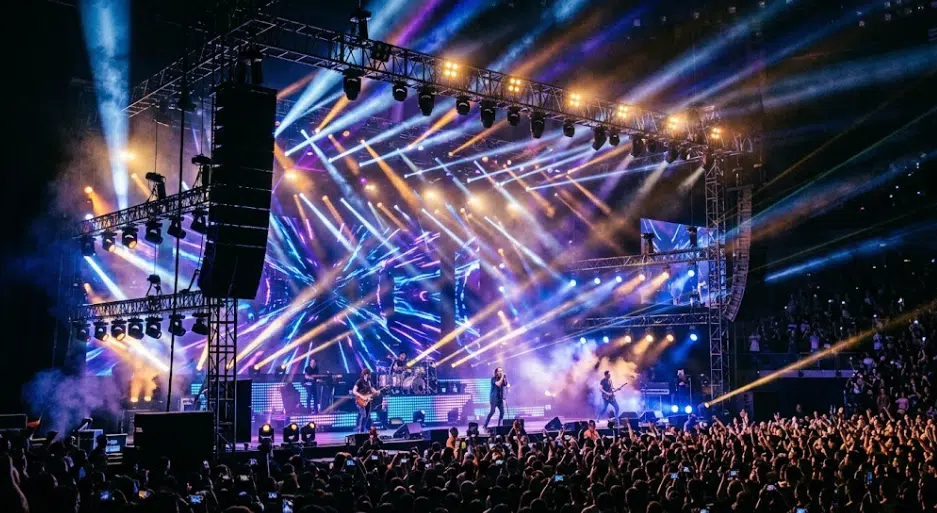
Beam Angle and Fixture Type (Pure Beam vs. BSW Hybrid)
- Pure‑beam fixtures: Beam angles typically 1.5°‑2.5°, with highly concentrated light energy.
- BSW all‑in‑one fixtures: When a 400 W BSW runs in gobo / cut‑out mode (beam angle 8°‑35°), centre‑spot illuminance projected onto a surface can fall below that of a 230 W pure‑beam fixture set to just 1.8°.
At 10 metres onto a wall, the centre brightness from a 230 W pure‑beam spot can exceed the expanded gobo spot of a 400 W BSW fixture by more than 30‑fold.
Accordingly, the strength of a 400 W BSW hybrid lies in producing large‑format, crisp projected gobos — not tight, piercing beam shafts. If your priority is sharp, eye‑catching “light‑sabre” aerial beams, the optical concentration of dedicated pure‑beam fixtures outperforms BSW units operating at wide angles.
Selection Guidelines
Choose 230 W: For indoor venues with stage depth under 15 m and ceiling height below 6 m. 230 W moving‑heads deliver excellent cost‑performance, compact physical size, plus low installation and servicing costs.
DJClub Mini 230W Ultra Bright Moving Head Light – Silent Operation + Prism Effect for Weddings
This DJ‑Club 7R 230W moving‑head beam light features a light‑source lifespan of over 2,000 hours and delivers bright, high‑penetration beams, priced at only $299.00.It comes with a multi‑function gobo wheel holding 17 gobos plus white, alongside a color wheel with 14 colors plus white. Furthermore, this fixture is fitted with electronic zoom and 0%‑100% adjustable frost effect with a maximum frost angle of 40°. It supports 16 DMX channels and is compliant with the international DMX512 standard protocol.
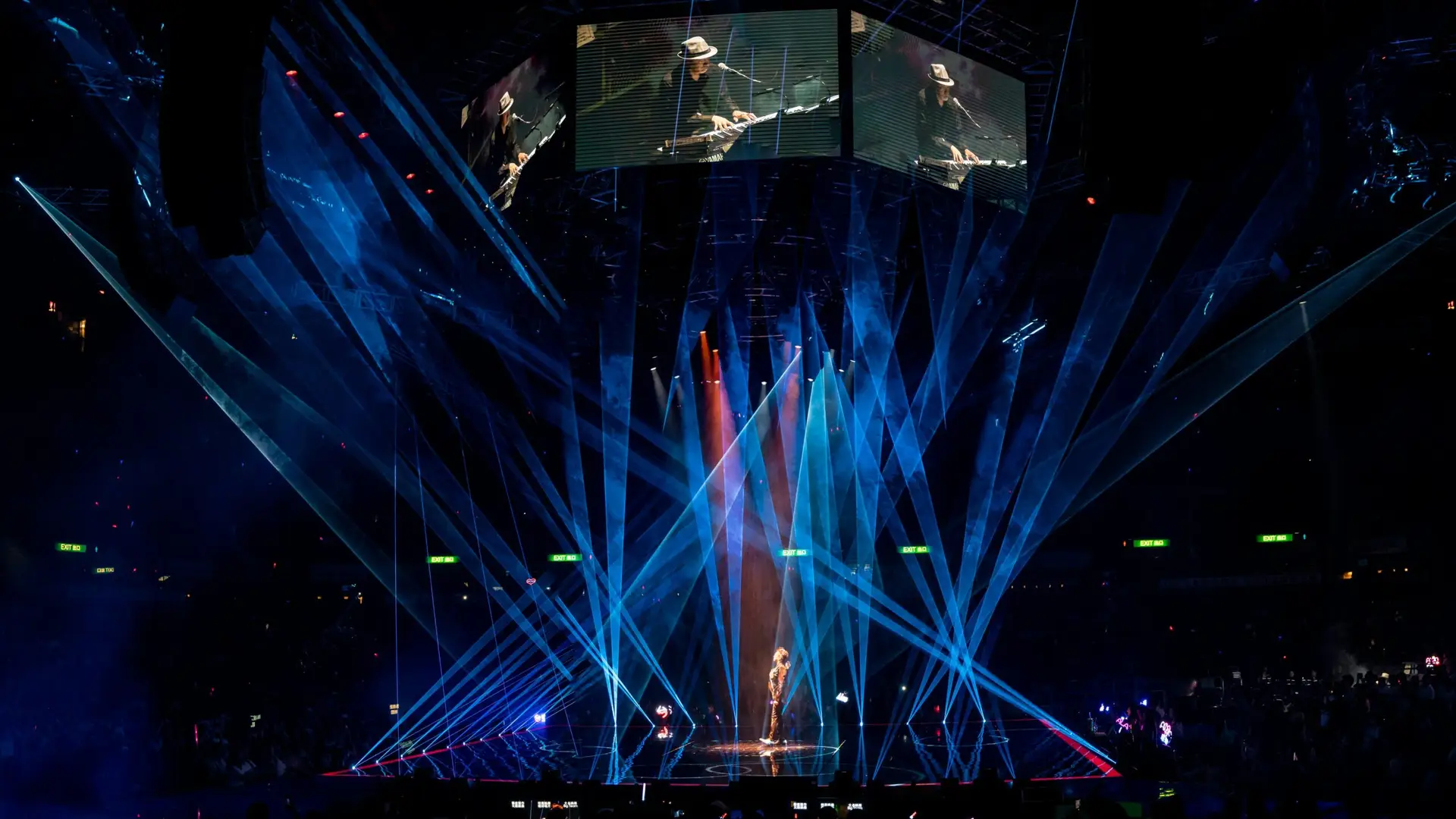
Choose 400 W: For stages deeper than 20 m, outdoor events, or venues with intense glare from large‑format main LED screens. The superior light penetration of 400 W moving‑heads keeps aerial beams clearly visible even when background screens run at full brightness.
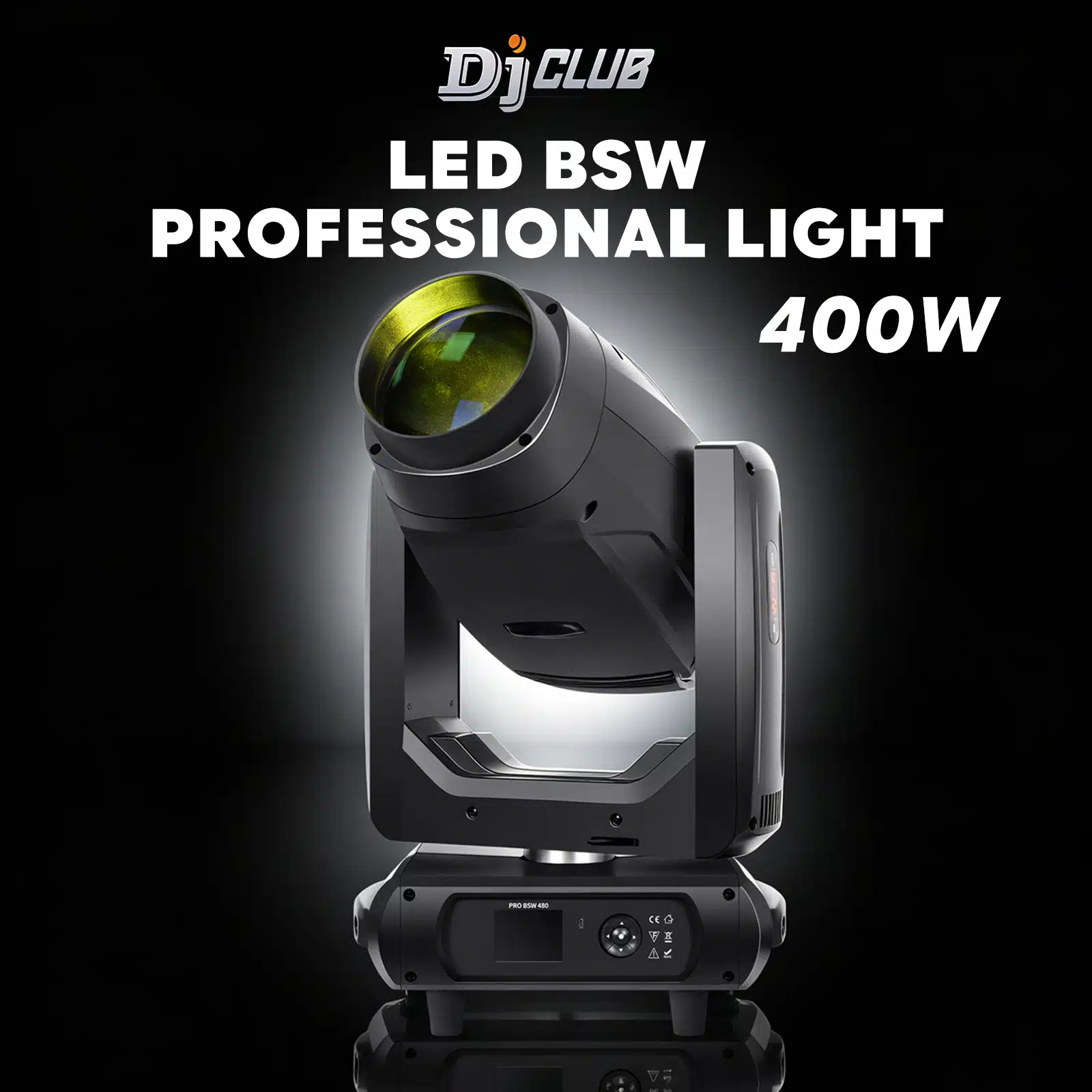
DJClub 400W Professional Stage Beam Light – High Power + DMX512 Control for Concerts & Large Venues
This fixture features an LED light source with a 50,000‑hour service life and delivers 120,000 lumens at 5‑metre distance.
It incorporates a 4‑35° linear zoom system (adjustable focal range: 4‑50 m) plus an independent soft‑edge effect. It generates 8 colours plus white (half‑colour function), alongside linear CMY and CTO colour mixing.
It is equipped with 12 fixed gobos and 7 flip‑able rotating glass gobos, as well as a flip‑over 6‑facet / 8‑facet prism.
References
- OSRAM Specialty Lighting. SIRIUS HRI High-Yield Discharge Lamps Photometric Performance Series. OSRAM Technical White Paper, 2023.
- PLASA (Professional Lighting and Sound Association). Comparative Photometric Analysis of High-Output Stage Luminaires. PLASA Technical Report, 2022.
- Illuminating Engineering Society (IES). The IES Lighting Handbook (10th Edition): Fundamentals of Photometry and the Inverse-Square Law. IES Standards, 2020.
- AVIXA (Audio Visual and Integrated Experience Association). ANSI/AVIXA A102.01:2023 – Display Image Size and Luminaire Throw Ratios in Event Production. AVIXA Technical Standards, 2023.
- Lighting & Sound International (LSi). Beam vs. Hybrid Luminaires: Optical Efficiency and Beam Collimation in Tour Rigging. LSi Technical Feature, Issue 412, 2023.
- Entertainment Services and Technology Association (ESTA). ANSI E1.9 – Reporting Photometric Data for Luminaires Used in Entertainment Lighting. ESTA Technical Standards Program, 2021.
- Robe Lighting & Chauvet Professional. Stage Lighting Rig Design & Main Screen Ambient Light Overcoming Guidelines. Joint Application Note, 2024.