
Lighting Blog
Under ErP Regulations: Why are Low-Power Energy-Efficient EU-Certified LED Wash Moving Heads a Must?

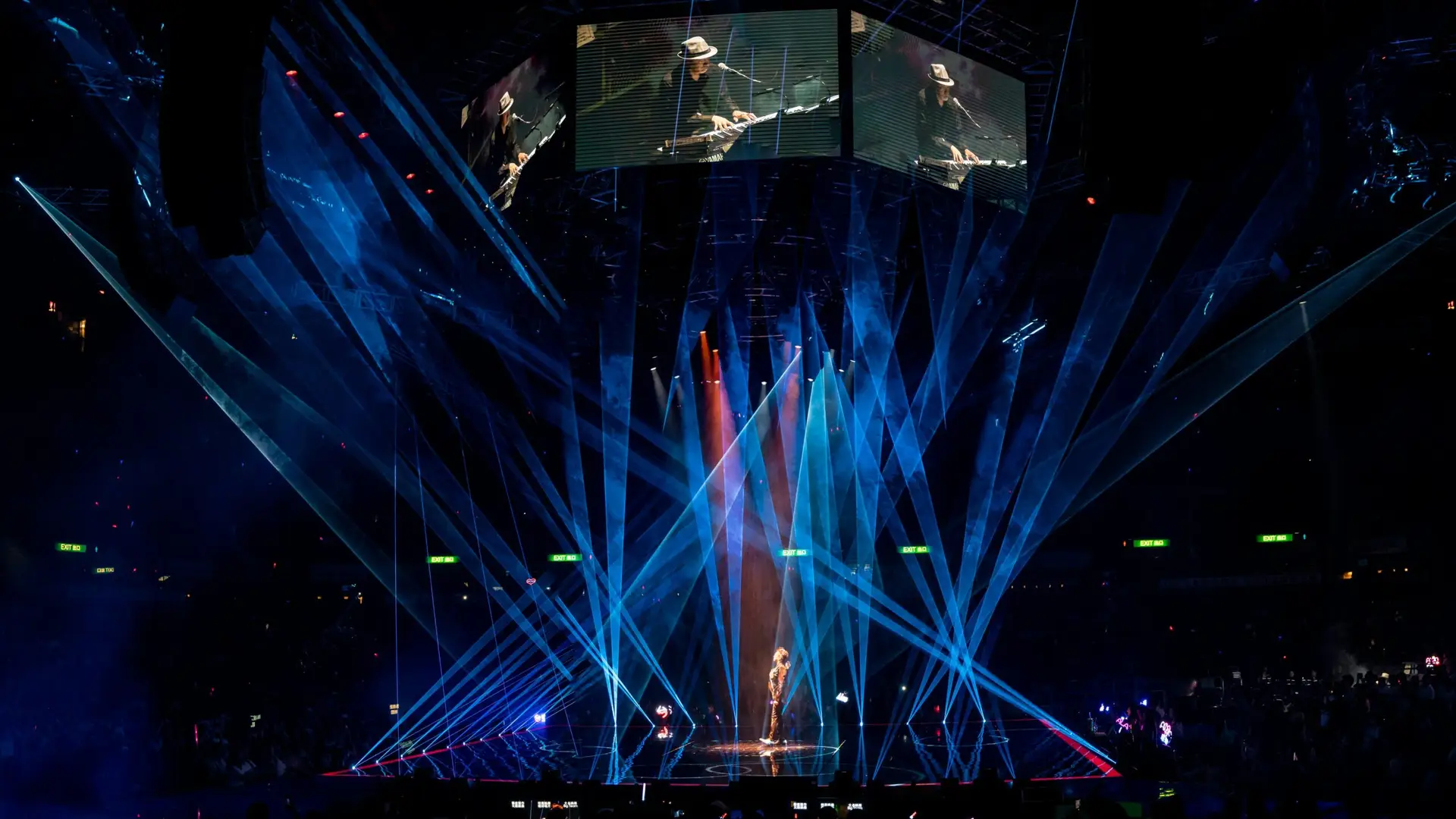
As an engineer who regularly attends Prolight + Sound in Frankfurt, I have observed that many B2B buyers have come to a critical realization: the European Union’s ErP (Energy-related Products) regulations have become a definitive “compliance red line.”
Consequently, for buyers in 2026, it is no longer enough to focus solely on “brightness” and “price.” One must also prioritize the study of energy efficiency labels.
1. ErP Regulations: Mandatory Market Access for Stage Lighting [1]
According to the latest EU Regulation 2019/2020 (and its amendment 2021/341), all light sources and control gears sold within the EU must meet stringent Energy Efficiency Index (EEI) requirements. In the past, some common low-end LED wash lights boasted high brightness but failed to meet efficiency standards due to outdated thermal designs. Such products have now been phased out of the European market.
“From 1 September 2021, the energy efficiency of a light source shall be determined by calculating the total mains efficacy… below which the product shall not be placed on the market.” —— EU Regulation 2019/2015 Annex II [2]
According to EU Regulation 2019/2020 Annex II, the maximum allowed power for a light source is calculated using the following formula:

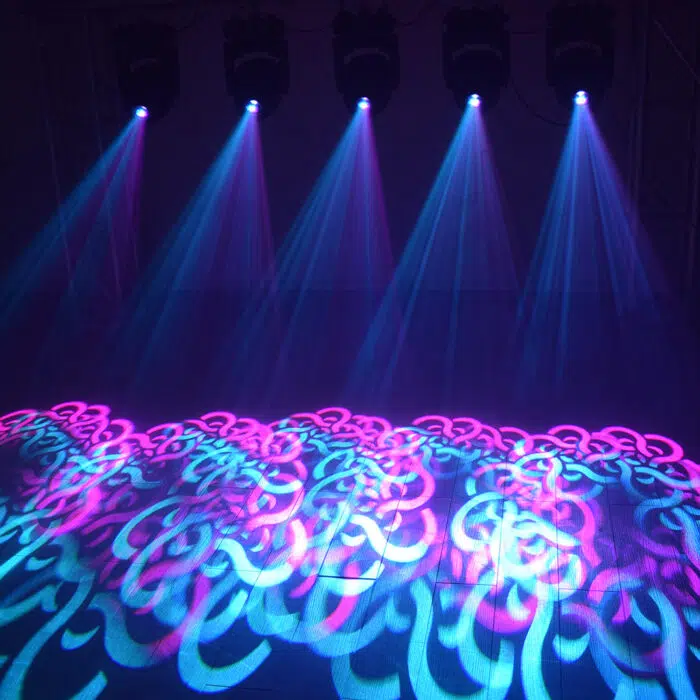
Low-Power Energy-Efficient EU-Certified LED Wash Moving Heads
Based on these calculations, the actual system efficiency of LED wash lights entering the EU market cannot fall below 80 – 85 lm/W.
Energy Labeling Red Lines: In 2021, the EU abolished the old $A++$ rating system and introduced a new A to G scale.
| Energy Grade | New Efficacy Threshold (Typical) | Current Status |
| Grade A (Green) | ≥210 lm/W | Rarely achieved by stage lights; a future goal. |
| Grade D/E (Mainstream) | 120 – 160 lm/W | High-efficiency EU-certified wash lights occupy this range. |
| Grade G (Red Line) | < 85 lm/W | Compliance Red Line. Traditional discharge lamps and low-end LEDs face exit. |
2. Operating Costs: More Than Just Rising Electricity Bills [3]
In Europe, where energy prices remain high, low-power stage lights significantly improve a project’s Return on Investment (ROI).
I once conducted a field test using a DJclub low-power energy-efficient EU-certified LED wash moving head. Compared to an older fixture of equivalent brightness, the power consumption was reduced by an average of 27% – 30%.
Furthermore, since approximately 90% of the energy from stage lighting is converted into heat, using high-efficiency lighting fixtures can reduce the cooling load on air conditioning. To help buyers make informed choices that better suit their needs, we recommend referring to this 2026 Moving Head Light Bulk Purchasing Guide: Buying Solutions for 10 Core Application Scenarios.
Furthermore, this saves more than just lighting electricity; it reduces the energy consumed by air conditioning. According to the ESTA Green Initiatives, approximately 90% of the energy consumed by stage lighting is converted into heat. For instance, in an indoor venue like a financial center ballroom in Geneva, every 1,000W of lighting power saved can reduce the AC cooling load by about 350W – 500W. Thus, for an event using 100 energy-efficient fixtures, the cumulative savings in cooling costs are substantial.
Efficiency doesn’t just impact the power bill; it influences the atmosphere. While meeting these technical standards, designers must still maintain visual impact. For those looking to maximize the aesthetic potential of these compliant fixtures, The Ultimate Guide to DJ Stage Lighting Color Schemes offers 3 practical steps to rescue a cold dance floor while maintaining professional standards.
Energy-Efficient vs. Traditional Fixtures
| Dimension | Traditional Fixtures (Non-ErP) | DJclub Efficient (EU Certified) | Savings |
| Total Power Consumption | 40,000 W (40kW) | 28,000 W (28kW) | ↓ 30% (Direct) |
| Heat Emission [1] | ~36,000 W | ~25,200 W | -10.8kW Heat Load |
| AC Comp. Power [2] | 18,000 W | 12,600 W | ↓ 5,400W (Extra) |
| Single-Event Energy Use | 580 kWh | 406 kWh | 174 kWh Total Saving |
| ESG Carbon Report | High (Non-compliant) | Low (Compliant) | Bid Advantage |
3. Energy-Efficient EU-Certified LED Wash Moving Heads:Meeting ESG Requirements to Win Major Corporate Tenders [4]
Today, large European corporations consider carbon footprint metrics when tendering for annual meetings. If you utilize low-power energy-efficient EU-certified LED wash moving heads, you can provide clients with a superior energy-saving report. In a competitive bid, this is as crucial as the price itself.
Some clients’ tender documents now explicitly require suppliers to submit an Event Sustainability Report.
While pursuing efficiency and compliance, the visual appeal of the design is equally important. You can use the practical steps in the ultimate guide to DJ stage lighting color schemes to revitalize a dull dance floor atmosphere.
About the Author:
Eason (Yifan) Chen
Stage Lighting Expert & Digital Strategist
With 15+ years of industry expertise, Eason Chen is a leading authority in stage lighting and digital manufacturing. A technical contributor at Prolight + Sound and LDI, he specializes in bridging the gap between cutting-edge energy protocols and commercial ROI.
References & Data Index:
[1] EU Regulation 2019/2020: Ecodesign requirements for light sources and separate control gears.
[2] EU Regulation 2019/2015: Energy labelling of light sources.
[3] ESTA Green Initiatives: Recommended Practice for Energy Efficient Entertainment Lighting.
[4] EU CSRD (2022/2464): Corporate Sustainability Reporting Directive.