
Lighting Blog
Wedding Party Moving Heads: Why Hidden Parameters Matter More Than Wattage

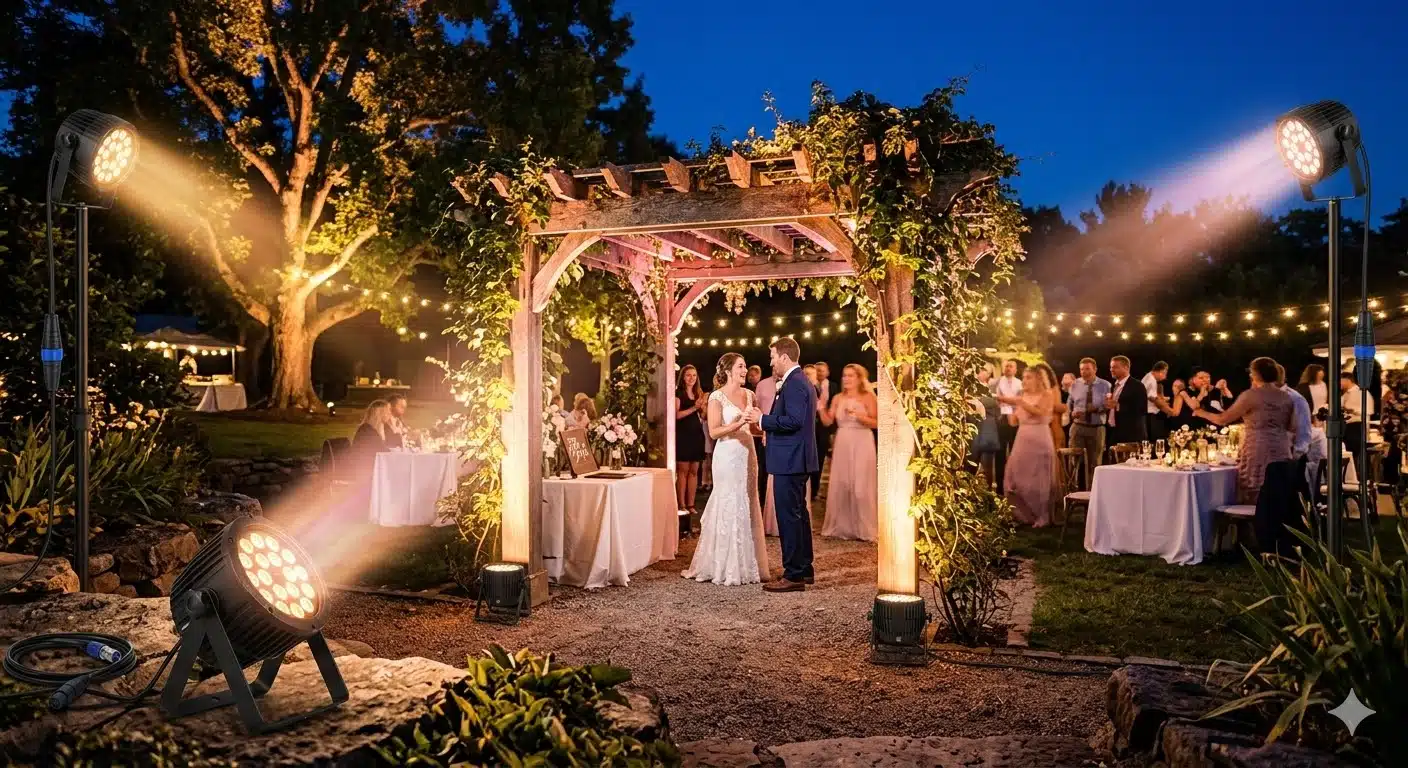
Selecting Wedding Party Moving Heads is about more than just wattage. Our expert analysis covers hidden parameters like 16-bit dimming, 12,000Hz flicker-free PWM, and CRI 90+ to achieve 4K broadcast-quality wedding visuals.
As a wedding visual design planner, I am often asked: “The background and wash lights are already bright enough, so why spend extra money on moving heads?”
My response is always the same: “From a professional event production perspective, moving heads aren’t meant for just lighting up the background—they are for controlling the room and creating a ‘sense of breathing.’ They produce an indescribable, lifelike light and shadow transition.” [1]
I have always believed that good lighting shouldn’t just be about illumination; it should allow guests to feel that the “atmosphere is in motion.” This subtle, seamless change in light and shadow lays the vital atmospheric foundation for a successful wedding. When a bride enters, any sudden flash or abrupt blackout can break the emotional continuity. In contrast, moving head lights sync with the rhythm of the music and the pace of the officiant, fluctuating at an extremely slow and gentle frequency. Subconsciously, this guides guests into a relaxed and sentimental state.
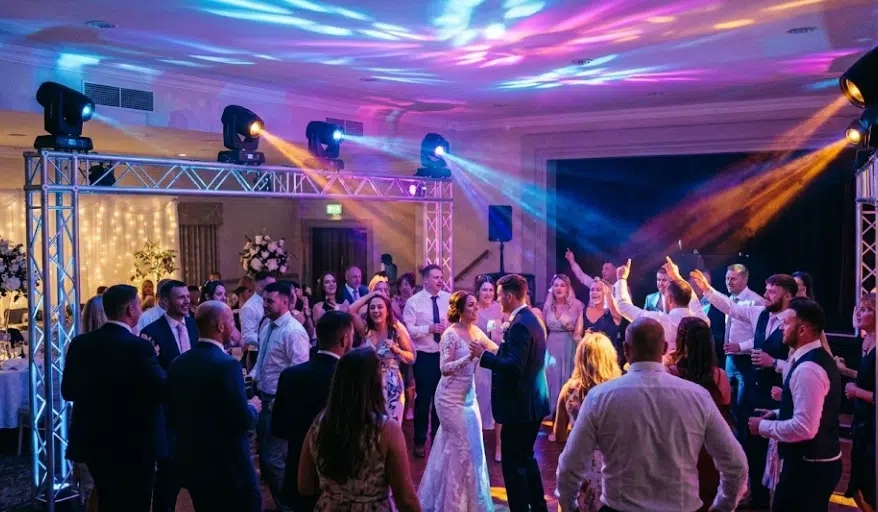
Why Choose Moving Heads for Wedding Parties?
A wedding is one of life’s most sacred ceremonies, and its most touching moments are the bridal processional and the exchange of vows.
When you install moving heads and the house lights dim, a single silky beam following the bride as she enters the venue will keep every guest fully focused.
During the ceremony, a moving head can transform into a wash light via its frost function, bathing the room in a warm amber glow. Once the party kicks off, it can instantly switch to sharp beams and dynamic patterns, proving its versatility. With the rapid sweeping of the XY axes, the ballroom is transformed into a high-end club.
Furthermore, almost all modern weddings feature full-frame videography. Professional moving heads accurately restore the bride’s natural skin tone and highlight the exquisite satin luster of the wedding dress, making the video much more memorable.
To master these transitions, understanding DJ stage lighting color schemes is essential to keep the atmosphere vibrant without breaking the elegant wedding mood.
Strategic Purchasing for 2026
When planning a full-scale venue setup, costs can escalate quickly. Smart planners refer to the Nightclub Stage Lighting Buying Guide to learn how to save on budgets without sacrificing high-end features like silent cooling or 16-bit precision.
Furthermore, for those managing multiple events, our 2026 Bulk Purchasing Guide for Moving Heads provides tailored solutions across 10 key applications, ensuring your investment meets professional broadcast-quality technical standards.
Key Selection Parameters for Wedding Party Moving Heads
| Dimension | Key Hidden Parameter | Wedding Recommended Standard | Practical Significance for Weddings |
| Visuals | Housing Color | Pearl White | Inconspicuous Aesthetics: Blends with light-colored venues to avoid visual clutter. |
| Broadcast | Refresh Rate (PWM) | ≥ 12,000 Hz | 4K Flicker-free: Eliminates black banding on camera for cleaner footage. [2] |
| Ceremony | Dimming Precision | 16-bit Linear | Seamless Entry: Silky smooth 0-10% brightness transitions. [4] |
| Portraitry | Color Rendering (CRI) | Ra ≥ 90 | True Skin Tones: Restores dress textures and reduces post-editing. [3] |
| Silence | Cooling Noise | Variable Speed (<30dB) | Quiet Vows: No fan noise during silent moments; no interference with audio. |
| Movement | Drive Motor | Three-phase Stepper | Zero Collision: Precise, smooth XY sweeping with a cinematic feel. [5] |
| Execution | Remote Protocol | Supports RDM | Efficient Transitions: Modify DMX addresses from the console without ladders. [1] |
Hidden Parameters to Watch When Selecting Wedding Moving Heads
1. 16-bit Linear Dimming
The most sacred moment of a wedding ceremony is when the light gradually follows the bride’s entry. Some failed wedding plans utilize standard 8-bit dimming, which only offers 256 levels of brightness, making the originally romantic scene look cheap.
Experts recommend choosing models that support 16-bit fine dimming. This divides brightness into 65,536 levels, ensuring light transitions are smooth and delicate. [4]
2. PWM Above 12,000Hz
Today, almost all high-end weddings involve high-definition live streaming or recording. Low-end fixtures have low PWM frequencies; while they look normal to the naked eye, they appear as jumping “black bar” flickers on high-end cameras.
Experts suggest prioritizing fixtures with high-frequency PWM technology (≥ 12,000Hz). This ensures that live broadcast footage from any high-end equipment remains pure and flicker-free. [2]
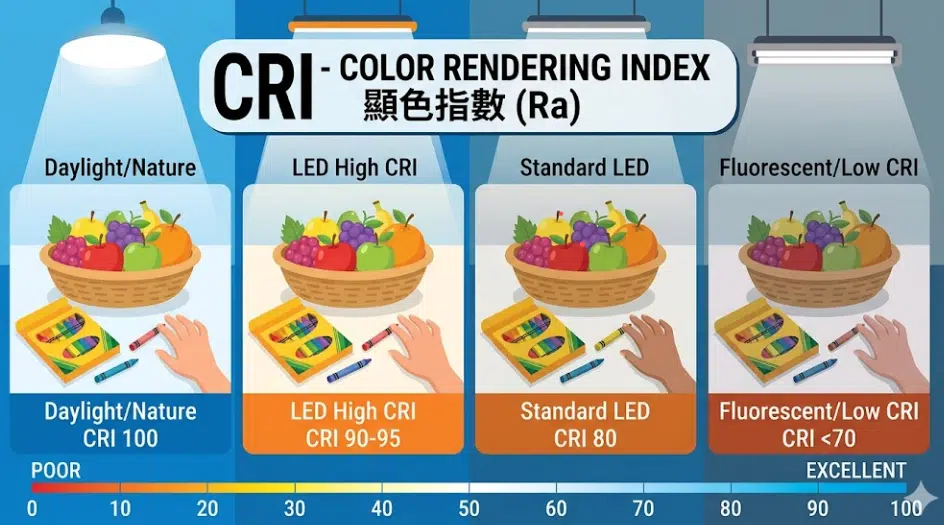
3. CRI Greater Than 90
The stars of a wedding are the people. The texture of the bride’s dress, her exquisite makeup, and the expensive fresh floral arrangements all require a high-fidelity light source.
Hidden Risk: Traditional moving heads often have a cool color temperature (around 8000K) and poor color rendering. Directing this light at the bride can make skin tones appear pale or even grey, creating a nightmare for post-production.
Selection Advice: Look for models equipped with High-CRI filters or high-quality LED beads to ensure CRI (Color Rendering Index) ≥ 90. High CRI performance truly restores the rosiness of skin tones and the satin texture of the wedding dress. [3]
4. Mechanical Silence: Variable-Speed Fans
Absolute silence is required during the exchange of vows and speeches. Any unnecessary background noise from stage lights can be highly disruptive.
While some performance-grade lights keep fans running at full speed—creating a “cicada” buzzing sound—it is recommended to select fixtures with temperature-controlled variable-speed fans. In low-power modes, the fans can slow down to keep noise under control.
Authoritative References:
[1] ANSI E1.11 – 2008 (R2023), Entertainment Technology—USITT DMX512-A. (The industry standard for DMX512-A control protocols and RDM remote management, ensuring execution efficiency and system reliability.)
[2] IEEE Standard 1789-2015. (Recommended practices for modulating current in high-brightness LEDs for mitigating health risks and camera flicker.)
[3] Illuminating Engineering Society (IES) TM-30-18. (An advanced method for evaluating light source color rendition, emphasizing the importance of Ra and color fidelity for portrait photography.)
[4] ESTA (Entertainment Services and Technology Association) Control Protocols. (Details technical specifications of 16-bit resolution in precision dimming and motor motion control.)
[5] Motion Control and Motor Drive Standards for Stage Equipment.
About the Author:Eason (Yifan) Chen
Stage Lighting Expert & Digital Strategist
With 15+ years of industry expertise, Eason Chen is a leading authority in stage lighting and digital manufacturing. A regular technical consultant and contributor at premier global trade shows—including Prolight + Sound (Frankfurt & Guangzhou) and LDI (Las Vegas)—he specializes in bridging the gap between cutting-edge DMX protocols and scalable manufacturing efficiency.