
Lighting Blog
How CMY and CTO Improve Moving Head Light Performance

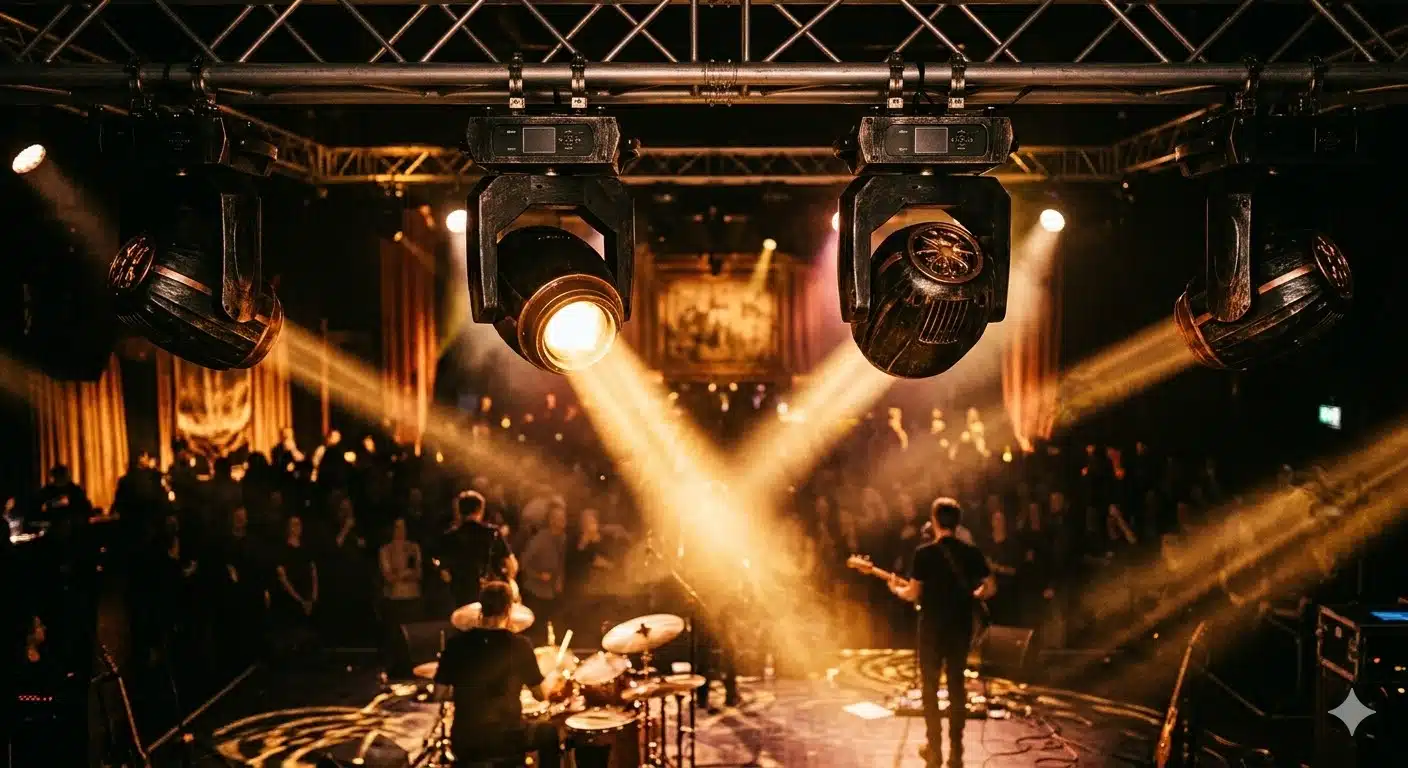
For professional moving head lights, CMY color mixing technology and CTO color temperature correction directly determine the overall color performance and ensure smoother color transitions.
Beam moving heads, integrated spot-wash-beam fixtures, and high-end theatre-grade moving heads are commonly equipped with dual CMY and CTO color filter modules. Written as an authoritative technical guide for global buyers, this article analyzes the working principles, technical differences, and practical applications of CMY and CTO systems in professional stage lighting.
1.Working Principle of CMY Color Mixing
CMY consists of three independent subtractive filters: Cyan, Magenta, and Yellow. Controlled by precision stepping motors, the filters are inserted into the optical path at variable depths to produce a full spectrum of blended colors. Unlike traditional RGB additive mixing, CMY adopts subtractive color mixing, delivering smoother gradients and spot-free color rendering, which is widely recognized as the optimal color solution for professional stage lights.
Moving heads equipped with CMY systems support stepless color tuning, generating millions of delicate color variations suitable for bars, theatres, cultural tourism night scenes, and large-scale live events.
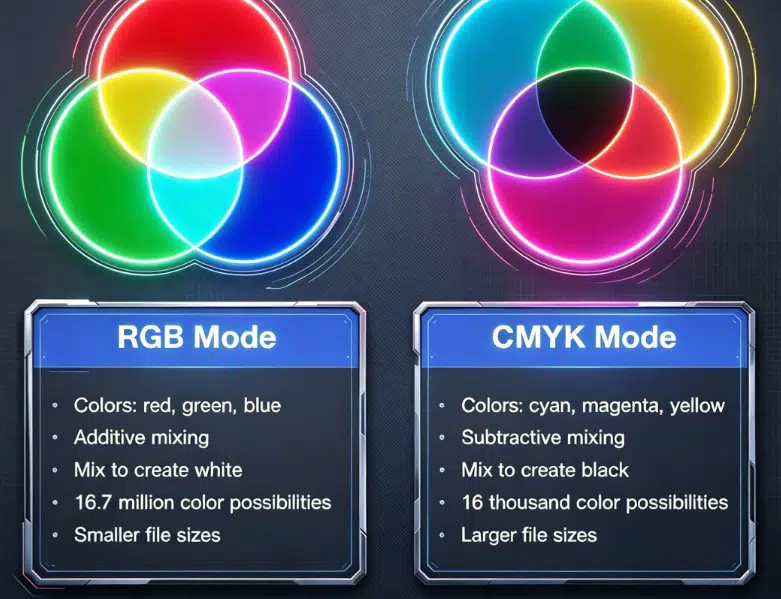
2.Working Principle of CTO Color Temperature Correction
CTO (Color Temperature Orange) filters are designed to adjust the color temperature of light sources. Most standard lamps produce harsh cool white light with a blue tint. Equipped with warm-orange filters, the CTO module can mechanically or electrically correct cold white light into natural warm white, soft neutral white, and warm yellow light.
The primary function of CTO is to restore natural light quality and improve visual authenticity. It has become an essential configuration for theatres, television studios, and cultural tourism lighting projects.
3.Practical Applications of CMY Color Mixing
3.1 Stage Performances
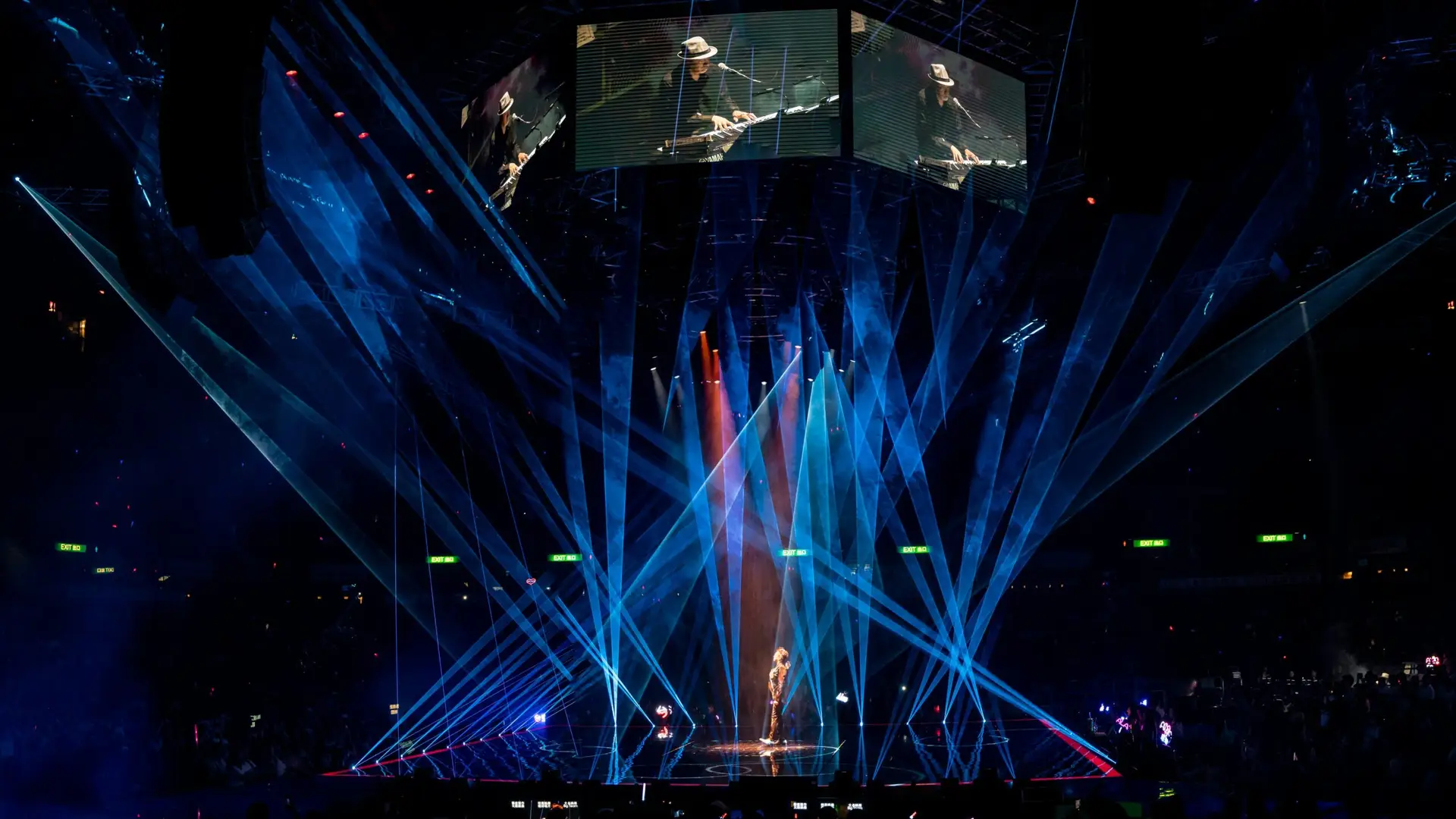
Concerts, music festivals, and commercial stages require frequent atmospheric transitions. CMY technology enables seamless color gradients without chromatic aberration, creating an advanced visual atmosphere especially for slow-tempo performances and ambient stage lighting.
3.2 Bars and Nightclubs
Nightclub lighting demands highly saturated red, blue, and violet color combinations. By overlapping filter densities, CMY produces vivid, pure colors with clean beam edges. Currently, nearly all mid-to-high-end integrated moving heads for bars are built with standard CMY systems.
3.3 Cultural Tourism Night Scenes
For ancient architecture illumination, mountain landscape lighting, and outdoor immersive projects, soft and natural color tones are essential. CMY can simulate natural ambient hues such as sunset glow, lake reflections, forest tones, and twilight scenery.
3.4 Theatres and Film Studios
Theatres, drama halls, and broadcasting studios require precise color reproduction. CMY accurately restores natural skin tones, fabric textures, and prop colors without unwanted green, purple, or cold color distortion.
4.Practical Applications of CTO Color Temperature Correction
4.1 Human Portrait Lighting
CTO adjusts raw 6500K cool white light to a natural warm white range of 3200K–5500K. Optimized color temperature enhances skin transparency and ruddy complexion, making it ideal for galas, weddings, interviews, and live stage portraits.
4.2 Ancient Architecture Illumination
To avoid cultural relic aging caused by high-energy blue light, ancient buildings, temples, and wooden structures prohibit harsh cool lighting. CTO warm white light preserves the original texture of wood and stone while minimizing long-term photochemical damage to cultural heritage.
4.3 Indoor Theatre Environments
In enclosed theatre spaces, cool white light easily causes visual fatigue. CTO produces gentle, glare-free warm white light suitable for long-duration stage dramas and resident performances.
4.4 High-Definition Film and Television Shooting
Television stations, live streaming rooms, and film sets require stable color temperature. CTO maintains consistent white balance without color shifting, reducing post-production color correction workload.
Conclusion
CMY color mixing determines the color upper limit of a moving head, while CTO technology defines white light quality. For rental productions, cultural tourism projects, theatre engineering, and high-end bar venues, moving heads equipped with complete CMY+CTO modules deliver superior visual performance and extended service life.
References
-
Wyszecki, G., & Stiles, W. S. (2018). (3rd ed.). Wiley.
-
CIE. (2018). . International Commission on Illumination.
-
Agostini, F., & Bonanomi, C. (2022). Subtractive color mixing analysis for professional stage lighting optical systems. , 51(3), 145-153.
-
Miller, T. (2023). Optical comparison between RGB additive mixing and CMY subtractive mixing in moving head fixtures. , 9(2), 22-29.
-
Lighting & Sound International. (2025). . PLASA Media Group.
-
Kumar, S., & Lee, J. (2021). Blue light hazard and color temperature correction for LED stage lamps. , 29(11), 17892-17901.
-
Davis, R. (2024). . Broadway Lighting Press.
-
Zhang, H. (2025). Nightscape color optimization for cultural heritage buildings. , 9(1), 31-38.
-
International Dark-Sky Association. (2023). . IDA Publication.
-
Messe Frankfurt. (2026).. Guangzhou International Lighting Exhibition Official Report.