
Lighting Blog
What Is a 3-in-1 Moving Head Light & Its Core Advantages

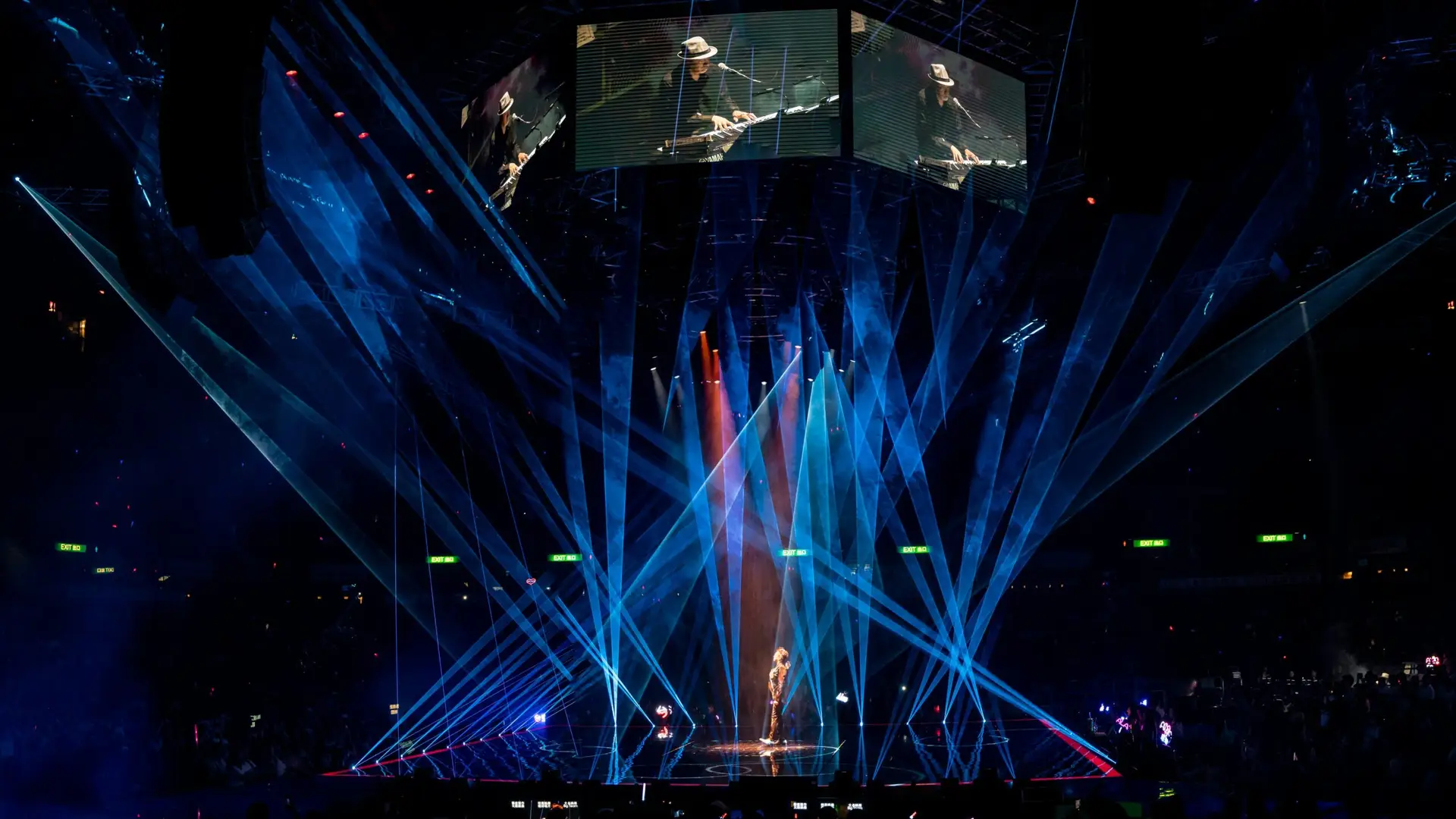
Within professional show lighting, the 3-in-1 moving head light has become a staple fixture for stage rental companies, live venues, theatres and large-format bars in recent years.
Traditional moving heads serve only a single function, split into three standalone fixture categories: Beam, Spot (pattern projection & framing) and Wash. A 3-in-1 moving head integrates all three optical functions into one single unit. It saves valuable space and cuts overall expenditure for compact venues, though it is not universally suitable for every application—it delivers unmatched efficiency for specific event setups.
Below is a full breakdown explaining how 3-in-1 moving heads work, plus the transformative benefits they bring to modern live entertainment production.
1. What Exactly Is a 3-in-1 Moving Head Light?
Its functionality hinges on a precision motorized zoom and focus optical lens array. When the lighting console transmits DMX control signals, internal lenses shift rapidly to adjust beam angle and focus, instantly switching between three distinct lighting modes:
Beam Mode
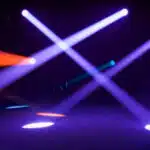
Optical characteristics: Ultra-narrow, razor-sharp beam output. With atmospheric haze in the venue, it produces laser-like light streaks across three-dimensional space, ideal for fast pan/tilt sweeps and strobe effects during festival climactic segments.
Spot Mode – Precise Projection for Visual Storytelling
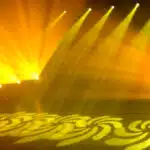
Optical characteristics: Medium beam angle, fitted with rotatable dynamic gobo wheels and high-precision focusing optics. It projects geometric shapes, water ripple textures and custom brand logos onto stage floors, backdrops or walls.
Wash Mode
Optical characteristics: Extra-wide beam angle activated by an integrated frost filter. The output softens into diffused ambient light, used for full-stage colour washing and filling front/back light for performers and speakers.
2. Five Key Advantages of 3-in-1 Moving Head Lights
1. Multi-Dimensional Stage Visuals with Zero-Latency Mode Switching
3-in-1 fixtures enable instantaneous transitions between lighting states. For example, you can run tight 2° matrix beam effects during a chorus, then widen the focal range into full wash coverage the very next beat. This seamless shift in visual tone creates powerful dramatic tension.
2. Streamlined Logistics & Rigging – Reduced Truss Load Capacity
For stage production firms, time directly translates to cost savings. A setup that previously required 100 separate lights (30 beam, 30 spot, 40 wash) can now be achieved with just 40–50 3-in-1 moving heads delivering equivalent visual output.
This slashes flight case volume and truck transport fees by nearly half. On-site rigging, DMX cable running and signal fault troubleshooting take over 50% less labour time. Most critically, the drastically lower weight eases structural strain on overhead trussing, boosting overall show safety. Reference: 2026 Bulk Purchasing Guide for Moving Head Lights: Buying Solutions for 10 Key Applications
3. Uniform Colour & Beam Consistency
Separate beam and spot fixtures from different manufacturers produce inconsistent colour output, even when identical RGB/CMY values are dialed into the console. Matching 3-in-1 units share identical light engines and CMY colour mixing systems, eliminating uneven colour casting across the stage.
To grasp how CMY paired with CTO elevates colour accuracy, read How CMY and CTO Improve Moving Head Light Performance
4. Lower Combined Procurement & Maintenance Costs
While premium single 3-in-1 moving heads carry a higher unit price than basic single-function fixtures, fewer total units need to be purchased. Stocking spare parts, servicing motors and cleaning optical lenses only requires inventory tailored to one fixture model, drastically simplifying spare part management for theatres, livehouses and lighting rental businesses.
5. Future-Focused Energy Efficiency
As of 2026, mainstream 3-in-1 moving heads feature high-output white LED light engines, gradually replacing conventional discharge lamps such as 7R and 10R models. This delivers dramatic power consumption reductions, easing heavy cooling loads on venue air conditioning systems for indoor theatres and stages.
3. Spec Checklist for Selecting 3-in-1 Moving Heads
If you are evaluating purchasing or renting 3-in-1 moving heads, these four core specifications separate professional-grade fixtures from entry-level entertainment units:
| Core Technical Spec | Professional Show-Grade Standard | Key Benefit |
|---|---|---|
| Zoom Ratio | Wide variable zoom range (e.g., 3°–50° or 2°–60°) | A broader zoom spectrum delivers crisper narrow beam effects and far wider wash coverage, maximizing the fixture’s all-in-one versatility |
| Colour Mixing System | Continuous CMY mixing + linear independent CTO colour temperature adjustment | Professional productions avoid harsh discrete colour wheel jumps; CMY mixing creates subtle muted tones and ultra-smooth colour fades |
| Movement Precision | 16-bit pan/tilt resolution + automatic home position calibration | Critical for long-throw projection; 16-bit precision eliminates jitter and misalignment for crisp gobo positioning |
| DMX Control Channels | 30+ to 50+ DMX channels | Consolidating three fixture functions requires extensive channel allocation for granular control of framing shutters, dual prism wheels and dynamic gobos |
💡 Pro Industry Tip:
While 3-in-1 moving heads cannot quite match the absolute beam purity of dedicated pure beam fixtures under extreme technical demands, their collective practical benefits make them irreplaceable for the vast majority of modern multi-purpose stage environments.
Frequently Asked Questions
Q1: What is a 3-in-1 moving head light, and how does it differ from standalone beam, spot and wash fixtures?
A 3-in-1 moving head integrates beam, spot and wash functionality within a single unit, replacing three separate single-purpose lights.
Individual fixtures only deliver one type of effect, while a single 3-in-1 unit fulfills multiple production requirements, cutting both equipment costs and cabling work for small-scale shows and bars.
Q2: What are the standard wattage options, and which venues suit each power rating?
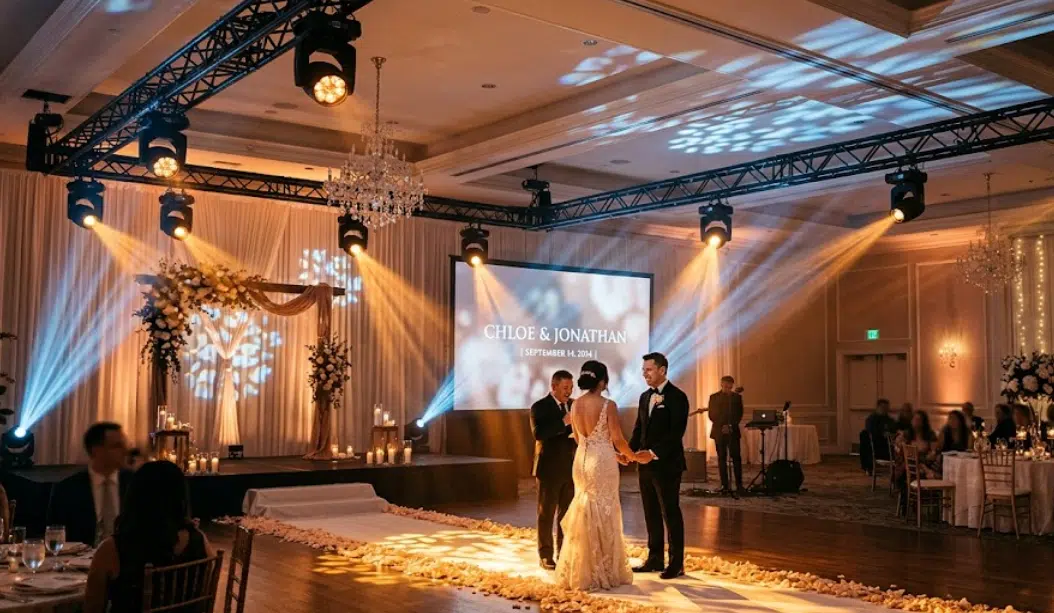
- 230W 3-in-1: Bars, small taverns, private KTV booths, compact wedding banquet halls
For quiet, flattering wedding lighting with 230W units, check How to Choose High-Brightness Silent Moving Head Lights for Indoor Weddings? - 260W / 275W 3-in-1: Mid-sized bars, livehouses, medium corporate annual stages
- 350W / 380W 3-in-1: Large theatres, music festivals, major commercial productions, outdoor events
Mid-size EDM venues rely heavily on 350W+ beam hybrid fixtures; full details in How to Choose High-Brightness Moving Head Beam Lights for Mid-Sized Electronic Music Clubs - High-power 440W / 470W: Sports stadiums, large gala performances, cultural tourism light shows
Q3: How to choose between 2-in-1 and 3-in-1 moving heads?
2-in-1 units only combine beam and spot functions with no even wash capability. Opt for 3-in-1 fixtures if you require broad ambient colour coverage and atmospheric washing. Select 2-in-1 moving heads solely for aerial beam effects when working with a tight budget.
Q4: What is the difference between CMY continuous mixing and fixed RGB colour wheels?
- Continuous CMY mixing: Creates soft, gradual colour transitions and delicate intermediate shades such as blush pink, sky blue and champagne gold; standard on high-end 3-in-1 lights for superior wash output
- Fixed RGB colour wheels: Produce bold, saturated solid hues but lack smooth fading capability, primarily used on entry-level 230W models
Q5: Which prism configurations deliver the best output? What is a bi-directional rotating prism?
Common prism variants: 8-facet, 16-facet, 24-facet and honeycomb prisms. 8/16-facet prisms produce soft, dispersed beams ideal for compact spaces, while 24-facet prisms deliver dense starburst effects for large venues.
Bi-directional prisms support independent variable-speed clockwise and counterclockwise rotation, generating interwoven dynamic patterns with greater visual depth than single-direction prisms.
Q6: What functions do strobe and frost filter modules serve?
- Strobe: Adjustable flash rate ranging from 0–30 flashes per second, synced to drum beats for high-energy peak moments
- Frost filter (diffusion lens): Softens sharp narrow beams into wide wash light, balancing crisp beam effects and full-stage ambient colour coverage with quick switching
Q7: What is the standard DMX channel count, and how do channel modes differ?
230W models typically feature 16 or 20 DMX channels; premium 380W units offer 24 or 28 channels.
- Simplified channel mode: Merges multiple functions into shared channels for intuitive console operation, suitable for novice KTV operators
- Full independent channel mode: All functions operate on separate dedicated channels, mandatory for precise programming in professional live productions
Q8: What safety guidelines apply for rigging overhead and floor-standing installation?
- Overhead rigging: Secure a safety cable with fully locked fasteners; fasten the fixture horizontally and avoid prolonged inverted operation
- Floor placement: Fit anti-slip shock-absorbent pads underneath to prevent shifting from ground vibration; never block bottom ventilation outlets
Q9: How to wire DMX signal cables and resolve DMX512 console signal interference?
Use standard two-core shielded DMX cabling, and fit a terminator resistor on the final fixture in the daisy chain.
Run lighting cables separately from audio power lines to eliminate electrical interference that causes erratic fixture behaviour. Limit daisy-chained fixtures to a maximum of 8; deploy signal splitters for larger rigs.
Q10: What is the maximum number of fixtures that can be wired in a single power run?
A single 230W unit draws roughly 0.8A, while a 380W fixture uses approximately 1.5A. Do not connect more than 8 fixtures on a 1.5mm² national standard power cable, or over 15 fixtures on a 2.5mm² cable. Never overload power runs to avoid cable overheating and fire hazards.
Q11: Why does the lamp fail to ignite after powering on?
- End-of-life lamp with broken filament – replace with matching metal halide lamp
- Faulty igniter unable to trigger lamp startup
- Thermal shutdown protection triggered by clogged filter dust or failed cooling fans; power down and allow full cooling before restarting
- Faulty main power driver board requiring repair
Q12: Why does the moving head shake uncontrollably or drift off-position without console input?
- Loose DMX wiring or damaged shielding causing signal interference
- Worn horizontal/vertical motor belts or faulty stepper motors
- Dirty internal limit optical sensors; wipe clean light-sensitive components
- Mismatch between console channel mode and fixture configuration; reselect the correct channel profile
Q13: What causes dark centres in beam output or blurry, unfocused gobos?
- Misaligned lamp position – recalibrate the lamp mounting bracket
- Dust and oil residue covering lenses, gobos or prisms; power off fully and wipe optical surfaces with lint-free cloths
- Malfunctioning focus motor unable to lock sharp focal planes
Q14: Why does the fixture repeatedly shut down due to thermal overheat protection?
3-in-1 light engines generate significant heat; primary root causes include:
- Long-term dust buildup blocking intake air filters – clean filters on a regular schedule
- Failed cooling fans requiring identical replacement units
- Poor venue ventilation with no air circulation; install exhaust fans
- Extended continuous high-speed strobe and heavy prism operation; cycle power intermittently for heat dissipation
Q15: What is the recommended routine maintenance schedule?
- Permanent KTV / bar installations: Clean air intake filters weekly; wipe optical lenses monthly
- Professional rental inventory: Remove dust after every event; inspect lamp wear and motor belts every 500 operating hours
- Complete teardown deep clean every six months to remove internal dust; apply specialized lubricant to X/Y axis motor gears
Commercial Rental & Engineering FAQ
Q16: How many 3-in-1 moving heads are recommended for wedding stages?
- Compact 10m² small stage: 4–6 units
- 20–40m² banquet hall stage: 8–12 units
- Outdoor wedding main stage: 12+ units, supplemented by PAR wash lights for base ambient colour
Q17: Can standard 3-in-1 moving heads be used outdoors without protection?
Standard indoor models carry no waterproof rating and require rain hoods if used outdoors in wet conditions. For permanent cultural tourism outdoor installations, select IP65 waterproof-rated dedicated outdoor 3-in-1 moving heads; unprotected indoor units will sustain permanent motherboard and light engine damage from rain exposure.
Q18: Is it safe to look directly into the fixture lens during operation?
Direct eye contact is strictly prohibited. Metal halide light emits strong ultraviolet radiation that can permanently burn retinal tissue even with brief exposure. Certified protective lighting goggles must be worn for all fixture adjustments and programming.
Q19: What safety protocols apply for unattended long-duration operation?
- Conduct regular inspections to check for aged, overheating wiring
- Keep all flammable materials such as fabric drapes and balloons clear of fixture heat zones
- Activate built-in thermal cut-off protection to automatically shut down the light engine at dangerous high temperatures and prevent fire risks
References:
- PLASA / ESTA (Entertainment Services and Technology Association). ANSI E1.11 DMX512-A Digital Serial Control Standard for Entertainment Lighting Equipment. PLASA TSP Archive, 2010.
Covers DMX channel layout, signal wiring, daisy-chain limits, termination resistance & signal interference troubleshooting referenced in FAQ Q7–Q9.
- PLASA. ANSI E1.20 RDM (Remote Device Management) Standard. PLASA Technical Standards Program, 2014.
Basis for 16-bit pan/tilt auto-calibration, fixture address matching & error diagnosis for moving heads.
- CIE (International Commission on Illumination). CIE 1931 Standard Colorimetric System, 2018.
Foundational theory for CMY subtractive mixing, CTO color temperature adjustment & RGB color wheel comparison (Section 2.3 & Q4).
- IES (Illuminating Engineering Society). LM-79 LED Photometric Measurement Standard. IESNA, 2020.
Supports LED high-power engine energy efficiency analysis (Advantage 5) & lumen depreciation maintenance rules.
- USITT (United States Institute for Theatre Technology). RP-2 Recommended Practice for Theatrical Lighting Rigging & Truss Load Calculation, 2006.
Technical source for truss weight reduction, overhead rigging safety standards (Advantage 2 & Q8).
- NFPA 70 National Electrical Code (NEC). National Fire Protection Association, 2023.
Power cable load limits, overload fire prevention guidelines for power daisy-chain FAQ Q10.
About the Author:
Eason (Yifan) Chen
Stage Lighting Expert & Digital Strategist
With 15+ years of industry expertise, Eason Chen is a leading authority in stage lighting and digital manufacturing. A technical contributor at Prolight + Sound and LDI, he specializes in bridging the gap between cutting-edge energy protocols and commercial ROI.