
Lighting Blog
How to Choose High-Brightness Moving Head Beam Lights for Mid-Sized Electronic Music Clubs

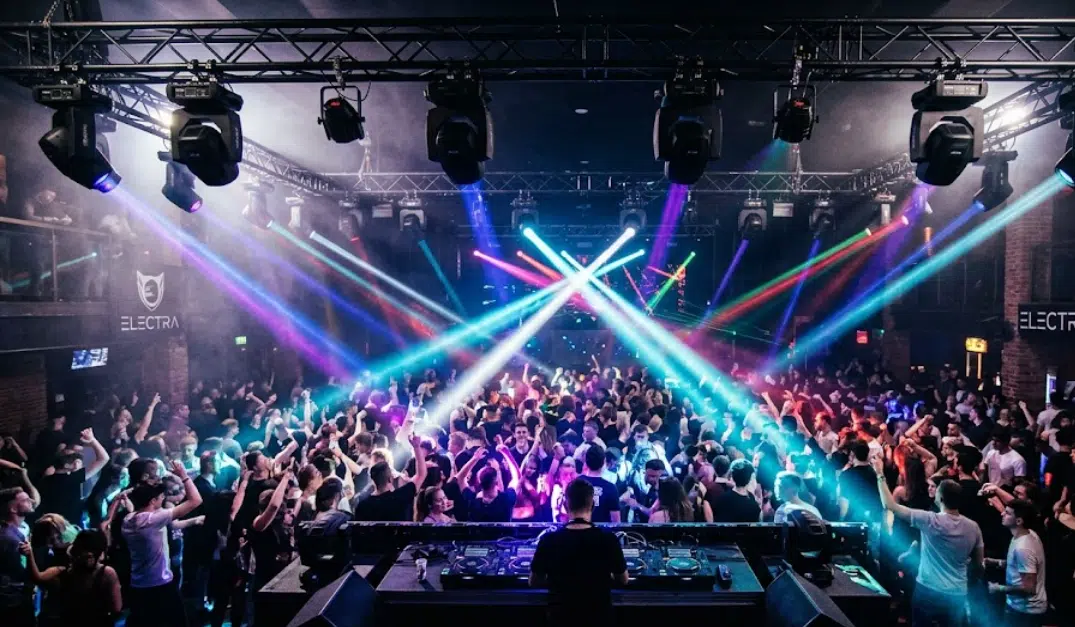
If you view lighting merely as illumination, you haven’t experienced a truly top-tier electronic music venue.
In a club, lighting actually “dances” alongside the music. I often tell my friends that when executing stage lighting engineering, you must provide customized solutions based on the client’s specific usage scenarios.
Why? Because the rhythm in an electronic music club is incredibly fast. At a tempo of, say, 128 BPM, moving heads must be extremely powerful, capable of cutting through dense fog like a sharp blade.
After many years in the industry, my deepest realization is this: ordinary shows focus on aesthetics, but electronic music venues focus on the quality of the fixtures—their ability to withstand long-duration, high-frequency use. Therefore, when customers choose lights, lifespan and quality stability are the primary considerations. According to ESTA (Entertainment Services and Technology Association) recommendations for high-duty performance environments, the mechanical fatigue strength requirements for fixtures are 300% higher than those for conventional theaters [1].To avoid costly mistakes, I always suggest reviewing the Common Pitfalls in Stage Lighting Procurement for 2026 before finalizing your gear list.
How to choose high-brightness moving head beam lights for mid-sized electronic music clubs? Here are three dimensions:
1. Mid-Sized Club Moving Head Beams: Brightness Must Have Sufficient Penetration
Mid-sized clubs typically have ceiling heights of 6–10 meters and use fog machines (Haze/Fog) frequently. Therefore, you need stage lights with enough penetration; otherwise, the light will be trapped in the fog, looking very unappealing.
Light Source Selection:
It is recommended to choose 350W – 450W LEDs. LED moving head beams have faster instantaneous strobe capabilities, which better comply with IES (Illuminating Engineering Society) standards and are perfect for the “Drop” in a track [2].
Optical Illuminance:
The core metric is the Lux value at 5 meters. For instance, the DJClub 400W Professional Stage Lighting can output 120,000 lm, which is particularly suitable for venues with heavy fog. While smaller venues might look for 7R compact moving head beam lights, high-energy clubs require the brute force of a 400W+ engine.
Classic Case: Omnia Nightclub, Las Vegas
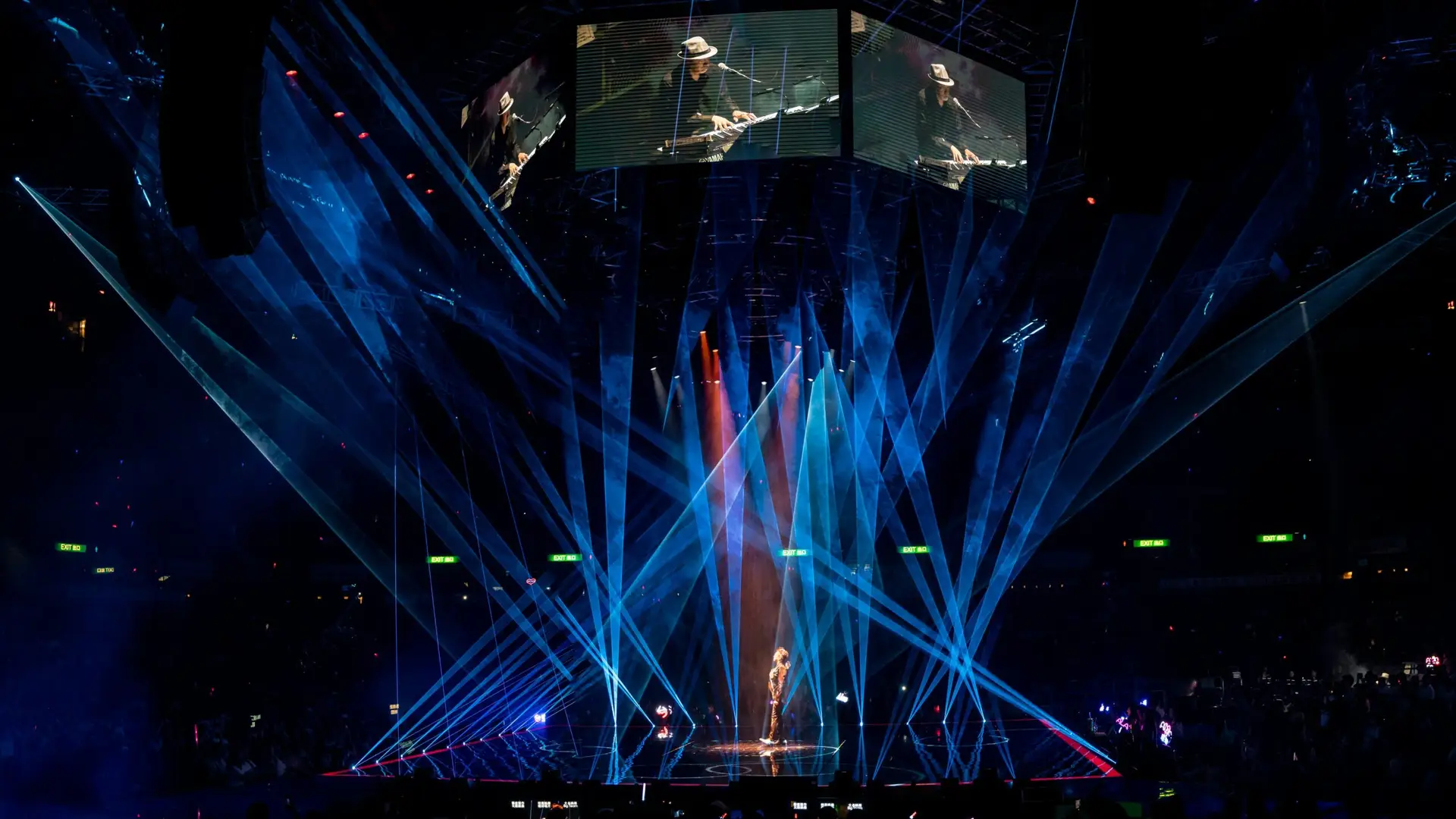
Omnia features a kinetic chandelier matrix composed of hundreds of high-brightness moving heads. Due to the massive scale of the main hall and the heavy fog, they selected beam lights with ultra-high center illuminance. For those looking to replicate this intensity, exploring a dedicated Beam Light category is the first step toward finding the right central illuminance.
2. Club Moving Head Beams: The Ultimate Test of Motor Performance
I often tell my friends that club lighting fixtures need to be more durable. Because they perform tens of thousands of Pan/Tilt movements nearly every day during operating hours, the demands on stage light quality are extremely high. Inferior products will increase maintenance and replacement costs.
Therefore, electronic music clubs must select moving head beams that support 16-bit speed-regulated motors, which can reduce the step-loss rate to below 0.01% [3]. Since the fixtures are close to the audience, motor noise must be as low as possible to avoid affecting the customer experience. Furthermore, motor positioning precision must be high; if the lights lose steps significantly, the visual effect of the entire array will be ruined. Imagine a perfectly neat array where two lights end up pointing diagonally toward a wall corner—the visual quality drops instantly.
When I lead a team for an installation, 16-bit motors are a must. It’s not just for precision, but also for silence. Modern clubs favor “immersive” experiences where lights might be only a few meters above people’s heads; you can’t have the mechanical grinding of motors drowning out the music. According to ANSI S12.60 noise criteria, high-quality fixtures should control motor operating noise below 45dB [4]. If your project is specifically noise-sensitive, you may want to compare these with silent moving head lights designed for indoor weddings.
The moving heads must support DMX512-A and RDM. Wiring in clubs is complex and usage is heavy, so the ability to remotely monitor fixture temperature and modify DMX addresses in real-time is critical.
Classic Case: Berghain / Panorama Bar, Berlin
Renowned for its industrial style, Berghain requires stage lighting to achieve millisecond-level synchronization within high-frequency Techno rhythms. For venues with a similar aesthetic, cool black housing moving heads are often the ultimate choice for modern industrial design.
3. Product Configuration Reference for Club Moving Head Beams
For investors, lighting is a capital asset. Ensuring your gear has a high technical ROI involves choosing UL-listed high-power moving heads and understanding global stage lighting equipment certifications.
| Key Parameters | Recommended Club Configuration | DJClub 400W Pro Version (Ref) |
| Light Source Power | 400W+ High Power LED | 400W LED (120,000 lm) [5] |
| Color System | Rich Color Wheel + CMY Mixing | 8-color wheel + CMY+CTO Linear Mixing |
| Prism Effects | Double-layer stackable prisms | 6/8-facet bidirectional rotating prisms |
| Zoom Range | Wide-range linear focus | 4° – 35° Linear Focus System |
| Durability | Axial fan + Electronic overheat protection | Axial fan + Dust-proof housing design |
Moving Head Beam Lights for Mid-Sized Electronic Music Clubs:Expert Suggestions
For mid-sized electronic music rooms pursuing a premium feel, CMY linear mixing combined with CTO color temperature correction ensures that the skin tones in videos recorded on the dance floor look much better. According to the IES TM-30 standard, high CRI combined with color temperature adjustment can significantly enhance the textural expression of a space [6].
Fog juice in clubs will adhere to the interior of the fixtures. Therefore, choosing lights with good sealing and dust protection is advised to lower the failure rate.
Avoid Flickering:
For clubs that livestream, always buy high-quality flicker-free stage lights to ensure the video quality matches the live experience.
The Nightclub Standard:
For smaller nightclub parties, 230W lights with double prism effects are often sufficient, but for the “Big Room” sound, you need the 400W Pro series.
Weather Proofing:
If your club has an outdoor terrace or rooftop, ensure you utilize all-weather IP66 moving heads.
Planning:
Always consult a 2026 professional club DJ lighting procurement checklist to ensure no accessory is overlooked.
Final Advice: Power vs. Venue Size
For an 8-meter ceiling, “Mini” lights will fail to deliver the “cutting” effect. If you are managing a stadium-scale project, refer to our 2026 concert beam light buying guide for large venues or the broader 2026 Concert Stage Lighting Procurement Guide.
References:
[2] IES (Illuminating Engineering Society): RP-37-15 Lighting for Outdoor and Performance Spaces.
[3] ANSI E1.11: Entertainment Technology – USITT DMX512-A Digital Data Transmission Standard.
[4] ANSI S12.60: Acoustical Performance Criteria, Design Requirements, and Guidelines for Performance Spaces.
[5] IES LM-79-19: Optical and Electrical Measurements of Solid-State Lighting Products.
[6] IES TM-30-18: Method for Evaluating Light Source Color Rendition.
About the Author:
Eason (Yifan) Chen
Stage Lighting Expert & Digital Strategist
With 15+ years of industry expertise, Eason Chen is a leading authority in stage lighting and digital manufacturing. A technical contributor at Prolight + Sound and LDI, he specializes in bridging the gap between cutting-edge energy protocols and commercial ROI.