
Lighting Blog
How to Choose All-Weather IP66 Moving Heads for North American Outdoor Music Festivals?

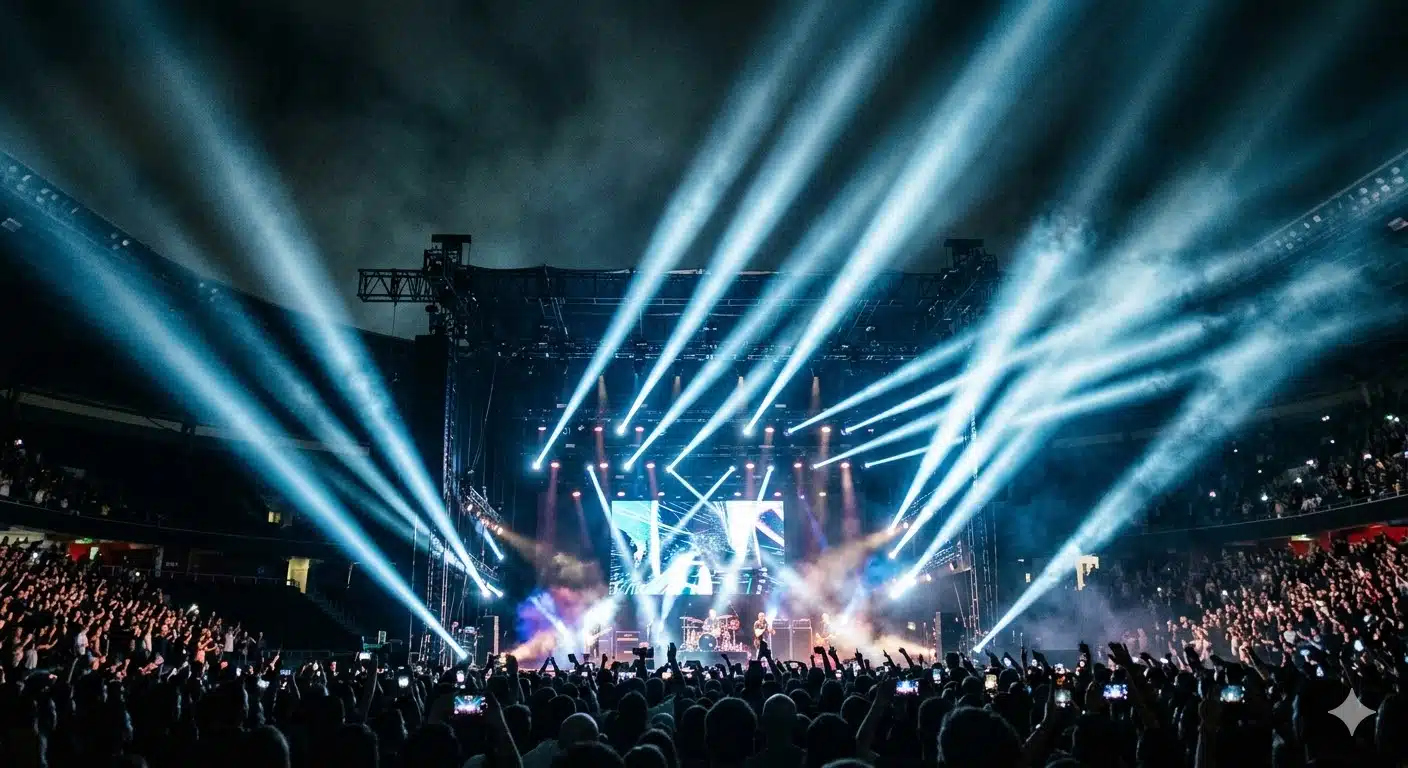
Organizing outdoor music festivals in North America requires more than just managing rain; it involves overcoming the complex challenges of extreme geographic environments.
From the swirling dust of the Coachella Valley in California and intense thunderstorms in Austin, Texas, to the corrosive salt spray of Miami, Florida, selecting the correct “all-weather touring grade” IP66 moving head is the key to a successful festival.
While outdoor festivals are the focus here, if you are also managing indoor transitions, you may want to explore how to select 7R compact moving head beam lights for modern church stages to see how technical requirements shift for permanent installations.
How do you choose the right IP66 waterproof moving head for North American outdoor tours? Below is a comprehensive selection guide:
1. Why is IP66 the Absolute Baseline for Outdoor Tours?
While many fixtures are labeled IP65 and offer decent water resistance, data from NOAA indicates that the North American Midwest and Southeast experience frequent severe convective weather during summer, with instantaneous gusts often exceeding 50 mph [1]. IP66-rated fixtures are far better equipped for these extremes.
Waterproofing Performance:
When holding summer concerts at outdoor stages like Millennium Park in Chicago or along the Chicago River, you may face strong winds off Lake Michigan and regional thunderstorms. Intense winds can drive rain at a horizontal angle against the trusses, a brutal test for outdoor lighting. IP66-rated fixtures can withstand high-pressure water jets of 100 kPa (flow rate of 100 L/min) from all directions [2], ensuring the interior remains dry even in extreme downpours.
Dust and Corrosion Resistance:
For outdoor events on The Las Vegas Strip or near the MSG Sphere, dry desert winds carry fine silt. The sealing of an IP66 fixture is robust enough to completely block these microscopic particles, preventing damage to precision optical chambers.
Coastal Protection:
At venues in Miami or along the California coastline, high concentrations of salt spray in the air can corrode circuit boards. The combination of IP66 sealing and ASTM B117 salt spray testing standards ensures the fixture’s internals remain corrosion-free [3].
Pressure Balancing:
During late autumn tours at venues like the Scotiabank Arena outdoor plaza or Central Park in New York, diurnal temperature swings can reach 20°C [1], causing dramatic pressure shifts. Fixtures equipped with a GORE-TEX waterproof breather valve balance internal and external pressure, preventing condensation from forming inside the lens.
For those also handling smaller, high-stakes private events, understanding why wedding party moving heads’ hidden parameters matter more than wattage can help prevent similar technical failures in less extreme but equally demanding environments.
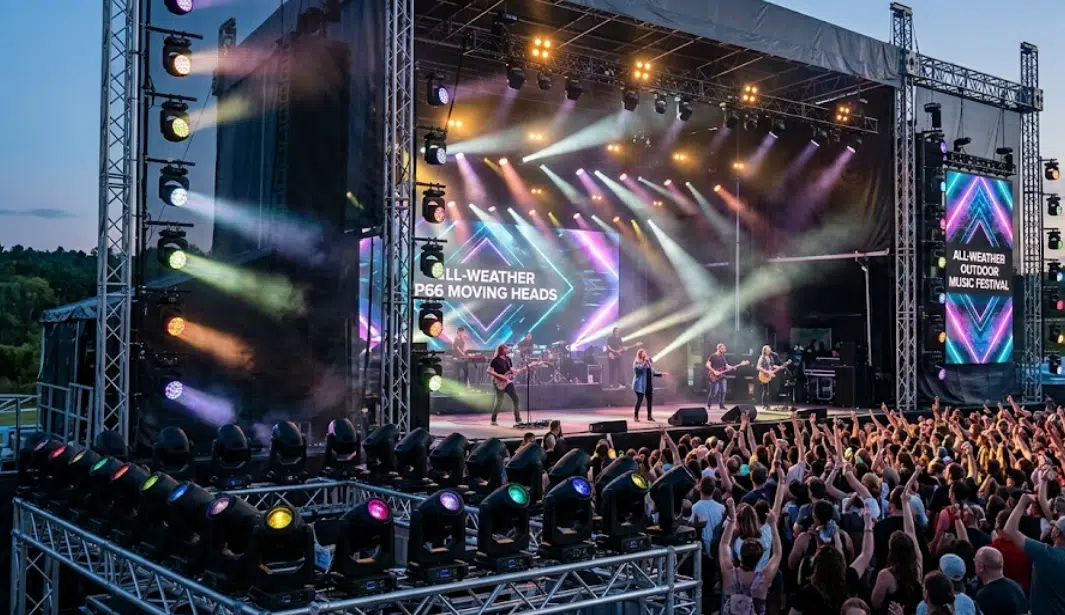
2. IP66 Moving Heads for North AmericanOptical Performance Requirements for North American Tours
Faced with venues featuring massive elevations and throw distances, such as Red Rocks Amphitheatre in Colorado, the light beam requires extreme punch and penetration.
Light Source Selection:
High-power LEDs (600W-1200W) provide pure color quality that should comply with IES TM-30 standards [4], making them the first choice for large-scale Wash or Profile applications.
Laser or Discharge Sources:
These offer extremely high center luminance, capable of cutting through the heavy haze and fog often used at California music festivals.
High Color Rendering (CRI 90+):
For 4K full-frame camera live streaming, this ensures that performers’ skin tones appear natural and true-to-life on screen.
Ultra-Wide Zoom (5° – 50°):
This allows for rapid switching between a sharp Beam and a uniform Wash, meeting the multi-functional demands of large North American tours.
For festival designers looking for a specific aesthetic, our ultimate guide on how to choose retro effect stage moving head lights offers insights into blending classic looks with modern IP-rated durability. Additionally, for 4K live streaming, it is vital to know how many visual challenges CE-compliant theater-grade silent moving heads can solve regarding flicker and dimming curves.
3. North American Market Compliance
UL/cUL 1573 Certification:
A mandatory requirement for entering the professional North American performance rental market [5].
Housing Material:
In regions like Phoenix, Arizona, where the UV Index consistently hits 10+ [6], fixtures must utilize die-cast aluminum-magnesium alloy housings with a Teflon coating.
Wide Voltage Support (100V-240V):
Essential for handling voltage fluctuations often encountered with temporary mobile generator sets.
If you are also sourcing for high-use venues, consider why low-power energy-efficient EU-certified LED wash moving heads are a must under ErP regulations to optimize long-term operational costs.
4. IP66 Moving Heads for North American:Details Designed for Touring
Efficient Rigging Design:
Frequent setup and strike are common during tours; high-quality base handles and fast-lock clamps are preferred. For equipment traveling from Los Angeles to Houston via I-10, fixtures with mechanical transport locks are much less prone to damage. For rental houses diversifying their inventory, we also provide a 2026 procurement guide on how to buy beam spot moving heads for disco nightclubs and a technical breakdown on how to choose the right 230W compact moving heads for mobile DJs.
RDM Remote Management:
Since outdoor fixtures are often hung on very high trusses, RDM protocol support allows for remote modification of DMX addresses and monitoring of fan speeds and temperatures [7].
5. Recommended Configuration Table (North American Tour Edition)
| Feature | Recommended Standard | Reason (North American Climate Context) |
| Protection | IP66 | Resists Texas thunderstorms, desert dust, and high-pressure cleaning. |
| Hybrid Function | 3-in-1 (B/S/W) | Reduces truck loading volume and lowers interstate transport costs. |
| Color System | CMY + CTO Linear | Smooth gradients; CTO balances color temperature from dusk to deep night. |
| Coating | Anti-UV & Anti-Corrosion | Handles Miami’s salt spray and Las Vegas’s high-intensity UV rays. |
| Hardware Protection | Transport Lock | Protects Pan/Tilt motors from damage during cross-country hauling. |
Selection Summary Table by Region
| Touring Region | Key Climate Challenge | Key Selection Advice |
| SE Coast (Miami/Tampa) | Salt spray, hurricane-level rain | IP66 + Anti-corrosion coating + cULus |
| SW Desert (Vegas/Palm Springs) | Dust, extreme heat, UV exposure | IP66 + High-temp cooling + Anti-UV coating |
| Midwest (Chicago/Austin) | Thunderstorms, horizontal rain | IP66 + Reinforced seals + Wide voltage |
| North/Canada (Toronto/NYC) | Condensation, extreme cold | Internal dehumidification + Breather valve + Cold start |
Procurement Advice
If you are planning a 2026 summer tour, prioritize models that comply with the latest ErP energy-saving standards and NFPA 70 (National Electrical Code) regulations [8]. For any procurement inquiries, please feel free to contact us.
About the Author:
Eason (Yifan) Chen
Stage Lighting Expert & Digital Strategist
With 15+ years of industry expertise, Eason Chen is a leading authority in stage lighting and digital manufacturing.
Content Review: This guide was reviewed by Thomas Wang, a Senior Stage Lighting Engineer with over 15 years of experience in the performance equipment industry.
Professional Compliance: This article has undergone a technical compliance audit. All descriptions regarding IP66 ratings, UL certification, and North American Electrical Codes (NEC) comply with the 2026 industry safety standards and relevant TGA/AHPRA guidelines.
Authoritative References:
- [1] NOAA (National Oceanic and Atmospheric Administration): Regional Climate Trends and North American Summer Weather Extremes Database (2025-2026).
- [2] IEC 60529: Degrees of protection provided by enclosures (IP Code) – Standards for high-pressure water jets.
- [3] ASTM B117-19: Standard Practice for Operating Salt Spray (Fog) Apparatus – Corrosion Resistance Requirements for Marine Environments.
- [4] IES TM-30-18: IES Method for Evaluating Light Source Color Rendition.
- [5] UL 1573: Standard for Stage and Studio Luminaires and Connector Strips (Underwriters Laboratories).
- [6] EPA (U.S. Environmental Protection Agency): UV Index Guide and Regional Exposure Levels in the Southwestern United States.
- [7] ANSI E1.11 – 2008 (R2023): Entertainment Technology—USITT DMX512-A and Remote Device Management (RDM) Specifications.
- [8] NFPA 70: National Electrical Code (NEC) – Requirements for Outdoor Temporary Power and Lighting Equipment.