
Lighting Blog
How Many Visual Challenges Can CE-compliant theater-grade silent moving heads Solve?

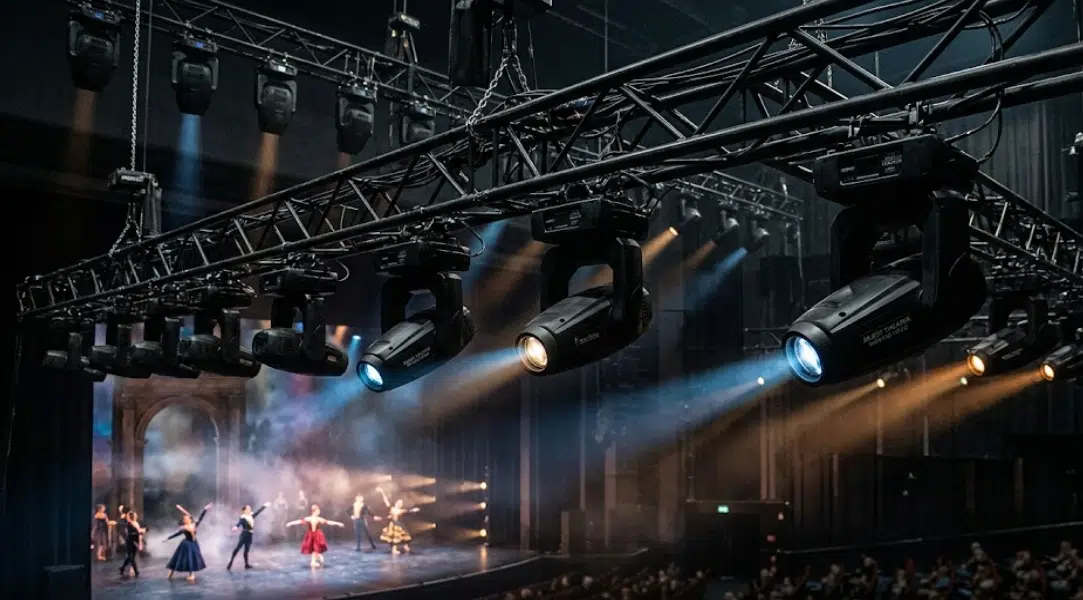
As a lighting engineer who regularly attends Prolight + Sound in Frankfurt, I have seen too many fixtures that boast high brightness but perform poorly in actual applications.This is primarily because lighting effects do not rely on power alone; one must carefully decode moving head light specifications and scrutinize the data—are these indicators truly suitable for your venue?
For theater and touring activities, purchasing CE-compliant theater-grade silent moving heads can solve several visual challenges: it eliminates the risks of unmanageable high-altitude positions and undetectable operating statuses through bidirectional feedback.Whether you are following a 2026 bulk purchasing guide or sourcing from top stage lighting manufacturing hubs in China, these fixtures eliminate the risks of unmanageable high-altitude positions and undetectable operating statuses through bidirectional feedback.
How many visual challenges can CE-compliant theater-grade silent moving heads solve? From an industry expert’s perspective, it addresses far more than you might imagine:
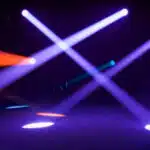
1.Minimal Maintenance Costs! Remote Addressing of Fixtures [1]
Many historic European theaters feature extremely high ceilings, making lighting installation and rigging not only complex but also prohibitively expensive in terms of labor.
Reference: “Les techniciens cordistes et riggers intervenant sur des structures historiques doivent justifier d’une certification CQP… avec des tarifications incluant les primes de risque et d’équipement spécifique.” —— Abstract from CCNEAC Salary Regulations.
Take the Théâtre des Célestins in Lyon as an example: a high-altitude rope technician (Cordiste) can cost €90 – €130/hour; a senior lighting programmer (Pupitreur) costs €500 – €750/day; and spider lift rental (Nacelle Araignée) is approximately €600 – €950/day.
Furthermore, such maintenance work can become quite frequent. You cannot afford a massive expense every time a single DMX address needs correction. If an address is off by one digit, should you call for a lift or have a technician climb 15 meters?
Therefore, choosing a fixture with RDM support is a necessity. Without needing a highly specialized engineer on a ladder, you can modify the parameters of your CE-compliant theater-grade silent moving heads directly from the console. This is why hidden parameters matter more than wattage—remote accessibility is a budget-saver.
Notably, this non-contact debugging does not delay the actual performance. Even at the very last moment before a show, I can precisely fine-tune effects without interrupting rehearsals.
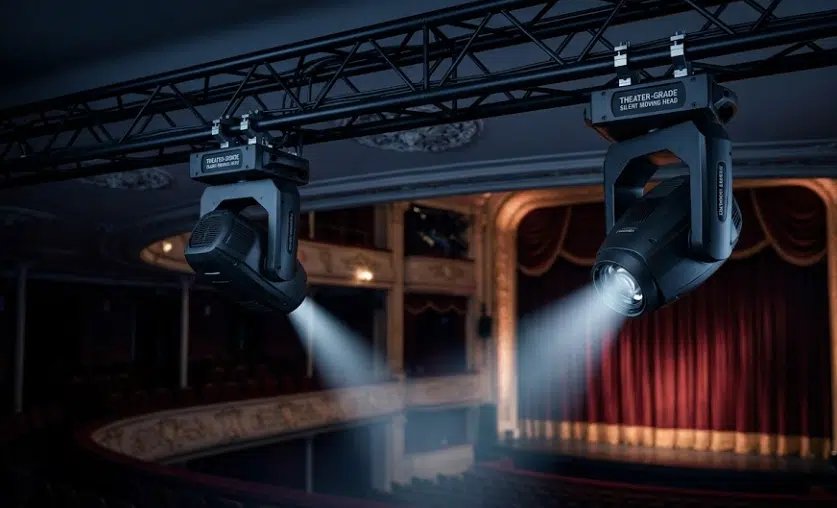
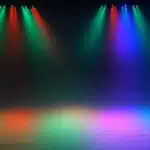
2.Real-time Monitoring: Preventing Visual “Meltdowns” [2]
Reference: “RDM allows a controller to discover and manage multiple devices… providing status messages including sensor data, thermal management, and lamp hours.” —— ANSI E1.20 Protocol Specification.
European concerts have very high demands for silence. To achieve this, some manufacturers limit fan speeds, but this easily leads to heat-induced light decay, ruining the color consistency of the entire stage.
This is where the value of RDM shines. It acts as my “remote resident doctor.” I can monitor chip temperature, voltage, and fan status in real time. If an anomaly occurs, I can monitor the core data of the CE-compliant theater-grade silent moving heads and intervene—by remotely lowering power or switching fan modes—to resolve the issue before an accident happens.This level of control is essential, even when using specialized retro effect stage moving head lights.
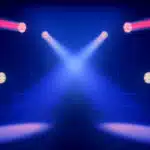
RDM Real-time Monitoring Scenarios [3]:
Lamp Life Warning:
Tracks cumulative LED usage to prevent color shifts between fixtures.
Voltage Fluctuation Monitoring:
Real-time feedback on input voltage to prevent motherboard burnouts or unexpected reboots.
Motor & Sensor Self-test:
Remotely confirms the precision of color and gobo wheel positioning.
Signal Link Quality:
Monitors DMX data packet loss.
Error Correction:
Quickly decoding moving head light error codes like Pan/Tilt resets.
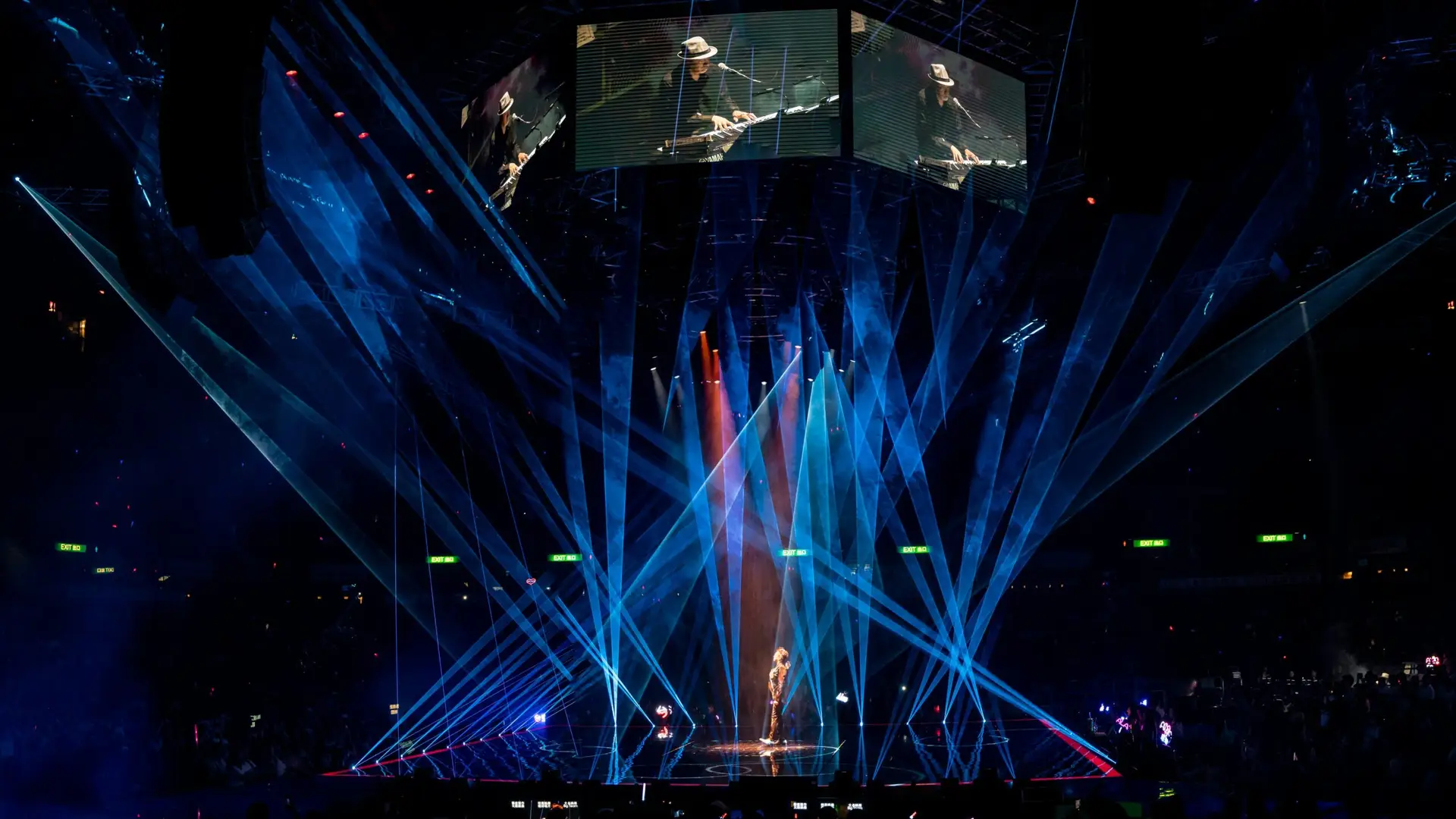
3. CE-compliant theater-grade silent moving heads:Color Consistency [4]
Why emphasize CE-compliant theater-grade silent moving heads? Because lighting designers demand extreme consistency in TM-30-18 and TLCI.
Reference: “The Color Vector Graphic provides a visual representation of hue and saturation changes… ensuring consistency across different batches of luminaires.” —— IES TM-30-18 Standard Description.
Since fixtures are composed of many LED beads, using different batches can result in subtle color drifts. Under new ERP regulations, energy-efficient LED wash moving heads are now the standard, and CE-compliant units allow us to remotely calibrate Color Temperature (CCT) to ensure seamless integration, even when mixing different beam spot moving heads sourced from China’s stage lighting manufacturing hubs.
Expert Summary
In my view, CE-compliant theater-grade silent moving heads are a guarantee for the art of lighting. In 2026, if your fixtures cannot be configured remotely, you are not just behind the times—you are inviting massive hidden maintenance costs.
About the Author:
Eason (Yifan) Chen
Stage Lighting Expert & Digital Strategist
With 15+ years of industry expertise, Eason Chen is a leading authority in stage lighting and digital manufacturing.
References & Data Index:
[1] CCNEAC: Convention Collective Nationale des Entreprises Artistiques et Culturelles – Official French regulations on stage technician salary standards.
[2] ANSI E1.20 – 2010: Entertainment Technology – Remote Device Management over DMX512 Networks.
[3] ESTA: Application Guide for Status Monitoring and RDM Feedback.
[4] IES TM-30-18: Method for Evaluating Light Source Color Rendition.