
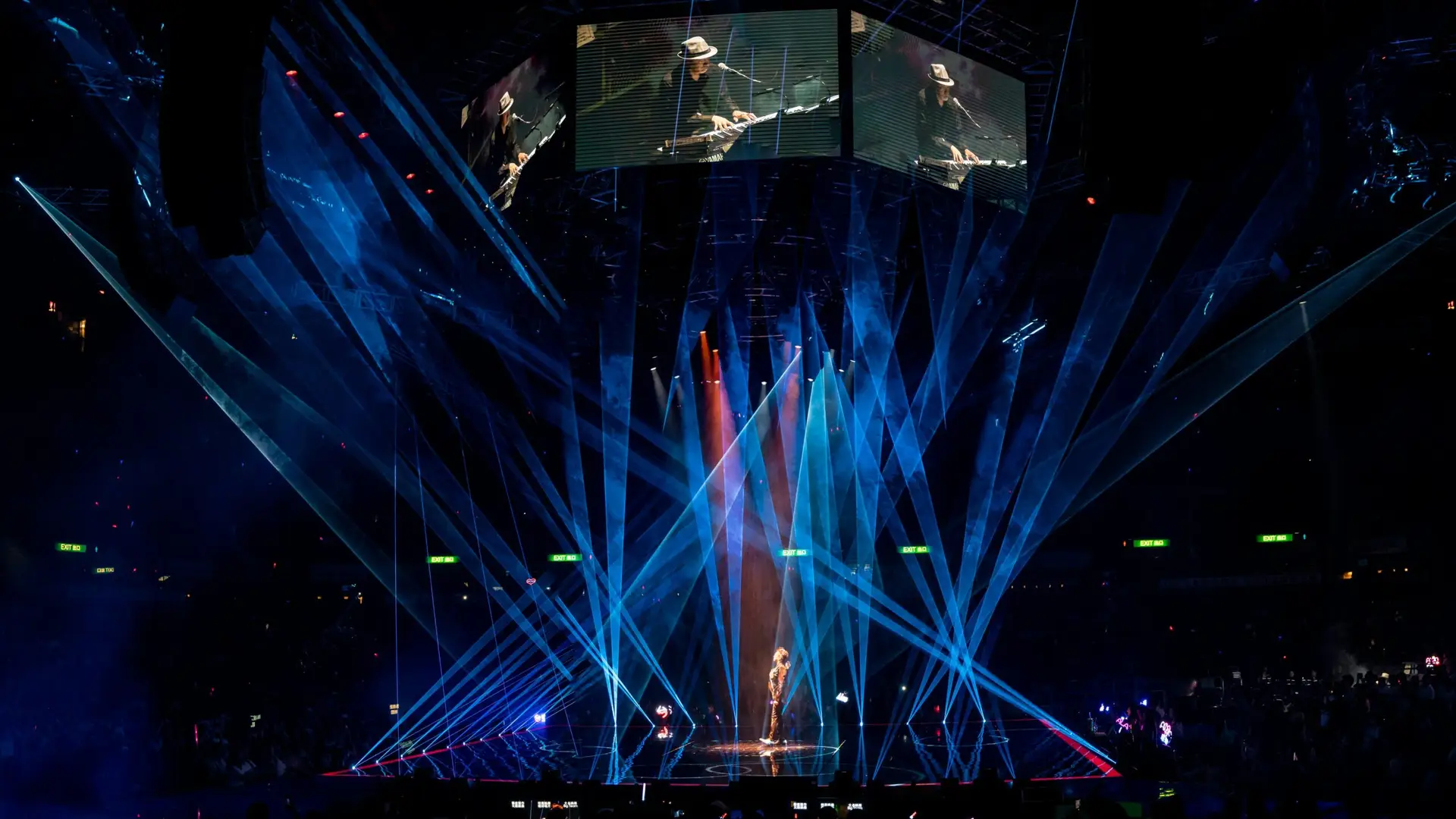
Lighting Blog
How CE-Compliant Theater-Grade Silent Moving Heads Create the Ultimate High-End Indoor Symphony Concert Experience?

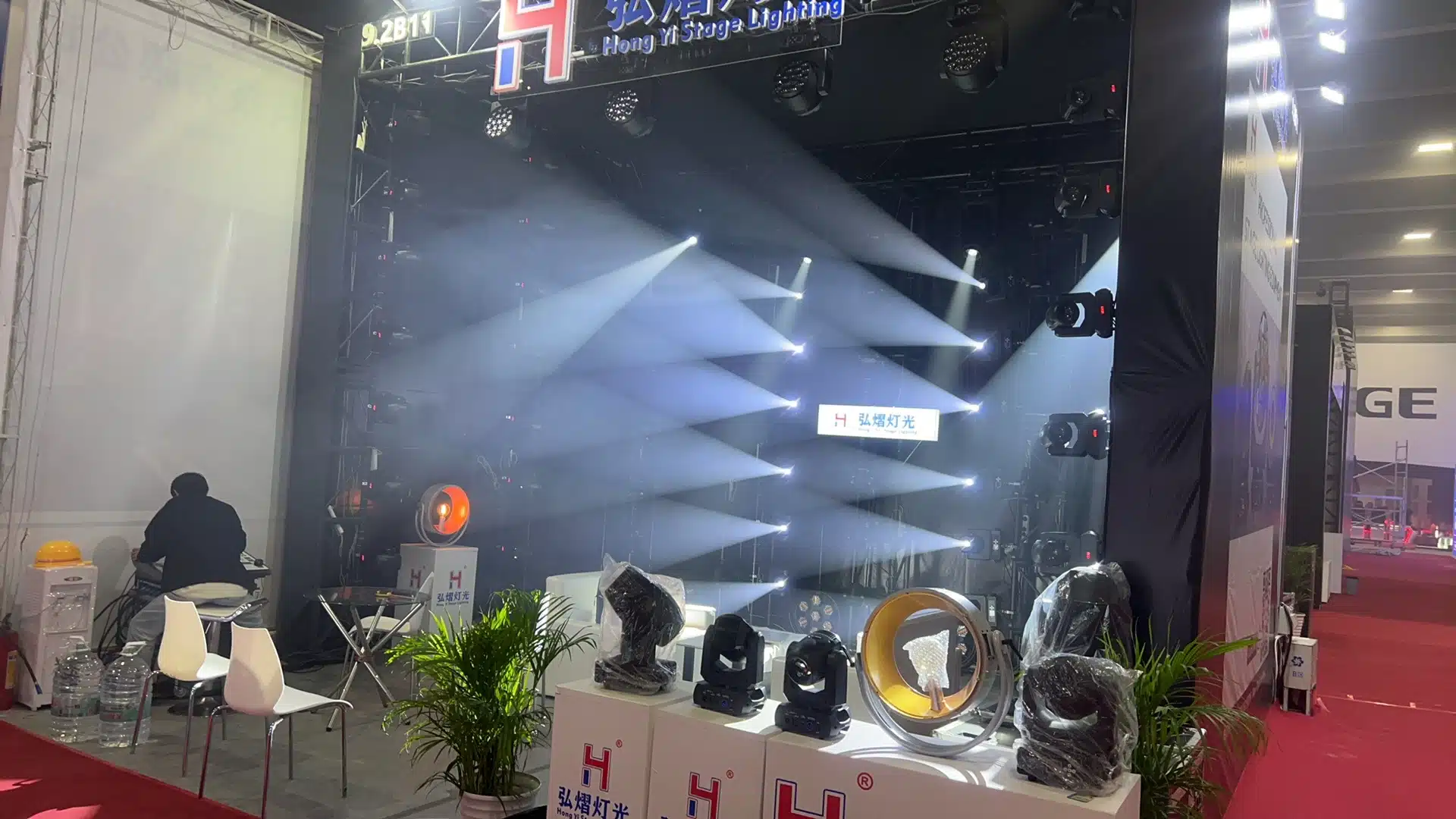
As a lighting engineer with ten years of experience in the stage lighting industry—and having traveled frequently between China and France—I am often asked a question by a colleague in Paris: “Since they are all LED moving heads, why is the barrier to entry so high for top-tier French theaters like the Palais Garnier?”
The answer lies not in the brightness of the light, but in the “Art of Balance.” France is a market with extremely high demands for artistic detail. It is not enough for a fixture to be a CE-compliant theater-grade silent moving head; it must meet high standards across several specific dimensions.
I. Strict Noise Level Requirements for French Theaters [1]
According to the French NF S 31-010 standard, the background noise in theater auditoriums must be controlled between 25-30 dB(A).
“Conformément aux recommandations issues de la norme NF S 31-010 et aux exigences de confort acoustique des salles de spectacle, le niveau de bruit de fond dans la zone du public doit être maintenu dans une plage comprise entre 25 et 30 dB(A).” —— French NF S 31-010 Standard [2]
Notably, L’Arrêté du 23 janvier 2019 [3] has reinforced these regulations. Consequently, French theaters must utilize CE-compliant theater-grade silent moving heads that offer superior sound insulation and minimal self-noise.
Measured Indicators:
What kind of acoustic performance defines CE-compliant theater-grade silent moving heads? Based on my on-site testing experience, a true “theater-grade” fixture, when running at full power, should not exceed a noise level of 28-30 dB(A) at a distance of 1 meter from the head.
There is a significant technical barrier here: manufacturers cannot simply turn off the fans to reduce noise. Instead, they must employ heat pipe conduction combined with large-area superconducting aluminum heat sinks, paired with large-diameter, low-speed silent fans.
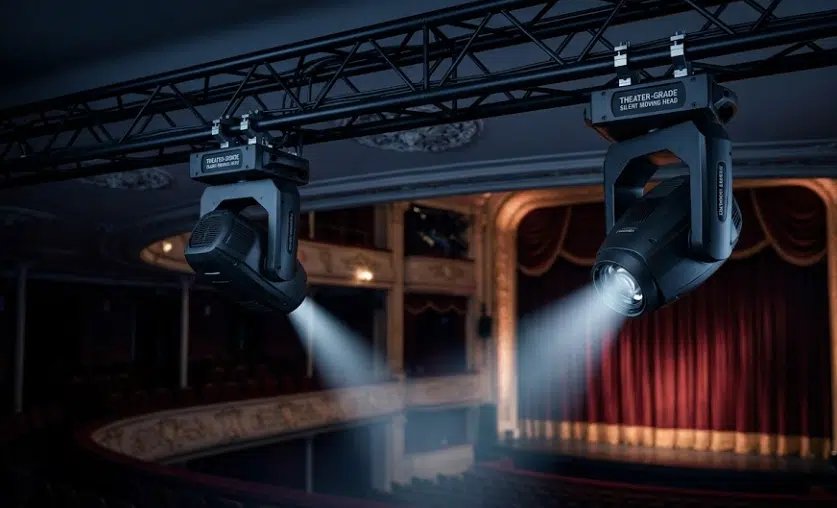
II.Theater-Grade Moving Heads:High-Fidelity Color Rendering for Actors and Costumes [4]
French lighting designers possess an extremely discerning aesthetic. This tradition is deeply rooted, dating back to the “Plan Lumière” (Urban Lighting Plan) established in Lyon in 1989.
In France, there are specialized unions (such as ACE – Association des Concepteurs Lumière et Éclairagistes [5]), and many elite designers graduate from top art academies like ENSATT, where they receive rigorous education in color science and theatrical aesthetics.
For French designers, light is a “narrative language.” It is not merely about “illuminating” an object, but using light to express emotion. Lighting design in France is a legally protected and highly recognized profession.
Measured Indicators:
CRI (Ra) ≥ 95: According to my tests, this ensures that the colors of the actors’ costumes do not shift, allowing the audience to remain fully immersed in the performance.
R9 (Deep Red Rendering) ≥ 90: This is vital for making human skin tones appear ruddy and natural. This level of color fidelity is equally critical in floral stage designs; for those working in similar artistic environments, our guide on how to choose the most suitable budget LED lights for a floral stage offers practical insights into balancing cost with aesthetic warmth.
TLCI ≥ 97: Essential for 4K filming or high-definition broadcasting, ensuring that no complex color correction is required in post-production [6].
Smooth Spectrum: The CNC [7] explicitly states that professional CE-compliant theater-grade silent moving heads must possess a smooth spectral distribution to maintain visual depth.
III. Electrical Safety: CE Certification is Mandatory [8]
In France, if a fixture lacks CE certification (specifically the EN 60598-2-17 standard), insurance companies may refuse to underwrite the performance.
Hard Technical Indicators:
EMC (Electromagnetic Compatibility) EN 55015: Fixtures must not generate high-frequency electromagnetic interference, avoiding disruption to sensitive wireless microphones and communication systems within the theater.
LVD (Low Voltage Directive) EN 60598-1: Must feature excellent grounding protection and double insulation.
Flicker-Free: The PWM dimming frequency must reach 15,000Hz – 25,000Hz or higher.
EN 60598-2-17 (Particular Requirements for Stage Lighting): Must include secondary suspension points capable of withstanding 10 times the impact of the fixture’s weight, along with barriers to prevent the scattering of fragments [9]. Maintaining these high-precision systems is critical; should you encounter technical disruptions, our guide on how to fix common moving head error codes will assist you in troubleshooting resets or motor failures swiftly. While theater fixtures prioritize indoor safety, planners organizing outdoor celebrations should consult our expert tips on choosing professional outdoor LED Par lights for weddings to ensure full weather protection without compromising performance.
CE-Compliant Theater-Grade Silent Moving Heads:Expert Summary: Pitfall Prevention Guide
If you are currently procuring such stage lighting products, always insist on obtaining authentic test reports from stage lighting manufacturers. Furthermore, in the French market, RDM (Remote Device Management) is a must-have feature for efficient management. For commercial environments, you might also refer to our 2026 procurement guide for beam/spot moving heads to see how theater-grade standards differ from high-output club requirements. For managers overseeing diverse venues, our 2026 bulk purchasing guide for moving heads provides solutions across 10 key applications. If your production requires a classic aesthetic, understanding how to choose retro-effect stage moving head lights can help you balance high-tech performance with vintage visual warmth.
About the Author:Eason (Yifan) Chen
Stage Lighting Expert & Digital Strategist
With 15+ years of industry expertise, Eason Chen is a leading authority in stage lighting and digital manufacturing. A regular technical consultant and contributor at premier global trade shows—including Prolight + Sound (Frankfurt & Guangzhou) and LDI (Las Vegas)—he specializes in bridging the gap between cutting-edge DMX protocols and scalable manufacturing efficiency.
References and Data Index:
[1] Code de l’environnement, Article R571-25 to R571-27 (French environmental law regarding noise in public places).
[2] NF S 31-010: Acoustique – Caractérisation et mesurage des bruits de l’environnement (French national standard for environmental noise measurement).
[3] L’Arrêté du 23 janvier 2019: Decree concerning noise limits for venues open to the public broadcasting amplified sound.
[4] Plan Lumière de la Ville de Lyon (1989/2005) – Reference standard for French urban lighting design.
[5] ACE: Association des Concepteurs Lumière et Éclairagistes (Official guidelines of the French Association of Lighting Designers).
[6] EBU Tech 3335: Methods for evaluating the colorimetric quality of white light sources (TLCI).
[7] CNC: Centre National du Cinéma et de l’image animée – Recommendations on spectral distribution for digital recording light sources.
[8] Directive 2014/35/EU (LVD) & Directive 2014/30/EU (EMC): Mandatory EU market access directives.
[9] EN 60598-2-17: Luminaires – Particular requirements – Luminaires for stage lighting, television and film studios.