
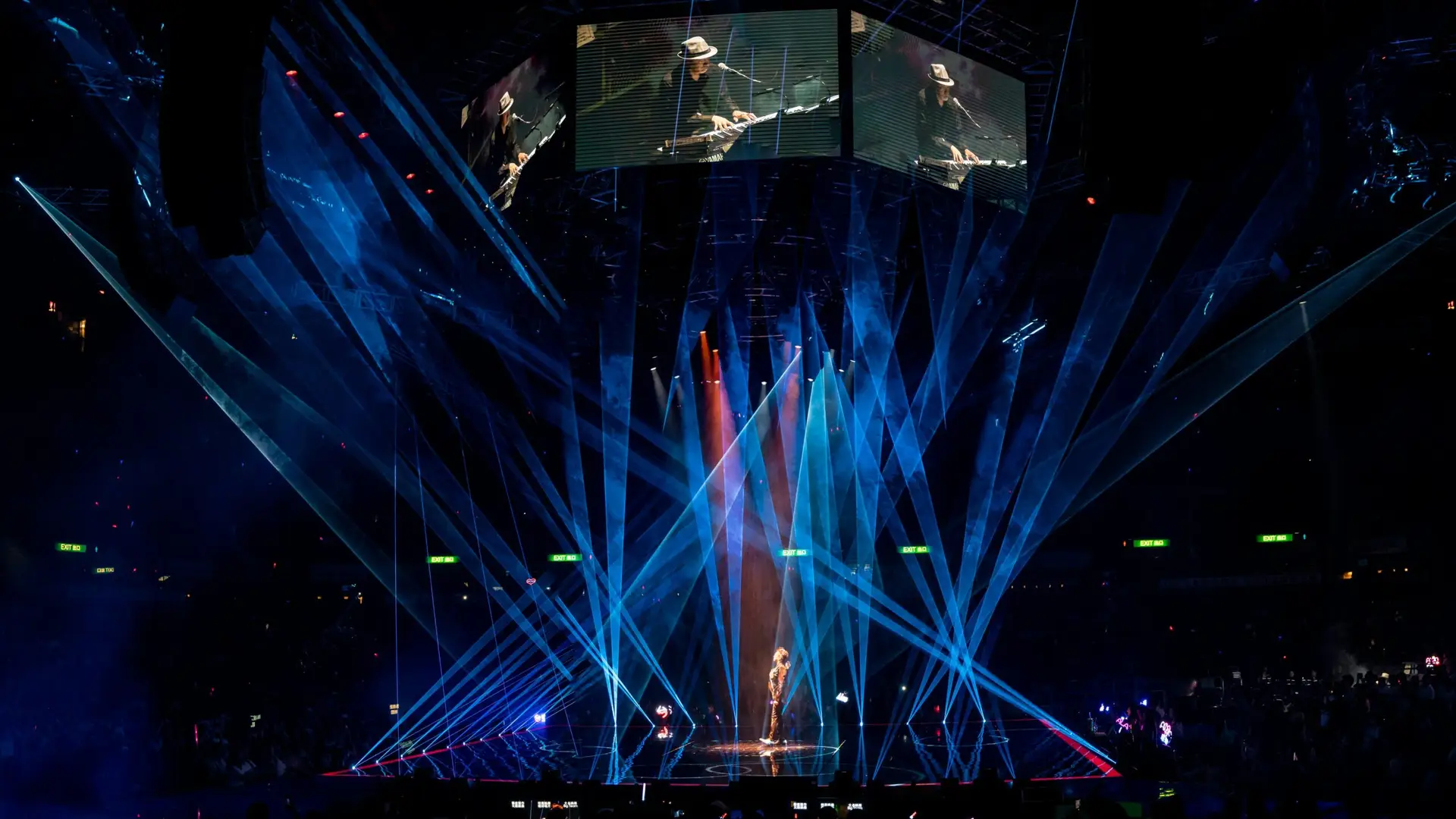
The Ultimate Guide to DJ Stage Lighting Color Schemes: 3 Steps to Rescue a Cold Dance Floor

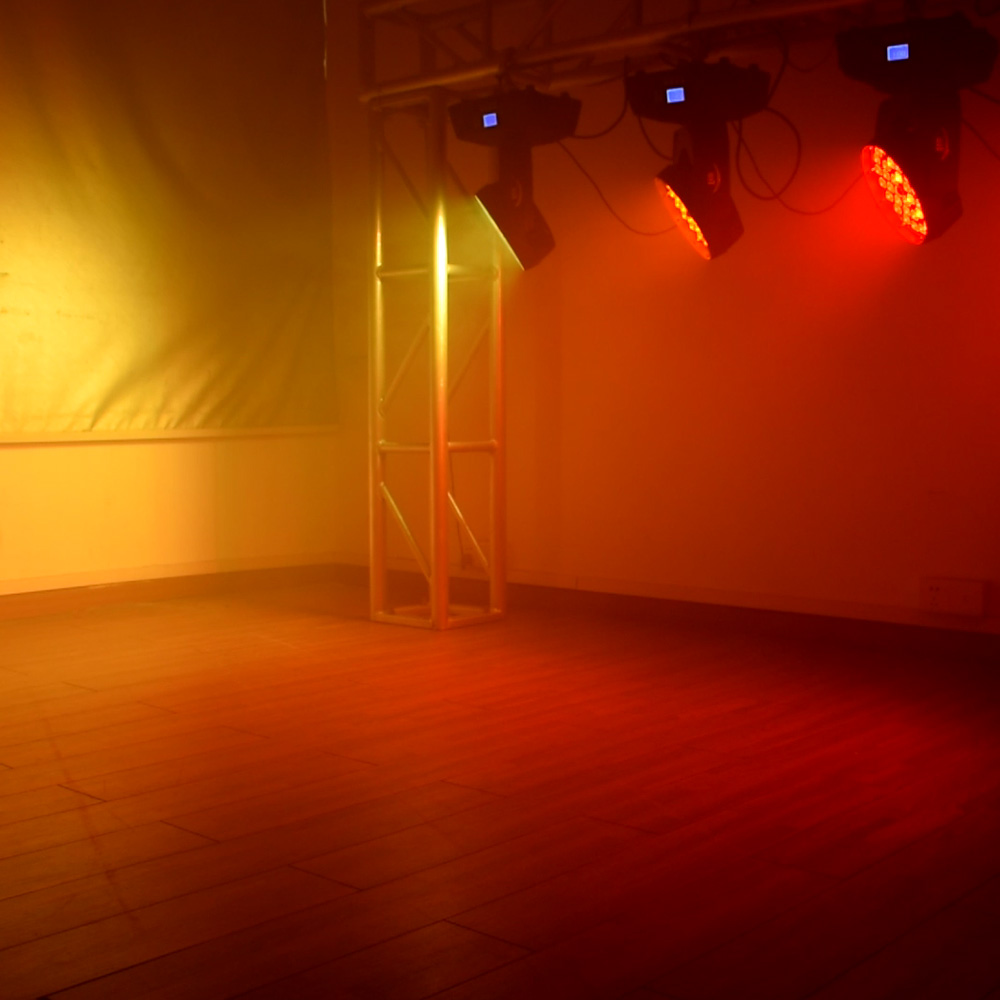
In the nightclub world, the most elite DJs don’t just rely on heart-pounding music—they lean on the intense visual impact of stage lighting. Whether shocking or psychedelic, these atmospheres are designed to evoke an emotional response.
Guests visit clubs for an exceptional atmosphere. When a dance floor feels “dead,” it is often due to a lack of ingenuity in lighting design. As legendary lighting designer Patrick Woodroffe puts it, the goal is to “manipulate the audience’s subconscious.”
How can you use LED color design to precisely trigger the crowd’s emotions? Master these “Color Psychology” techniques to give your venue a soul and keep customers coming back.
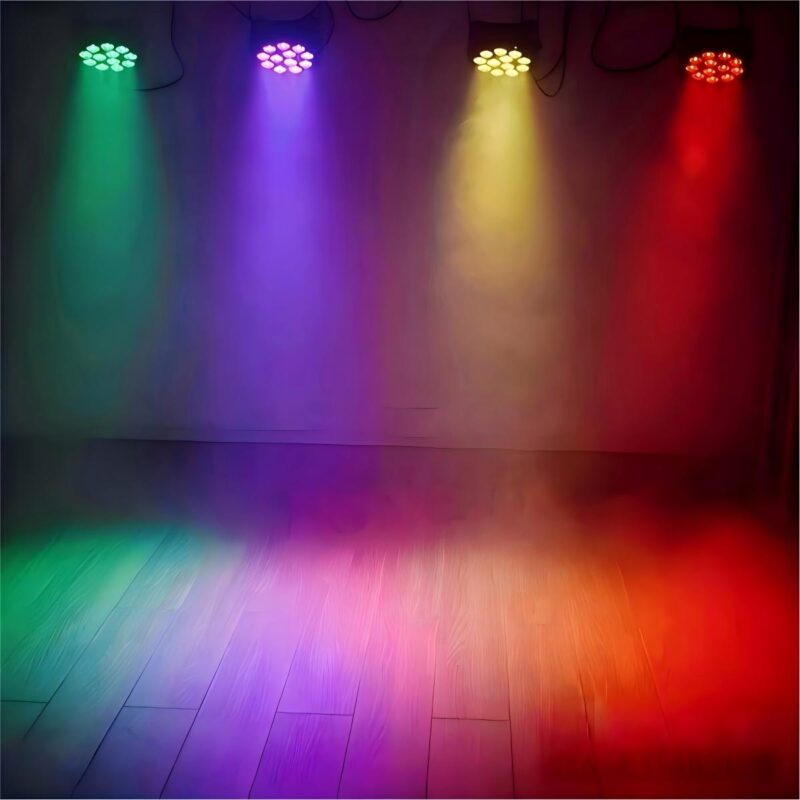
I. Color Psychology: How DJ Stage Lighting “Hypnotizes” the Brain
We are often drawn to advertisements in busy commercial districts, not just because they are bright, but because they use psychological cues. Similarly, stage lighting isn’t just a visual effect; it is a psychological trigger.
Patrick Woodroffe, who has designed lighting for the Rolling Stones and the London Olympics, stated in a Daily Telegraph interview: “The real power of lighting color is not what color it is, but how it manipulates the audience’s subconscious through contrast.”
Here is how specific colors influence the human psyche:
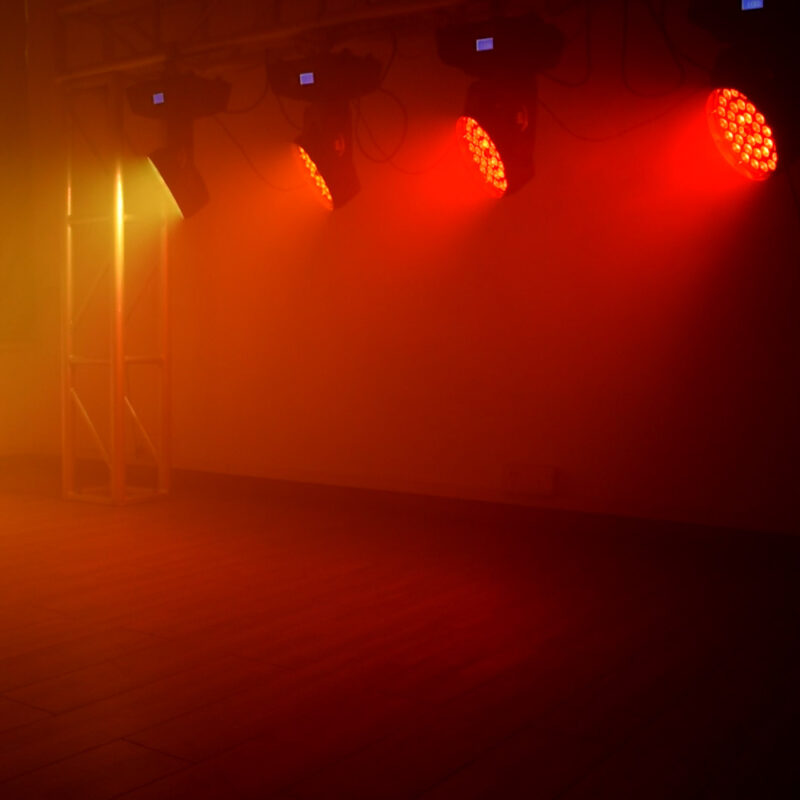
- Red: Represents primal impulse, heat, and aggression. Ideal for Hardstyle or Techno sets to instantly trigger an instinctive desire to move. According to the “World’s Favourite Color” study by the University of Sussex and G.F Smith, red can increase adrenaline levels by up to 15%.
- Blue: Represents futurism, technology, and depth. Commonly used in Deep House or transitional segments to create a psychedelic, immersive feeling. The same Sussex study found that Navy and Teal significantly lower heart rates, aiding immersion.
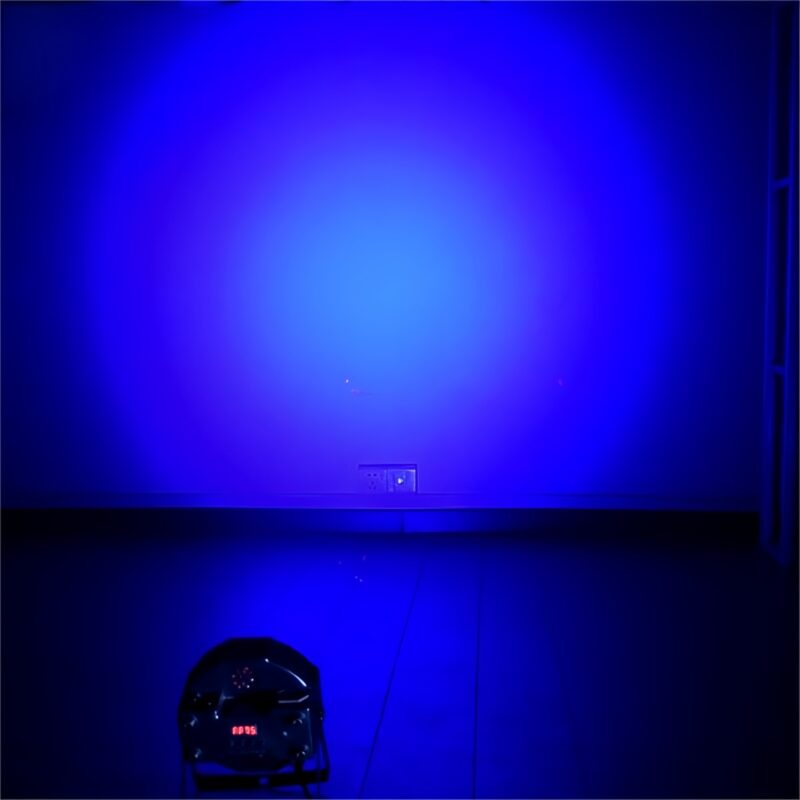
- Purple: The ultimate symbol of allure and luxury, and a dominant trend for 2026. Perfect for Trap and R&B, creating a hazy, intimate atmosphere.
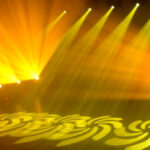
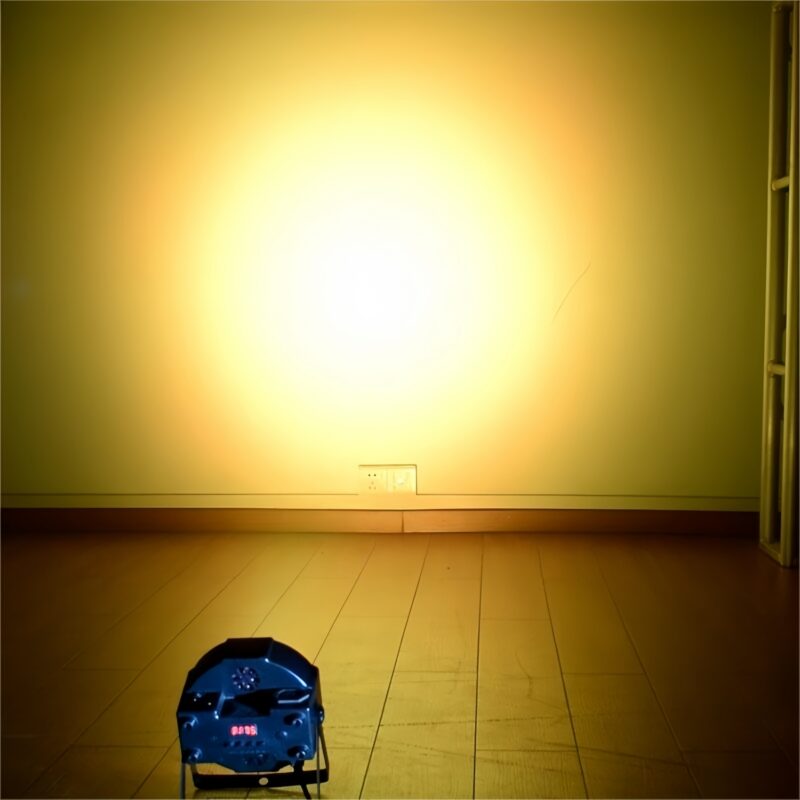
- Yellow/Amber: Symbolizes a burst of energy. Pairs perfectly with fast-paced Drops to mimic a sudden explosion of sunlight.
II. The King of DJ Stage Lighting Color Combinations
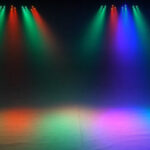
To elevate your club’s status, avoid the outdated “full RGB” look (turning red, green, and blue on all at once). Instead, try these classic dual-tone or triple-tone palettes:
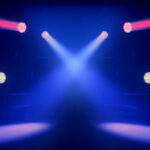
1. The Cold Futurist: Cyan + Magenta
- Genre: Future Bass, Melodic Techno.
- Effect: A Cyberpunk aesthetic with high-end visual appeal.
2. Violent Aesthetics: Crimson + White Strobe
- Genre: High-intensity Drops; the peak of hormonal engagement.
- Technical Insight: Reports from Lighting & Sound International (LSi) on EDM trends highlight that White Strobes function by cutting through the Persistence of Vision on the retina. This forces the brain to “fill in” the gaps during the dark intervals, creating an illusion of time standing still and heightening the euphoria of the Drop.
3. Deep Sea Mystery: Navy + Lime
- Genre: Psychedelic Electronic themes or mid-set “chill” breaks.
- Effect: Kinetic yet non-oppressive, suitable for long-duration grooving.
III. Rhythm and Tempo Control
At an IALD (International Association of Lighting Designers) forum, senior club designers noted: “Visual Saturation is a mood killer. If you use high-intensity warm colors from the start, the audience’s retinal cones will tire quickly.” Research from Live Design Online confirms that venues using “Progressive Color Storytelling” see significantly longer guest stay-times, which directly boosts beverage sales.
- The Build-up: Start with single cool tones or dark shades. Keep movement slow to create a sense of tension. Psychologically, this “suppression” is necessary to make the eventual explosion of light feel more powerful.
- The Drop: At the peak moment, switch instantly to high-contrast warm colors or high-frequency white strobes. The larger the jump in the color spectrum, the stronger the sensory impact.
- The Outro: Gradually return to Amber or Warm White. Allow the senses to land softly after extreme excitement, giving guests space for social interaction.
IV. Pro-Tips: Why Your Stage Lighting Looks Cheap
- Avoid “Color Hoarding”: Using more than 4 colors simultaneously creates a disorganized mess and ruins the design.
- Master the Dark: Great lighting designers know the value of “negative space.” Without the contrast of shadows, light has no power.
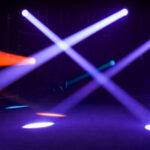
- Beam Angles & Atmosphere: Use Haze machines to make light visible. Narrow-angle LED moving heads can “cut” through the space to create 3D geometric shapes. Visual artist Beeple noted in an interview that cold-toned beams have a stronger “space-cutting” feel than warm tones, which is essential for creating a psychedelic matrix in tight spaces.
Disclaimer:
The technical data and industry citations provided in this article are for informational purposes only. Please refer to the official websites of the respective organizations (IALD, LSi, etc.) for the most current information. This content represents industry knowledge sharing and does not represent the official position of DJclub.
More Related Articles
- Guide to China Stage Lighting Manufacturers & Sourcing Bases
- Lighting Solutions for Outdoor Immersive Shows: Beating Extreme Weather
- Customized Lighting for Bars and Nightclubs: Creating the Ultimate Atmosphere
- What is DMX512? The Ultimate Guide to Stage Lighting Control
- Modern Church Lighting: Enhancing Congregation Engagement
- Custom Stage Lighting vs. Off-the-Shelf Fixtures: Which is Right for You?
- Multi-Function Hall Stage Lighting Configuration: A Versatile Solution Guide
- LED Par Light vs. Moving Head Beam Light: Selection and Combination Guide
- Mastering Your Stage Lighting Budget: 5 Sourcing Pitfalls to Avoid
- Stage Lighting Maintenance Manual: 6 Secrets to Extending Fixture Lifespan
- Nightclub Stage Lighting Buying Guide: How to Save 30% on Your Budget
- 2026 Guide to Finding Stage Lighting Factories: Secure Direct Factory Pricing