
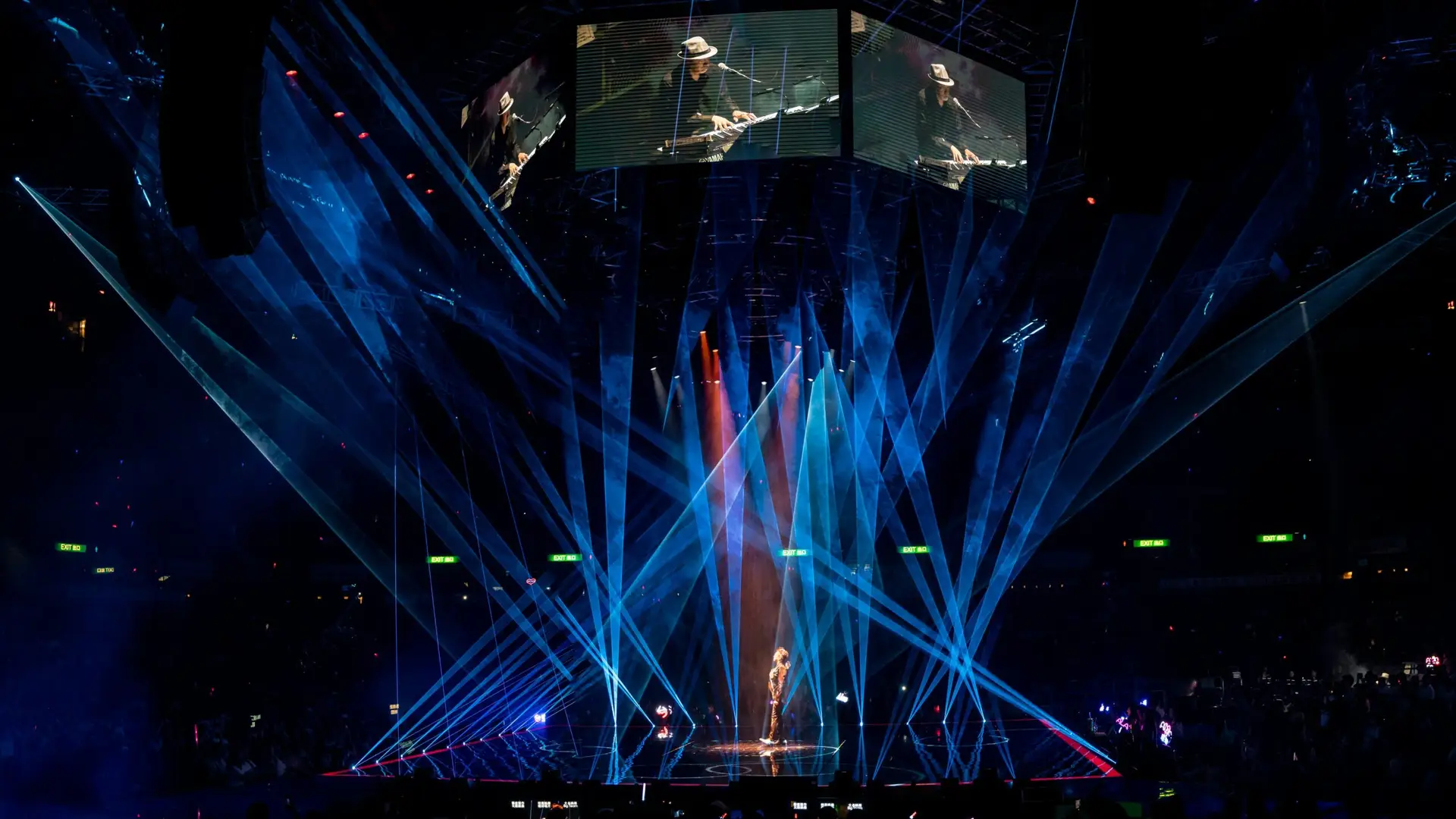
How to Configure Multi-Function Hall Stage Lighting? A Versatile Solution for Meetings, Reports, and Performances


How to Configure Multi-Function Hall Stage Lighting? In modern enterprises and institutions, the multi-function hall is a vital space for professional activities such as academic reports and important annual meetings.
However, many venues face a common challenge: the lighting is often too harsh or dim in “Meeting Mode,” yet lacks the necessary atmosphere and impact when switching to “Performance Mode.”
How do you build a professional lighting system that adapts effortlessly to any scenario? When configuring stage lighting for a multi-function hall, you need a solution that balances meetings, reports, and performances.
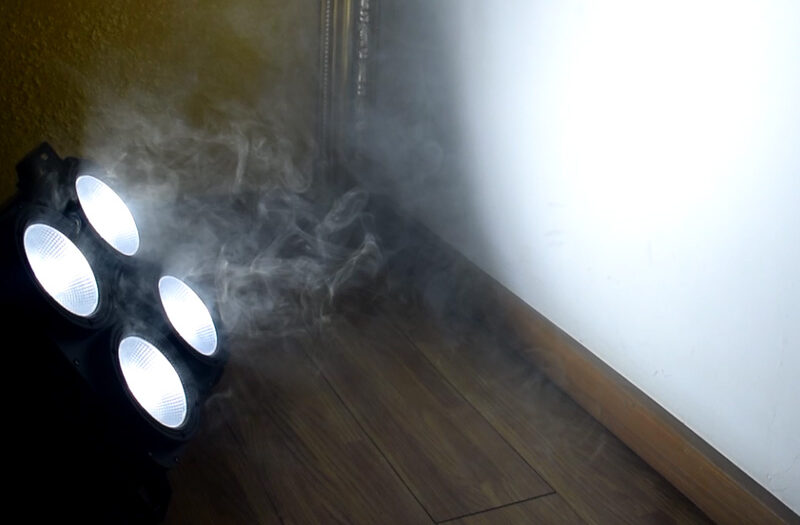
I. Three Core Requirements for Multi-Function Hall Lighting
To satisfy diverse needs, lighting design must achieve a balance across three key dimensions:
- Clarity of Communication (Meeting Mode): This is the foundation. Lighting must ensure that the rostrum and the speaker’s face are lit evenly and softly, without harsh shadows. For video recording or live streaming, the picture must be clear, flicker-free, and offer true-to-life color reproduction (High CRI), which is essential for effective information delivery.
- Atmospheric Creativity (Performance Mode): When the space transitions to a show or celebration, the lighting needs powerful emotional rendering capabilities. It should transition rapidly from bright white light to rich colors, using light and shadow to create layers and depth on stage, igniting the atmosphere.
- Ease of Operation (Management Mode): A professional system shouldn’t require a dedicated lighting engineer for every event. Ideally, any authorized personnel should be able to trigger preset scenes via an intuitive interface (such as a wall panel or tablet) to achieve instant mode switching.
II. How to Configure Multi-Function Hall Stage Lighting? Recommended Core Equipment Configuration
To achieve these goals, we recommend the following market-proven equipment combination to provide a solid technical foundation:
- Base Lighting Layer: LED Profile Lights + Recessed Tri-color Lights
- Usage: Precise front lighting (Face Light) and top lighting for the rostrum area.
- Key Selection Factor: Always choose sources with a high Color Rendering Index (CRI ≥ 95) to ensure natural skin tones. LED Profile lights can precisely “cut” the beam shape, ensuring light is focused only on the target (like the lectern) without washing out the projection screen.
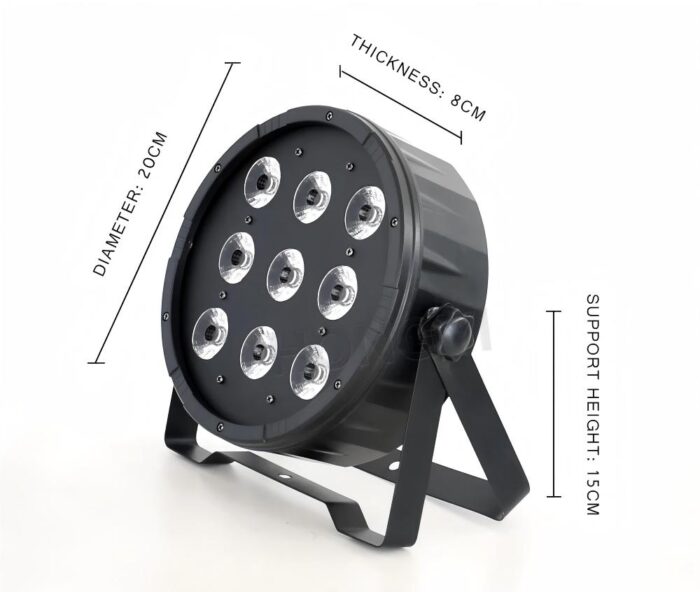
- Ambient Rendering Layer: High-Power LED PAR Lights
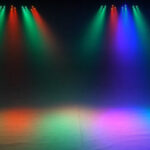
- Usage: Large-area color washing and ambient rendering for the entire stage.
- Key Selection Factor: RGBW (4-in-1) or higher-grade LEDs are recommended. This allows for millions of vivid colors for performances, while also providing high-quality pure white light as supplemental ambient lighting during meetings.
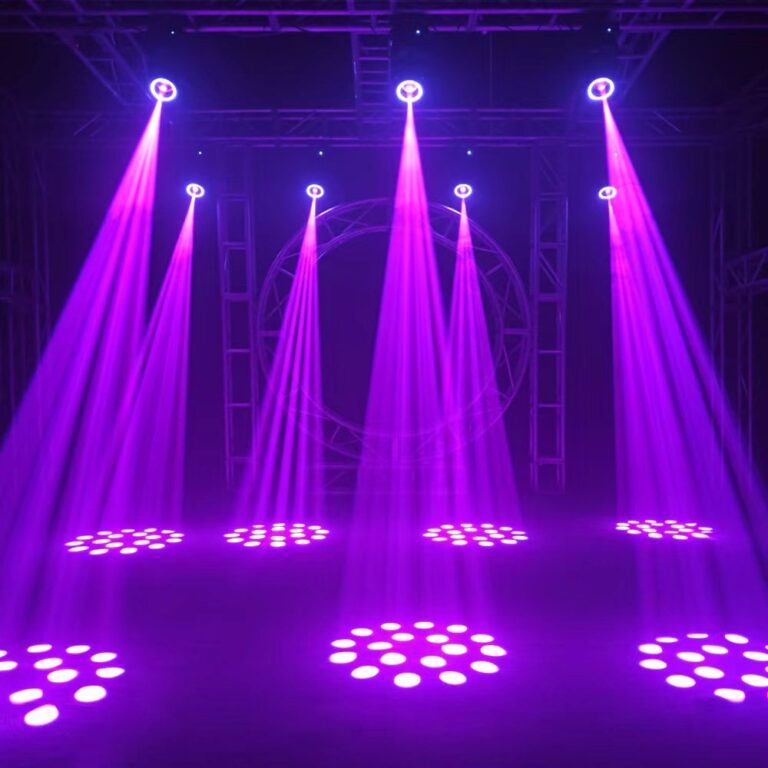
3.Dynamic Effects Layer: Multi-functional Moving Head Lights
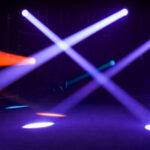
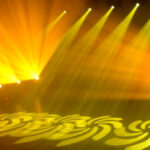
- Usage: Creating visual focus, dynamic beams, and variable patterns—the “soul” of Performance Mode.
- Key Selection Factor: Choose “3-in-1” models (Beam, Spot, Wash). Crucially, since multi-function halls are sensitive to noise, prioritize Silent or Ultra-silent models (operating noise < 35dB) to ensure no interference during quiet academic reports.
4.Intelligent Control Layer: Scenario-based Smart Control System
- Usage: The “brain” of the system, enabling one-touch switching between Meeting, Performance, and Projection modes.
- Key Selection Factor: It should support physical wall panels, touchscreens, and mobile apps with a user-friendly interface and clear logic.
III. Analysis of Three Classic Application Scenarios
With an intelligent control system, you can easily call up pre-configured lighting scenes:
- Scenario A: Formal Meeting / Academic Report
- Lighting Performance: Full power for rostrum front and top lights, set to a neutral white (approx. 4500K) to create a focused, efficient atmosphere. Stage backgrounds use PAR lights for a soft pale blue wash to add visual depth without being distracting.
- Result: Speakers are bright and clear, keeping the audience’s attention while ensuring professional-grade photo and video quality.
- Scenario B: Cultural Performance / Corporate Gala
- Lighting Performance: Front lights are dimmed slightly to focus on performers. Moving head patterns and beams are fully activated, coordinated with LED PAR lights for color “breathing” fades or rhythmic pulsing to create a dynamic visual feast.
- Result: Instantly enhances the venue’s emotional impact, providing an immersive experience for the audience.
- Scenario C: Multimedia Projection / PPT Presentation
- Lighting Performance: The system automatically turns off or heavily dims top and ambient lights near the projection screen to maximize contrast. A single soft front light is kept on the speaker at 30%-40% brightness.
- Result: The audience can see the screen clearly while still being able to see the speaker’s expressions and gestures—balancing information delivery with human connection.
IV. Why Choose DJclub’s Custom Lighting Solutions?
- Professional & Reliable: With over 10 years of R&D and manufacturing experience, all DJclub lighting products carry international certifications (CE, ROHS) and strictly follow EU and US safety standards.
- High Capacity & Fast Delivery: Our 5,000+ sqm modern production base and automated assembly lines feature a monthly capacity of over 5,000 units, efficiently responding to OEM/ODM needs.
- Full-Process Management: From requirement analysis and solution design to sampling and quality control, we implement highly standardized project management.
- Global Service Support: Serving 5,000+ customers across 20+ countries. We offer 7-day hassle-free returns (for non-custom items), a 2-year warranty, and support via remote debugging and video guidance.