
2026 Guide to Finding Stage Lighting Factories: Secure Direct Factory Pricing

In any international trade sector, the price difference between sourcing from a trading company versus a direct factory is night and day. According to Gartner’s Supply Chain Strategy Report, every additional distribution tier in a global procurement chain increases the Total Cost of Ownership (TCO) by an average of 15% to 22%.
In the stage lighting equipment sector, this markup is often significantly higher due to the inclusion of after-sales service reserves. According to the 2024-2025 White Paper on China’s Entertainment Equipment Export Trade, traders incur heavy costs through massive advertising on platforms like Google Ads and Alibaba International, alongside financing and service premiums. Furthermore, Hult (2018) in Global Sourcing Strategy points out that reducing distribution layers can directly cut procurement spending by 25% to 40%.
To put it into perspective: a standard 380W moving head from a trader typically costs at least 30% more than the same unit from an original stage lighting factory—a markup far exceeding other industries. For high-value procurement, this 30% represents a substantial sum. By accessing first-hand information on quality factories, you can save significant capital for your brand. With the abundance of excellent manufacturers today, sourcing from traders is no longer a necessity, and unnecessary procurement costs are simply unwise.
So, how do you avoid the middlemen and connect with manufacturers in Guangdong? Where is the hub for China’s best stage lighting factories?
In 2026, simply Googling “manufacturer” is not enough—many traders pose as factories online. This guide shares proven methods to identify genuine manufacturers and secure the best possible pricing.
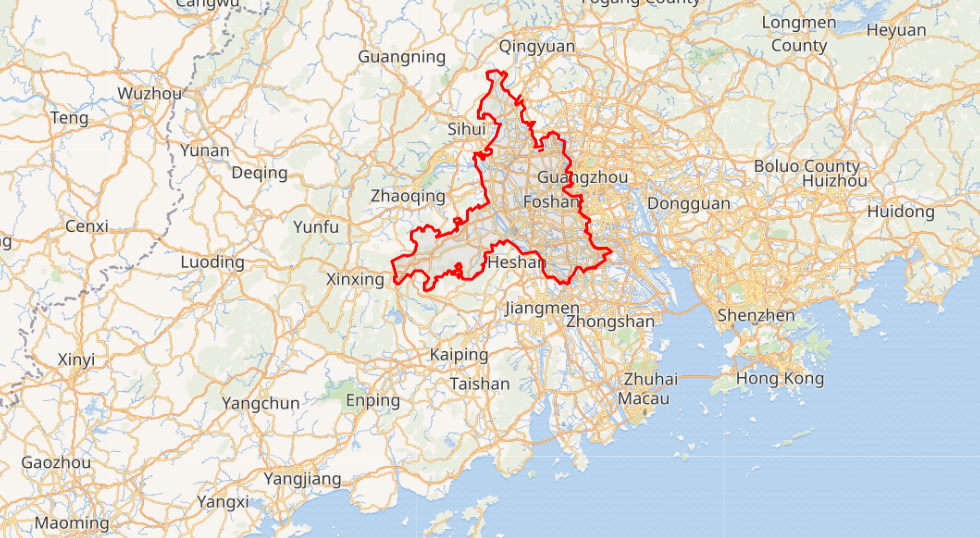
I. Stage Lighting Hubs: Focus on the “Two Districts and One City”
Nearly all of China’s stage lighting production is concentrated in the Pearl River Delta, offering the best price-to-performance ratio globally. Michael Porter’s The Competitive Advantage of Nations proves that manufacturers within industrial clusters can offer lower floor prices than traders. Additionally, Forbes Business Review has noted that the D2C (Direct-to-Consumer) model is shifting toward B2B industrial procurement; shortening the supply chain isn’t just about price, but also about R&D responsiveness.
Porter’s “Cluster” concept highlights that the Pearl River Delta’s highly concentrated supply chain for components creates “economies of scale.” This allows original factories to maintain a cost structure that decentralized traders cannot match.
When searching for manufacturers, focus on these specific areas:
- Baiyun District, Guangzhou: Located near the city center with higher land costs, factories here focus on mid-to-high-end, customized lighting for large theaters or cultural tourism projects.
- Huadu District, Guangzhou: Home to large-scale stage lighting production bases known for export-grade moving heads and comprehensive supporting facilities.
- Nanhai District, Foshan: Due to lower labor and land costs, this area hosts massive manufacturing bases with high levels of automation. Foshan factories offer the highest cost-efficiency for large-scale global procurement without compromising quality.
Representative Enterprise in Foshan:
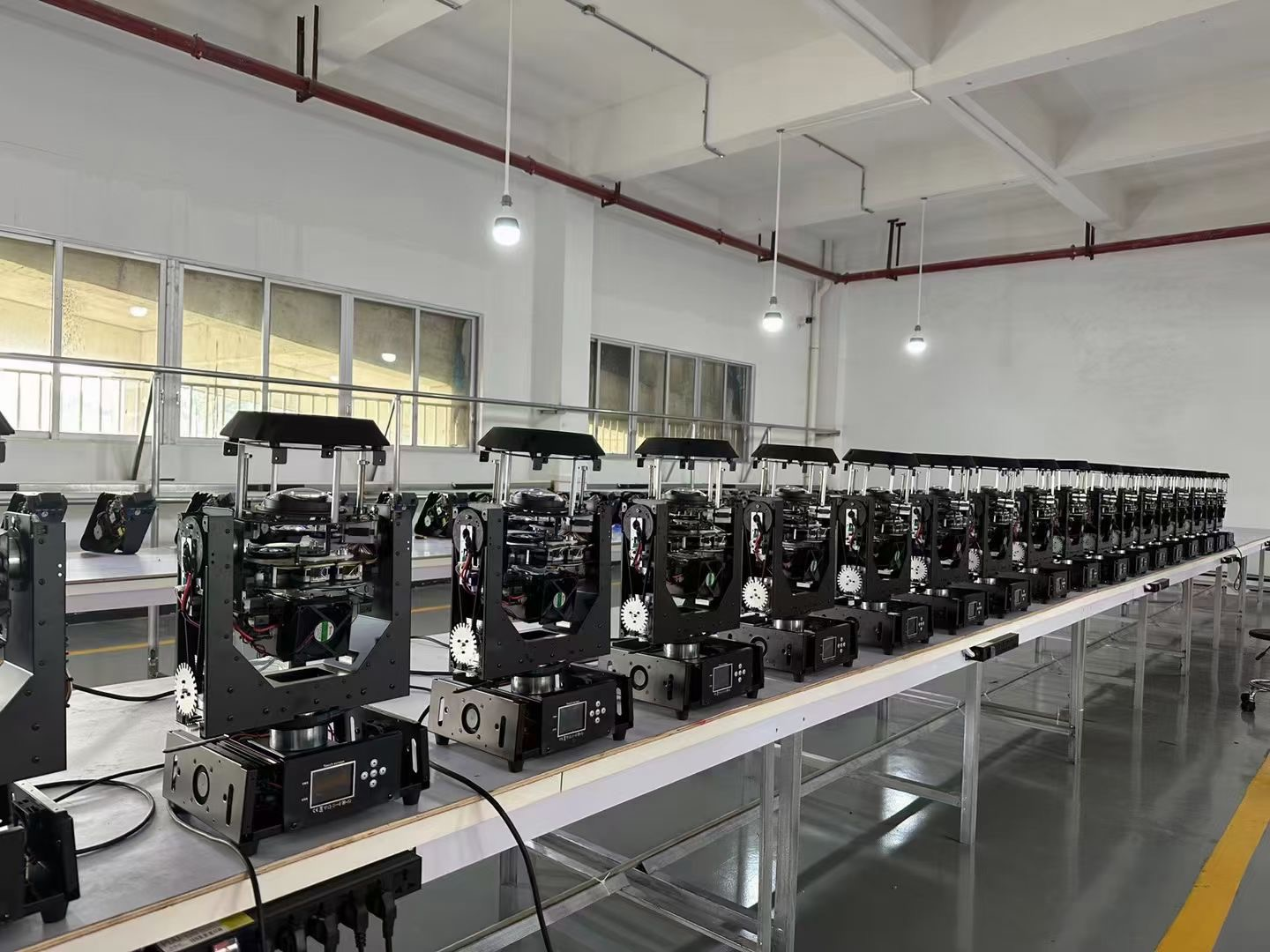
DJclub Light, a brand under Hongyi Lighting, manufactures products that are CE and RoHS certified, meeting both EU and US safety standards. With an industrial base exceeding 5,000 square meters, automated assembly lines, and a monthly output of over 5,000 units, DJclub offers significant production capacity.
Their prices are notably lower than comparable brands in Guangzhou, while maintaining superior quality, a 2-year warranty, and a 7-day return policy for non-customized products.
Contact imformations:
Building B, No.1 Xinfeng Road, Songxia Industrial Zone, Nanhai District,
 Address:Foshan City Guangdong China
 Whatsapp: (+086) 18970434078
 Email: support@djclublight.com
II. How to Identify a Real Factory: 3 Pro Tips
Many trading companies spend a few hundred dollars to create websites that look like “massive factories.” Use these three methods to filter them out:
- Verify the Business License: Search on Tianyancha (China’s authoritative corporate database). A genuine factory’s scope of business must include terms like “Production, Manufacturing, or Processing.” If it only lists “Wholesale or Trade,” it is a middleman.
- Request a Live Video Call: Ask for a live tour of the assembly line, aging test room, and warehouse. If they dodge the call or only send pre-recorded videos, they are likely a trading house.
- ISO Certification Audit: Genuine factories hold ISO9001:2015 certifications. According to ISO official guidelines, certification is based on a specific “Production Address” audit. On the IQNet platform, the registered address should be a “Factory/Industrial Park,” not an “Office/Business Center.”
Pro-Tip: Experts also check the 18-digit Unified Social Credit Code. Using customs databases like Panjiva or ImportGenius, you can verify if a company has records of buying raw materials (LED chips, metal aluminum) and selling finished goods. As a Panjiva senior analyst stated: “Checking the Shipper on the Bill of Lading against the manufacturer is the most effective way to prevent middlemen from taking a cut.”
III. Negotiating Prices: Avoid the “Low-Price Trap”
Direct sourcing doesn’t mean “the cheaper, the better.” A technical columnist for Lighting & Sound International (LSi) warned: “When sourcing from factories, one must distinguish between ‘production cost advantages’ and ‘material degradation.’ Real manufacturers reduce costs through automation; small workshops cut prices by sacrificing motor precision and cooling materials.”
Watch out for these “hidden costs” during negotiations:
- Motors and Fans: Ensure the use of three-phase motors (for smooth movement) and silent fans.
- Warranty Terms: Genuine manufacturers confidently offer 2-3 year warranties on core components and provide detailed DMX charts and library files.
- Optics: Many low-cost lights use plain glass or acrylic lenses that yellow and lose light efficiency. High-quality factories use high-transmittance glass lens groups with Anti-Reflective (AR) coatings.
- Wiring: Inferior wiring becomes brittle and breaks under long-term heat. Ensure the use of shielded cables to prevent signal flickering in large-scale setups.
💡 Essential Questions Before Placing an Order:
- “Do you have an in-house mold development team?”
- “Can you provide third-party test reports for this specific model?”
- “Do you have local service points or spare part hubs in my region?”
- “Is the motherboard aging test conducted under load or no-load, and for how long?”
- “What is the micro-step resolution of your motors? Is there jitter at low speeds?”
- “Is the lens group all-glass, and does it have AR coating?”
- “Beyond CE/RoHS, can you provide energy efficiency reports for specific countries?”
Disclaimer:
The industry data and expert citations provided in this article are for informational purposes only. Please refer to the official websites of the respective organizations for the most current information. This content represents industry knowledge sharing and does not represent the official position of DJclub.
More Related Articles
- Guide to China Stage Lighting Manufacturers & Sourcing Bases
- Lighting Solutions for Outdoor Immersive Shows: Beating Extreme Weather
- Customized Lighting for Bars and Nightclubs: Creating the Ultimate Atmosphere
- What is DMX512? The Ultimate Guide to Stage Lighting Control
- Modern Church Lighting: Enhancing Congregation Engagement
- EDM Stage Lighting Design: Igniting Crowds with Professional Beam Lights
- Stage Lighting Maintenance Manual: 6 Secrets to Extending Lifespan
- LED Par Light vs. Moving Head Beam: A Guide to Selection & Combination
- The Ultimate Stage Lighting Buying Guide: Choosing the Right Equipment
- Configuring Multi-Function Hall Lighting: Solutions for Meetings & Performances
- Custom Stage Lighting vs. Off-the-Shelf Fixtures: Which is Right for You?
- Mastering Your Budget: 5 Sourcing Pitfalls to Avoid
- Lighting Procurement Guide: Top Stage Lighting Manufacturing Hubs in China