
The Ultimate Stage Lighting Buying Guide: How to Choose the Right Equipment for Your Venue

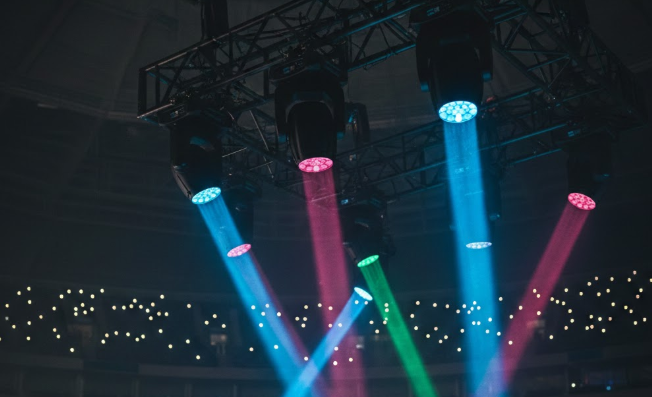
When purchasing stage lighting, it is easy to fall into a common trap: assuming that higher wattage is always better, or that more fixtures automatically result in a more impressive show.
However, professional lighting design is about precise matching, not blind accumulation. A well-executed lighting plan can make a small space shine and bring clarity and depth to a massive arena.
This guide will help you look past common misconceptions and analyze how to select the perfect lighting equipment based on the scale of your venue.
I. The Ultimate Stage Lighting Buying Guide: Small Venues (50–150 m²)
Recommended Lighting Setup:
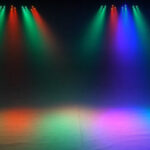
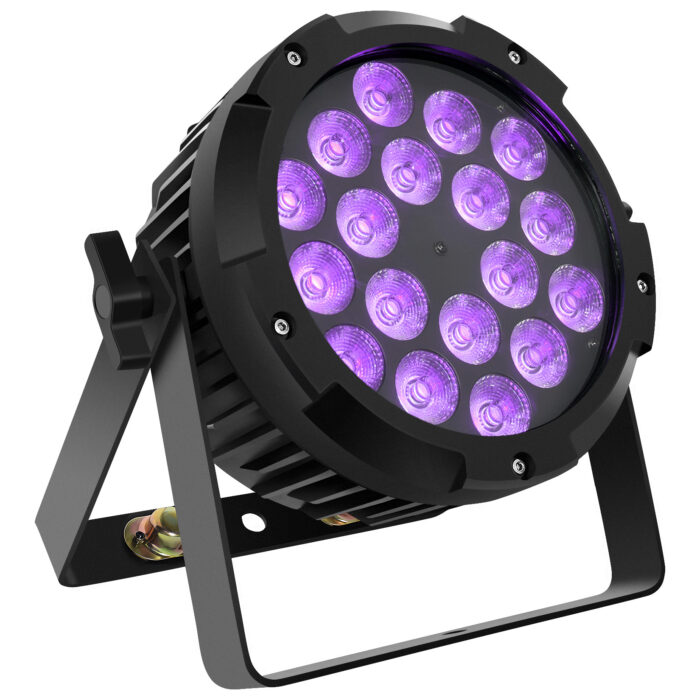
- Foundation: Start with 4–6 LED PAR lights. Opt for RGBW full-color models; these serve as versatile “all-in-ones,” providing soft, bright white light for front-lighting or switching to vibrant colors for atmosphere.
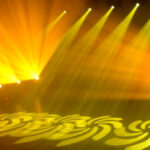
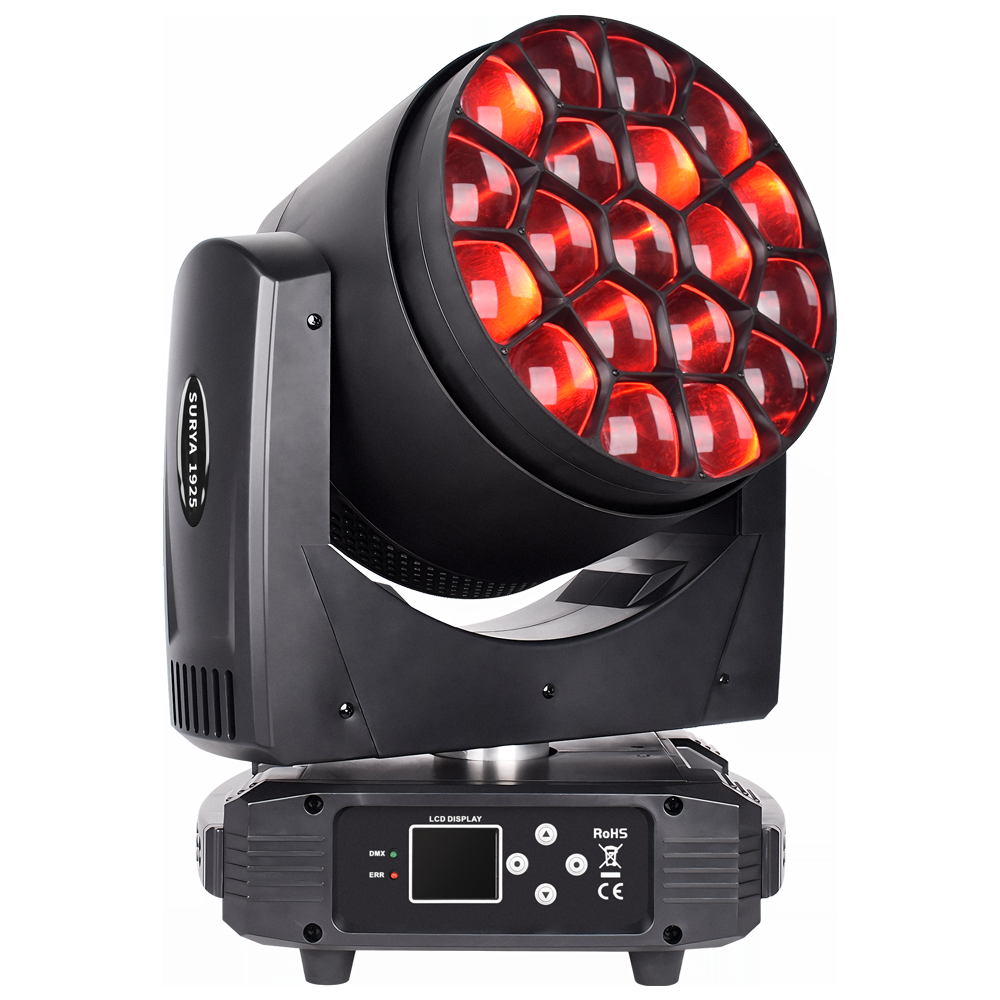
- Dynamics: Use 2 compact Moving Head Spots to break the stillness. The patterns (gobos) and spots they project inject energy and texture into the stage instantly.
- Ambiance: Deploy 2 LED Wall Washers along the backdrop or stage edges. This is the most cost-effective way to create a high-impact atmospheric glow.
- Typical Scenarios: Small bars/lounges, multi-functional meeting rooms, live-streaming studios, and private party spaces.
- Core Challenge: With limited ceiling height (usually 3–4 meters) and restricted space, you must balance functionality with visual comfort while avoiding equipment noise and “clutter.”
Pro Tip: For low-ceiling venues, prioritize “ceiling-mount” installations or lightweight vertical trusses to maximize floor space.
II. Medium Venues (150–500 m²)
- Typical Scenarios: Hotel ballrooms, mid-sized theaters, clubs, and corporate auditoriums.
- Core Challenge: As throw distances increase to 8–15 meters, the demand for brightness and optical quality rises. You need professional gear that can project light accurately over long distances.
Recommended Lighting Setup:
- Key Light: 6–8 LED Profile lights or Long-throw Fresnel lights are essential. They ensure that performers’ faces are clear and evenly lit without glare. Look for a Color Rendering Index (CRI) of 90+ to accurately reproduce skin tones and costume colors.
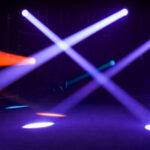
- Impact: 8–12 Moving Head Beams project sharp, powerful rays that cut through the room, creating a high-energy visual experience.
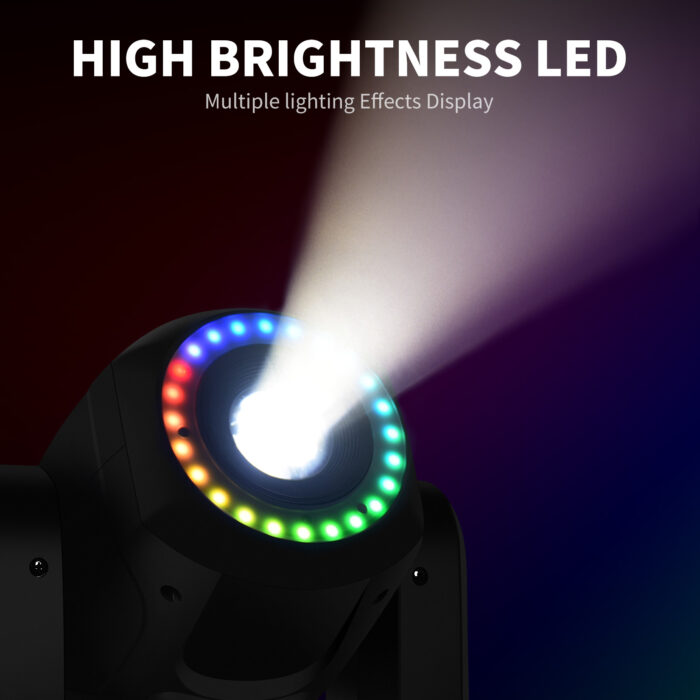
- Color Wash: 8 high-power Moving Head Wash lights are responsible for painting the stage. They provide rich, uniform color coverage that sets the tone and “vibe” of the entire performance.
Customization: Especially in venues like hotel ballrooms where aesthetics are paramount, we offer custom housing colors (such as elegant white or champagne gold) to ensure the technology blends seamlessly with the interior design.
III. Large Venues (500+ m²)
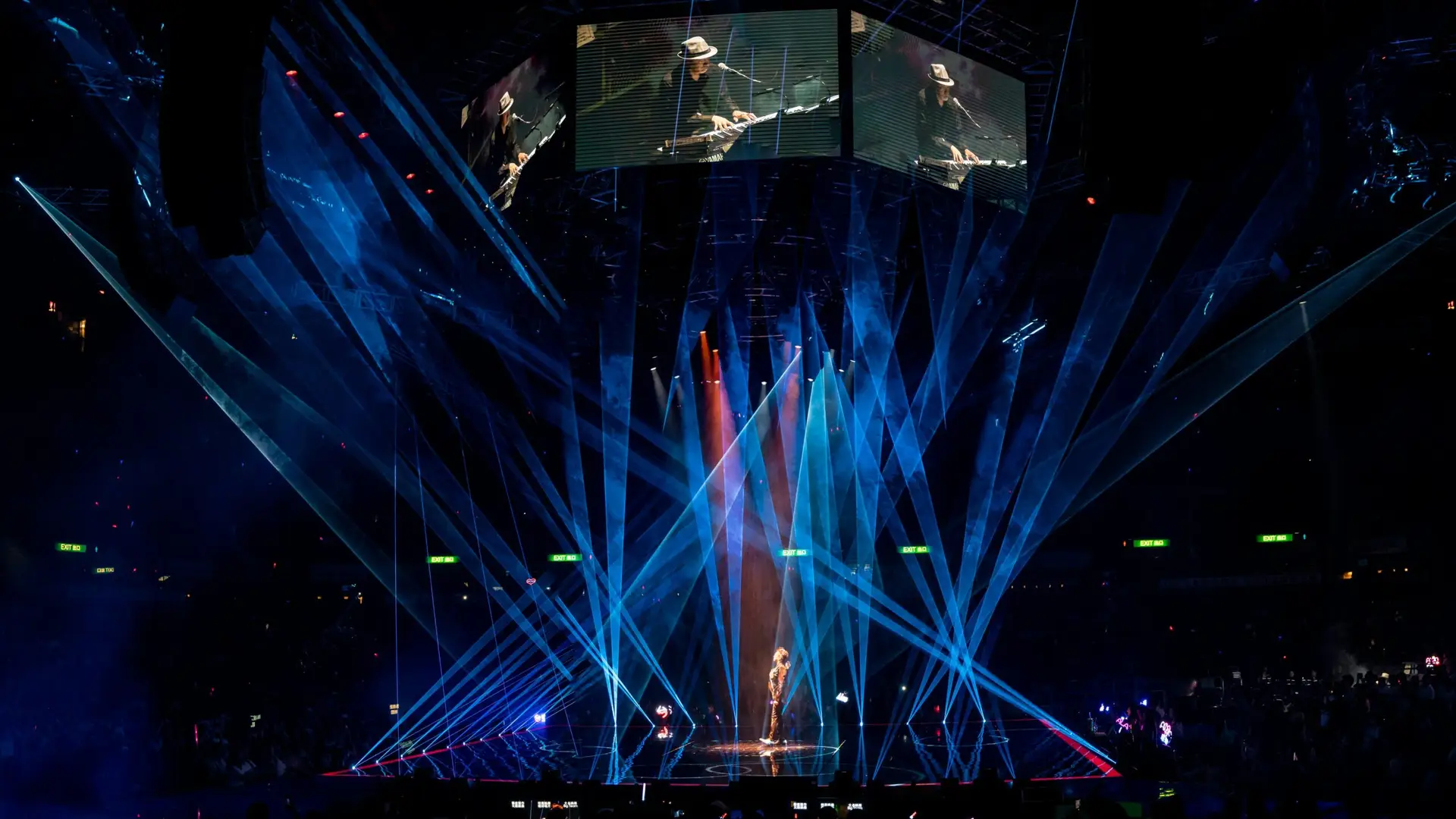
- Typical Scenarios: Stadiums, large concerts, outdoor music festivals, and major brand launches.
- Core Challenge: In massive spaces, lighting design becomes a complex engineering project. Power output, weatherproofing, and signal stability are critical factors.
Recommended Lighting Setup:
- Follow Spot: 2–4 high-performance follow spots (such as 4000W Xenon or high-power LED units) are mandatory to keep the focus on the star of the show at all times.
- Lighting Matrix: A massive array of 3-in-1 Hybrid Moving Heads (Beam/Spot/Wash) creates a lighting matrix. Their versatility ensures that every corner of the stage has perfect coverage at every moment.
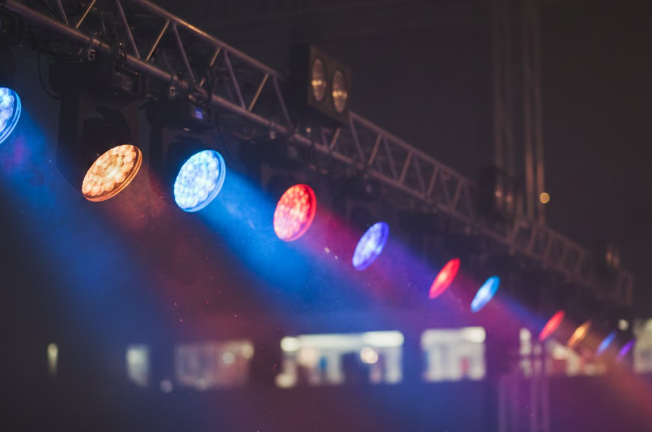
- Effects Enhancement: Combined with high-power Fog or Haze machines, the air becomes a medium, making every beam of light three-dimensional and “touchable.”
Outdoor Requirements: For outdoor events, weather is a major factor. All fixtures must have an IP65 rating or higher. Additionally, long-distance signal transmission requires professional signal amplifiers or wireless DMX systems to ensure stability.
IV. Three Core Metrics: Sourcing Standards Beyond Venue Size
Regardless of scale, ensure these three indicators are met before making a final decision:
- Illuminance (Lux) > Wattage: Don’t just look at watts. What matters is the actual Lux (brightness) the fixture provides at your specific throw distance. Professional lighting manufacturers will provide detailed photometric charts.
- Cooling Systems Determine Lifespan: A fixture’s longevity depends heavily on its thermal design. High-quality lights use thicker die-cast aluminum housings and intelligent temperature-controlled fans to keep core components cool.
- Control Protocols: Ensure all equipment supports the international standard DMX512 protocol. This is the “universal language” of lighting, ensuring your gear works seamlessly with any mainstream console and allows for future expansion.
The Ultimate Stage Lighting Buying Guide: How to Choose the Right Equipment for Your Venue?Our Services
As a professional stage lighting solution provider, DJclub offers more than just high-quality hardware; we focus on delivering satisfaction to you and your clients.
Ready to create a tailor-made lighting solution for your venue? Contact us today, and our lighting engineers will provide a professional preliminary configuration plan within 24 hours.
More Related Articles
- Guide to China Stage Lighting Manufacturers & Sourcing Bases
- Lighting Solutions for Outdoor Immersive Shows: Beating Extreme Weather
- Customized Lighting for Bars and Nightclubs: Creating the Ultimate Atmosphere
- What is DMX512? The Ultimate Guide to Stage Lighting Control
- Modern Church Lighting: Enhancing Congregation Engagement
- EDM Stage Lighting Design: Igniting Crowds with Professional Beam Lights
- Stage Lighting Maintenance Manual: 6 Secrets to Extending Lifespan
- LED Par Light vs. Moving Head Beam: A Guide to Selection & Combination
- The Ultimate Stage Lighting Buying Guide: Choosing the Right Equipment
- Configuring Multi-Function Hall Lighting: Solutions for Meetings & Performances
- Custom Stage Lighting vs. Off-the-Shelf Fixtures: Which is Right for You?
- Mastering Your Budget: 5 Sourcing Pitfalls to Avoid
- Lighting Procurement Guide: Top Stage Lighting Manufacturing Hubs in China