

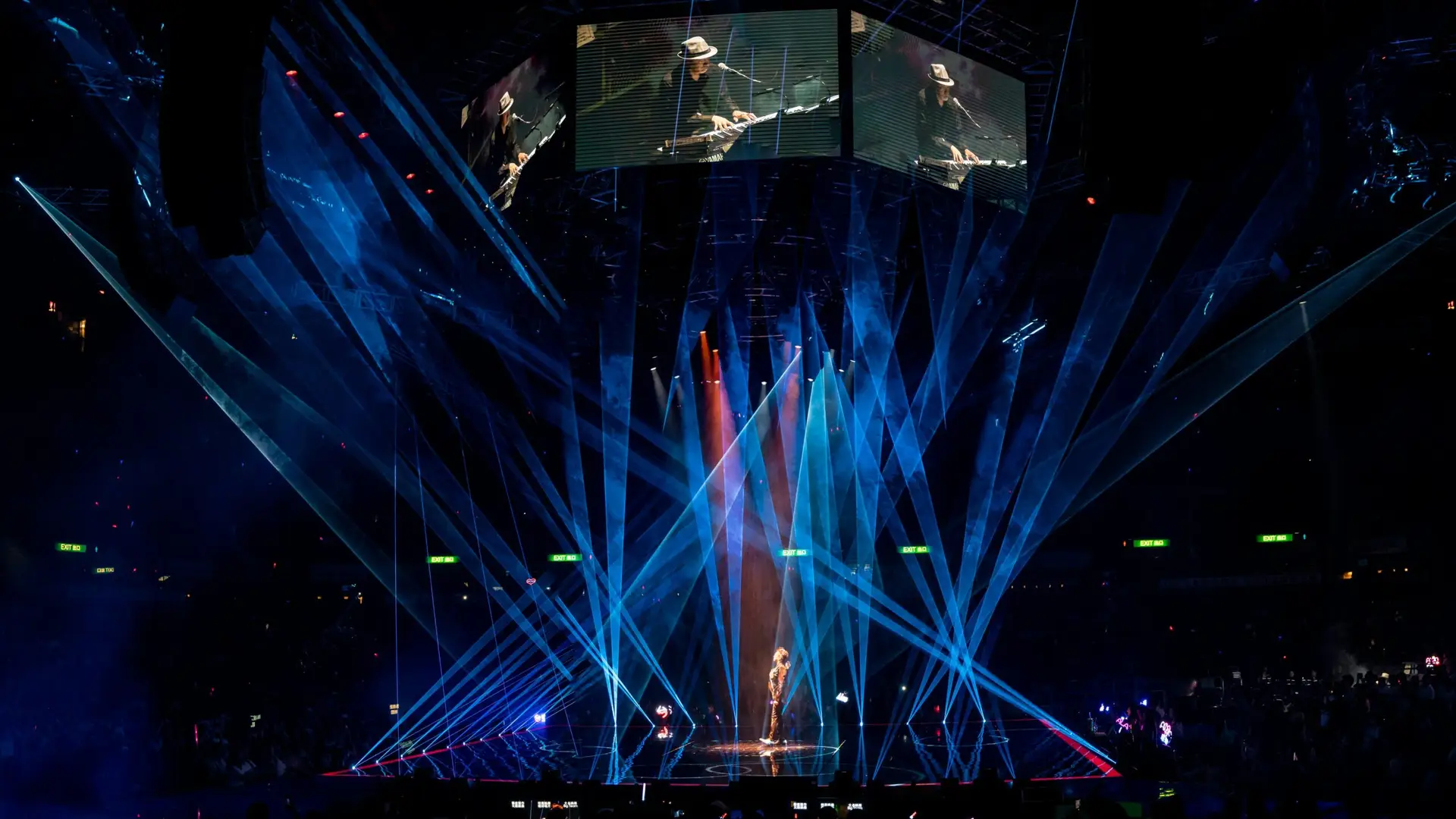
Mastering Your Stage Lighting Budget: 5 Sourcing Pitfalls to Avoid

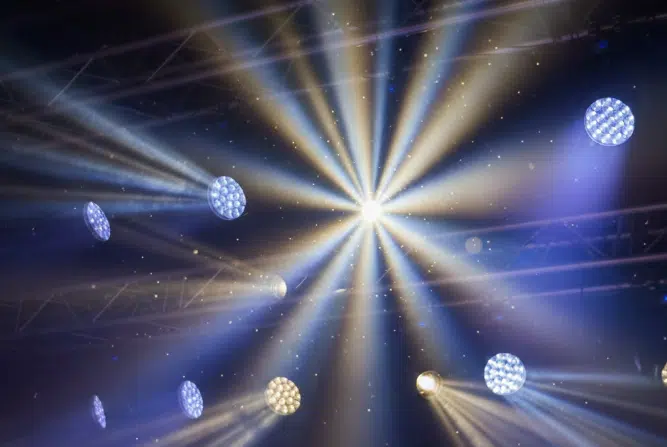
Staring at a stage lighting quote and feeling completely lost? Moving heads, ellipsoidals, beam lights… the sea of technical jargon and spec sheets is enough to make anyone’s head spin.
But remember: a successful stage lighting budget isn’t just about stacking up expensive gear. It’s a balancing act between visual impact, system safety, and long-term reliability.
Today, we’re pulling back the curtain on how the pros build a budget and how you can steer clear of the five most common procurement traps.

Part 1: What’s Inside a Professional Stage Lighting Budget?
A comprehensive, pro-grade budget is typically broken down into these four key pillars:
1. Core Fixtures (Approx. 50%–60%)
This is the heart of your budget and dictates the final look of your show. It includes:
- Front Lights: To illuminate performers and ensure clarity.
- Wash Lights: To bathe the stage in color and set the mood.

- Effect Lights: To create beams, patterns (gobos), and dynamic motion.

- Followspots: To keep the spotlight on key performers.
- Pro Tip: Sometimes, investing in fixtures tailored to your specific venue may cost more per unit, but because their output and beam angles are more precise, you can actually achieve a better look with fewer lights, optimizing your total spend.
2. Control & Signal Systems (Approx. 15%–20%)
If the fixtures are the eyes, the control system is the brain. This includes the lighting console, signal amplifiers, network switches, and cabling. This is the one area where you cannot afford to cut corners. An unstable console or a cheap signal cable can lead to drops or crashes at the worst possible moment—creating an irreversible disaster mid-show.
3. Rigging & Hardware (Approx. 10%–15%)
Lights need to be safely suspended. This covers trussing, electric hoists, mounting hardware, safety cables, and the power distribution racks that feed the system. Safety is always the top priority.
4. Labor & Services (Approx. 10%)
This covers shipping, on-site installation, and—most importantly—lighting design and programming. A top-tier lighting designer uses brilliant programming to maximize your hardware’s potential, creating a “1+1 > 2” effect that truly wows the audience.

Part 2: 5 Sourcing “Pits” to Avoid
Pitfall #1: Obsessing over Wattage, Ignoring Luminous Efficacy
This is the most common rookie mistake. Many assume higher wattage equals a brighter light. In reality, an outdated fixture might pull massive power but produce half the actual brightness (luminous flux) of a high-efficiency brand-name light. It’s like buying a phone that drains the battery instantly but has a dim screen.
- How to avoid it: Don’t just look at Watts (W); look at Lumens and the center lux levels at a specific distance. Demand third-party photometric reports from your supplier—let the data do the talking.
Pitfall #2: Ignoring the Color Rendering Index (CRI)
If you’re only doing ambient effects, this might slide. But for filming or photography, CRI is your lifeline. A front light with a CRI below 90 will make performers look washed out or “sickly” on camera. No amount of post-production color grading can fix poor lighting at the source.
- How to avoid it: For any fixture hitting a human face (key lights, soft lights), insist on a CRI of 90+, or ideally 95+.
Pitfall #3: Saving Pennies on Cables, Risking the Whole System
A stage lighting rig pulls serious power and handles complex data. Using sub-standard power cables or unshielded signal lines leads to flickering, “ghost” movements, or—worse—overheating and fire hazards.
- How to avoid it: Explicitly require high-quality, pure copper power cables that meet international safety standards and professional-grade shielded DMX cables for all data runs.
Pitfall #4: Overlooking After-Sales Support
Lighting gear requires maintenance—bulbs dim, fans get dusty, and hardware eventually glitches. Cheap “no-name” vendors often vanish when it’s time for repairs. If a fixture goes down, you could be stuck with no parts and a weeks-long lead time for a fix.
- How to avoid it: Vet your supplier’s support system. Do they offer local tech support? Do they keep spare parts in stock? Can they provide a 24-hour turnaround or a loaner unit?
Pitfall #5: Blindly Chasing “Feature Creep” Is more always better? Not necessarily. If you buy a complex fixture with hundreds of effects, but your staff only knows how to turn it on and change the color, you’ve wasted your budget.
- How to avoid it: Match the gear to the operator. For schools or corporate multi-purpose rooms, an intuitive “one-touch” smart control system is far more valuable than a high-end touring console that no one knows how to use.
Part 3: Pro Budgeting Tiers
- Entry-Level (Functional): The goal is “Bright and Clear.” Prioritize clean front lighting and even background washes using cost-effective LED combos.
- Professional (Artistic): Focuses on visual depth. Adds beam and spot fixtures for texture and professional consoles for nuanced control.
- Master-Class (Immersive): For those with the budget to customize. Integrates lasers, holographic projections, and interactive multimedia for a one-of-a-kind experience.
Final Word
A great stage lighting budget is more than just a list of prices—it’s a technical blueprint for a flawless performance.
Not sure where to start? We’ve put together a “2026 Stage Lighting Configuration & Budget Template” covering everything from conference rooms to broadcast studios and live music venues.
Contact us today with your venue dimensions and goals. Our consultants will build you a custom, professional quote within 2 hours, ensuring every dollar of your budget is spent where it counts!
Why Choose DJclub’s Custom Lighting Solutions?
- Professional & Reliable: With over 10 years of R&D and manufacturing experience, all DJclub lighting products carry international certifications (CE, ROHS) and strictly follow EU and US safety standards.
- High Capacity & Fast Delivery: Our 5,000+ sqm modern production base and automated assembly lines feature a monthly capacity of over 5,000 units, efficiently responding to OEM/ODM needs.
One thought on “Mastering Your Stage Lighting Budget: 5 Sourcing Pitfalls to Avoid”