
Comprehensive Guide to Global Stage Lighting Equipment Certifications: Essential Types

If a product needs to be exported to another country, understanding the types of stage lighting factory equipment certifications recognized by that country is the threshold for entry.
So, besides CE and UL, if you are involved in international tours or overseas engineering projects, what other certifications do you need? Below is a guide to stage lighting certification requirements for major countries and regions worldwide:
Ⅰ.North America (USA, Canada)
The North American market has the highest safety requirements for stage lighting equipment in the world, and legal liability is extremely strict.
UL (Underwriters Laboratories) – USA
Stage lighting fixtures generally must follow the UL 1573 standard. It is primarily developed by UL (Underwriters Laboratories) and the NFPA (National Fire Protection Association) and is enforced by local AHJs (Authorities Having Jurisdiction). Without UL certification, most professional theaters and commercial insurance companies in the US will refuse equipment entry.
UL 1573 Standard:
Dielectric Voltage-Withstand Test: The equipment must withstand high-voltage surges for 1 continuous minute without insulation breakdown.
Temperature Limits: Under maximum ambient temperatures, the temperature of touchable parts on the fixture housing must not exceed 70°C – 90°C.
CSA / cUL – Canada
Canada has its own safety standards for stage lighting equipment. The core code for CSA is the Canadian Electrical Code (CEC). It must comply with several standards:
Canada is extremely strict regarding grounding impedance tests for high-power stage equipment. Furthermore, safety warning labels for stage equipment exported to Canada must be bilingual (English and French). Finally, due to the cold climate, cable materials for outdoor waterproof fixtures must pass a -35°C cold bend test.
In the North American stage lighting market, the cULus mark is regarded as the “platinum pass” for electrical safety. When you see a mark with a “c” on the left and “us” at the bottom right, its legal validity covers all of North America. A fixture with the cULus mark means the manufacturer has obtained entry rights for both the US and Canadian markets simultaneously and is recognized by regulators in both countries.
FCC – Federal Communications Commission
Focus: This certification is for the internal circuitry and wireless control systems of the fixtures. It ensures that the electromagnetic interference from the fixture does not interfere with local emergency communications or radio.
Ⅱ.European Union
The European stage lighting certification system is the most mature in the world, yet its laws and regulations are the most detailed. If you plan to bring fixtures into the European market, you need a deep understanding of the underlying directives and environmental barriers.
Core Entry: CE Mark (Conformité Européenne)
The CE mark proves that a product complies with all relevant safety directives set by the EU. For stage lighting, it primarily involves four major directives: LVD (Low Voltage Directive – 2014/35/EU), EMC (Electromagnetic Compatibility Directive – 2014/30/EU), RoHS (Restriction of Hazardous Substances – 2011/65/EU), and the ErP Directive.

European Safety Standards: EN Standards
Under the CE declaration, stage fixtures must comply with specific EN standards.
EN 60598-2-17: A specialized standard for stage, television, film, and photographic luminaires. It includes an additional safety bond (safety cable) anchor point test compared to ordinary civilian lamps.
EN 62471 (Photobiological Safety): In theaters and performances, the audience may look directly at strong light. This certification ensures that the light from the fixture will not cause burns to the human retina.
Germany’s “Gold Standard”: GS Certification
In Europe, the GS mark is considered a higher-level quality certification than CE. While CE is a self-declaration by the manufacturer, GS must be issued by a third-party body following type testing and annual audits, meaning it has undergone Germany’s strictest product safety testing.
Ⅲ.United Kingdom (UK)
UKCA (UK Conformity Assessed)
Background: Following Brexit, the UK has gradually replaced the CE mark with UKCA. Stage lighting fixtures sold within the UK (England, Wales, and Scotland) must now bear the UKCA mark. Its technical standards are similar to the EU CE, but certificates must be issued by a UK-recognized body.
Additionally, according to the UK Plugs and Sockets etc. (Safety) Regulations, stage lighting equipment sold to end-users must be equipped with a UK three-pin plug complying with the BS 1363 standard.

Ⅳ.China
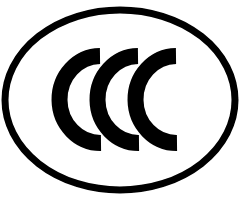
Core Mandatory Certification: CCC (China Compulsory Certification)
In China, lighting fixtures listed in the *Compulsory Product Certification Catalogue* that have not obtained a 3C certificate and bear the certification mark are prohibited from being manufactured, sold, imported, or used in other business activities.
Technical Standards:
GB 7000.1 (General Requirements): Basic electrical safety requirements.
GB 7000.217 (Stage Lighting Specific Requirements): Specific requirements for indoor and outdoor stage lighting fixtures for theaters, television stations, etc. (corresponding to international standard IEC 60598-2-17).
GB 17625.1 / GB/T 17743 (Electromagnetic Compatibility): Ensure that the lighting fixtures do not interfere with the power grid or surrounding wireless equipment.
Ⅴ.Asia-Pacific & Oceania
PSE (Product Safety of Electrical Appliance) – Japan:
Stage fixtures are “Non-Specified Electrical Appliances” and require the Circular PSE mark. Note that Japan’s voltage is 100V; when selecting models, ensure the power supply supports Wide Voltage input (100V-240V).
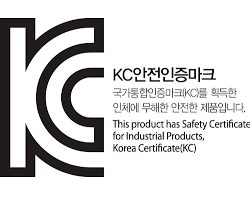
KC (Korea Certification) – South Korea:
A mandatory certification in South Korea covering safety and EMC. It is a hard threshold for performance equipment exported to South Korea.
RCM (Regulatory Compliance Mark) – Australia/New Zealand:
Integrates safety and EMC requirements. Australian theaters place high importance on the RCM mark.
Ⅵ.Eurasian Economic Union (Russia, Belarus, etc.)
EAC (Eurasian Conformity)
If you are involved in theater construction projects in Russia or CIS countries, the EAC mark is the primary credential for customs clearance and commissioning.
Looking for a sourcing partner that meets international standards? DJclub is the epitome of high-quality, cost-effective professional lighting.
As a brand under Hongyi Stage Lighting, DJclub has been deeply involved in the global market since 2015. Its 5,000㎡ modern facility ensures high-quality output of over 5,000 sets of equipment per month through automated production and rigorous QC.
100% Market Access: All products (beam lights, LED PAR lights, pattern lights, and zoom wash lights) are CE and RoHS certified, fully complying with European and American safety standards.
Global Compliance Guarantee: Strict adherence to CE Marking and RoHS environmental directives helps projects easily pass acceptance tests.
Choose DJclub, making professional compliance simpler.
[Get Product Catalog]
More Related Articles
- Guide to China Stage Lighting Manufacturers & Sourcing Bases
- Lighting Solutions for Outdoor Immersive Shows: Beating Extreme Weather
- Customized Lighting for Bars and Nightclubs: Creating the Ultimate Atmosphere
Custom Stage Lighting vs. Off-the-Shelf Fixtures: Which is Right for You?
Multi-Function Hall Stage Lighting Configuration: A Versatile Solution Guide
LED Par Light vs. Moving Head Beam Light: Selection and Combination Guide
Mastering Your Stage Lighting Budget: 5 Sourcing Pitfalls to Avoid
Stage Lighting Maintenance Manual: 6 Secrets to Extending Fixture Lifespan
Nightclub Stage Lighting Buying Guide: How to Save 30% on Your Budget
2026 Guide to Finding Stage Lighting Factories: Secure Direct Factory Pricing