
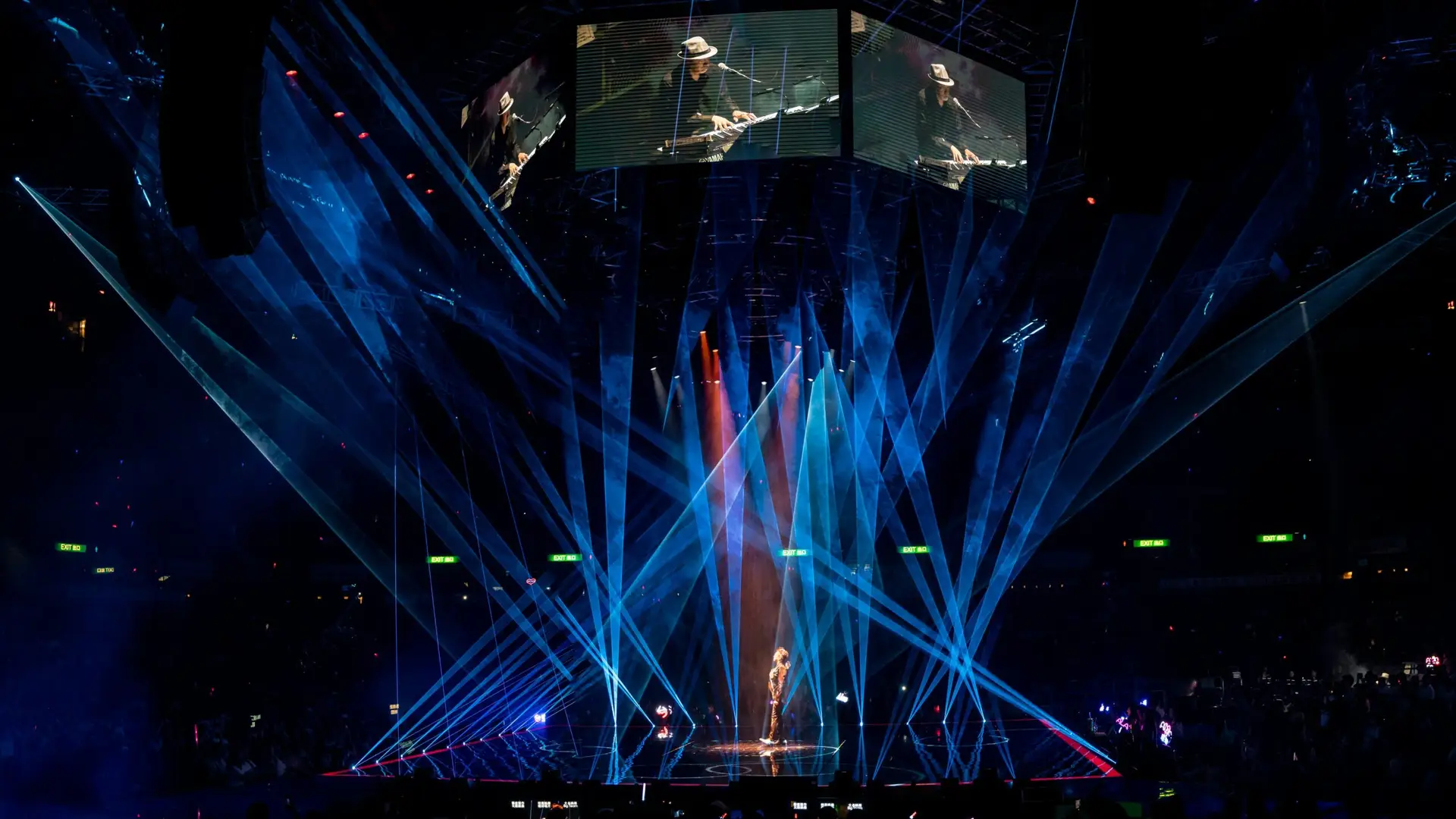
5 Essential Technical Parameters for Professional Stage Lighting Procurement

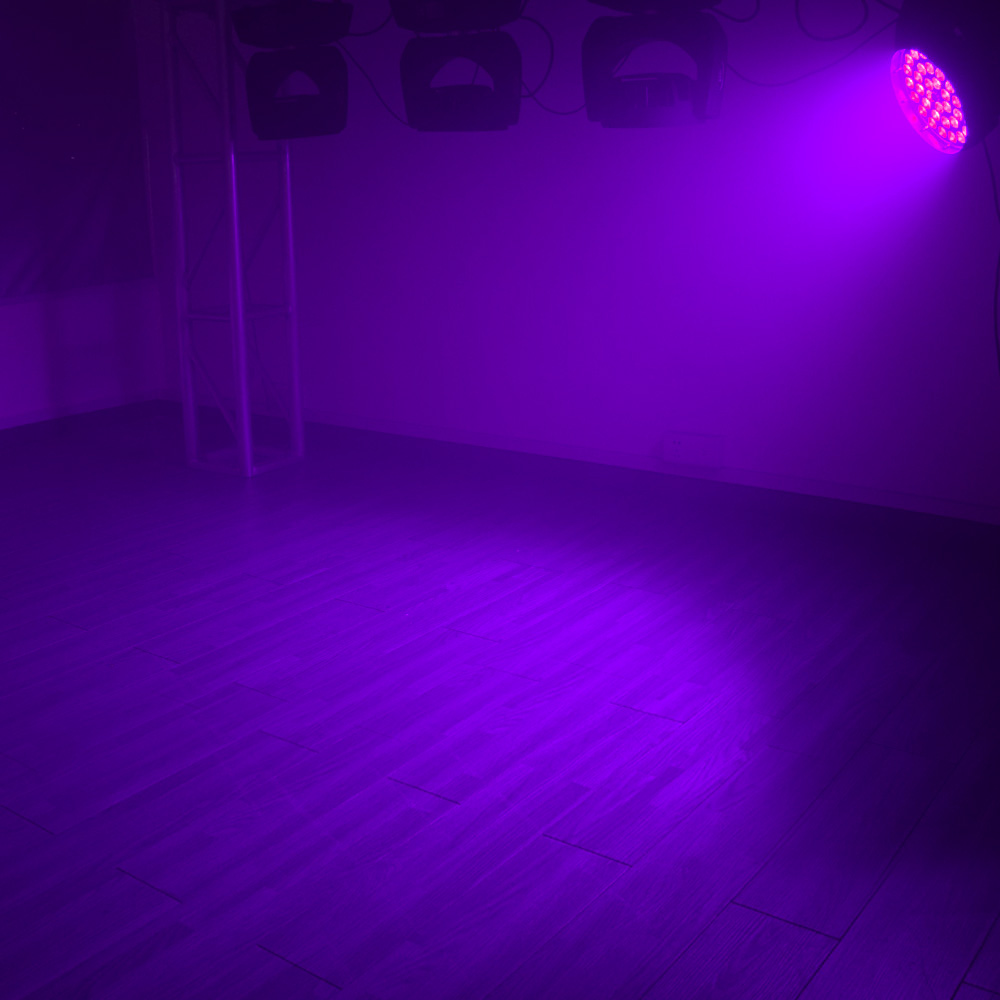
In the fiercely competitive stage lighting market, you may encounter two moving heads that look identical on the outside but differ in price by over 100%. However, a lower price tag does not necessarily mean you are getting a good deal.
In the wholesale stage lighting market, comparing prices alone often leads to a “low-price trap.” For products with high installation and maintenance costs, a lower price frequently signals inferior quality. Poor-quality lights do more than just ruin the stage effect; they escalate long-term maintenance expenses. When a light’s performance drops below a certain threshold, you are left with a difficult choice: endure the poor quality or spend “wasted money” to replace it entirely.
As a professional lighting buyer, we recommend verifying the following five factors before placing an order. These parameters determine the lifespan and performance of the fixture and are far more critical than price.
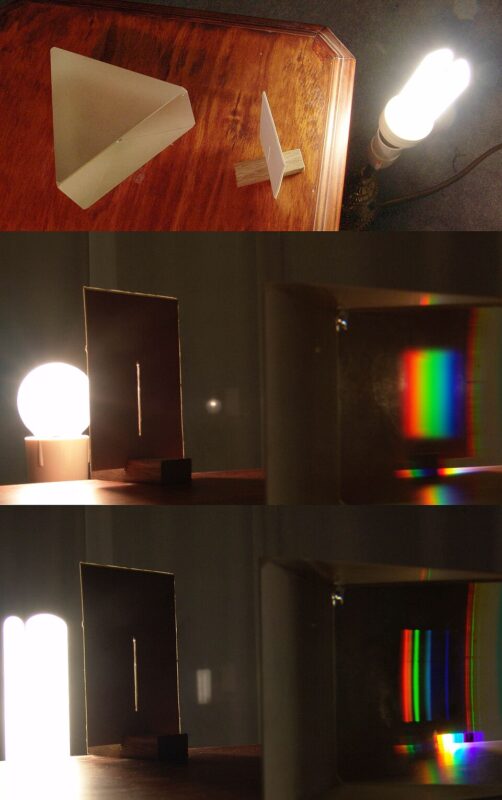
1. Essential Technical Parameters for Professional Stage Lighting Procurement:Color Rendering Index (CRI / Ra)
The light source is the heart of any fixture. Low-quality sources decay rapidly and offer poor color rendering. For filming or live-streaming environments, CRI must be >90. Otherwise, light hitting a human face will appear sickly green or grey.
This conclusion is backed by hard data: According to the IES TM-30-15 color evaluation standard and research from ARRI Laboratories, light sources with low color rendering (Ra < 80) lose at least one-third of color details when capturing skin textures, significantly compromising the overall visual quality.
Senior lighting designer John Featherstone noted in an interview with PLASA Focus: “In the era of 4K and 8K recording, a high CRI is a mandatory metric. The ‘color cast’ caused by low-CRI fixtures cannot be fully corrected in post-production, directly leading to increased production costs.”
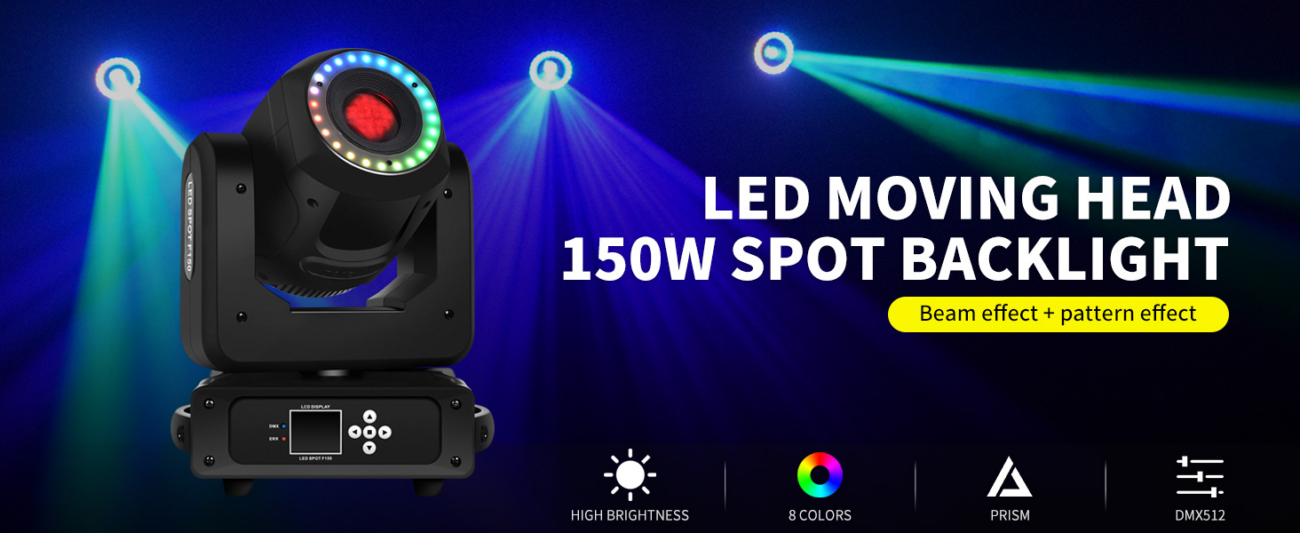
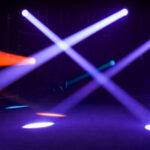
Therefore, choosing high-CRI stage lighting is essential. Take the DJClub 150W High CRI Moving Head as an example. It achieves 81,210 Lux at 1 meter, a remarkably bright figure that proves the high quality of its LED chip.
Beyond the 100W main beam, its outer ring features 24 RGB 3-in-1 LEDs—the most popular design for modern nightclubs—and two independent gobo wheels for complex overlapping effects.
2. Drive Current and Real Wattage
Many manufacturers inflate wattage ratings (e.g., labeling a fixture as 400W when it is actually 250W). To verify this, ask the manufacturer about the drive current of the LED beads.
Why does this matter? Excessive current creates brightness but causes overheating and rapid light decay. Conversely, insufficient current results in dimness. The international testing agency SGS reported that approximately 20% of budget high-power fixtures on the market suffer from “over-driving.” This causes the effective lifespan (L70) to drop from the nominal 50,000 hours to less than one-fourth of that duration.
3. Motor Precision in Moving Heads
The fluid movement of a moving head relies entirely on motor drive. According to the ANSI E1.11 protocol standards set by ESTA (Entertainment Services and Technology Association), 16-bit dimming and positioning is now the “entry-level” requirement for high-end theaters.
“During extremely slow sweeps, the ‘steppy’ feel of an 8-bit motor ruins the immersion of the entire performance,” wrote a Lead Lighting Technician from London’s West End in Lighting & Sound International.
When purchasing, you must verify that the product supports 16-bit micro-step positioning. An 8-bit light will exhibit a noticeable “jitter” during slow movements, making light transitions look unnatural. In venues with high standards, such as theaters or lounges, smooth movement is a non-negotiable requirement.
4. Heat Dissipation and Product Lifespan
Poor heat dissipation directly reduces the lifespan of electronic components. According to the laws of semiconductor physics, for every 10°C increase in LED Junction Temperature, the lifespan is cut in half. If cooling is inadequate, the fixture will trigger frequency reduction or even burn out under high power.
Ask the manufacturer: Does it use superconducting copper tube cooling or simple aluminum blocks? Does the fan feature intelligent temperature control? For indoor multi-function halls, fan noise should be kept below 45dB.
5. DMX Channel Modes and RDM Functionality
Fixtures with RDM (Remote Device Management) allow you to modify DMX addresses and parameters directly from the console. This eliminates the risk of climbing several meters onto a truss for manual setup.
“RDM isn’t just about convenience; it’s about safety,” shared a contractor on LinkedIn. “In large outdoor shows, RDM saves the vast majority of labor costs for high-altitude work and minimizes safety risks for the crew.”
Advanced fixtures now offer up to 16 DMX channel modes. For example, DJClub’s 230W Moving Head features 16 modes, providing 65,536 steps of positioning ($256 \times 256$) for incredibly smooth trajectories and pinpoint accuracy. Additionally, its 0–3° electronic zoom concentrates energy into a solid, laser-like beam with extreme penetration in foggy environments.
💡 Pro-Sourcing Tips: Essential Technical Parameters for Professional Stage Lighting Procurement
- Inspect the Interior: Purchase a sample first and open the casing. Look for neat wiring; products with organized cables and shielding layers have much stronger anti-interference capabilities.
- Check the Power Supply: Ensure the PSU carries CE, RoHS, or UL certifications. Cheap, low-quality power supplies are the primary culprits behind flickering and system crashes in stage lights.
Disclaimer:
The technical data and industry citations provided in this article are for informational purposes only. Please refer to the official specifications provided by manufacturers for the most accurate details. This content represents industry knowledge sharing and does not necessarily reflect the official position of DJclub.
More Related Articles
Custom Stage Lighting vs. Off-the-Shelf Fixtures: Which is Right for You?
Multi-Function Hall Stage Lighting Configuration: A Versatile Solution Guide
LED Par Light vs. Moving Head Beam Light: Selection and Combination Guide
Mastering Your Stage Lighting Budget: 5 Sourcing Pitfalls to Avoid
Stage Lighting Maintenance Manual: 6 Secrets to Extending Fixture Lifespan
Nightclub Stage Lighting Buying Guide: How to Save 30% on Your Budget
2026 Guide to Finding Stage Lighting Factories: Secure Direct Factory Pricing