
Stage Lighting Sourcing 2026: The Ultimate Guide to China Factory Audits

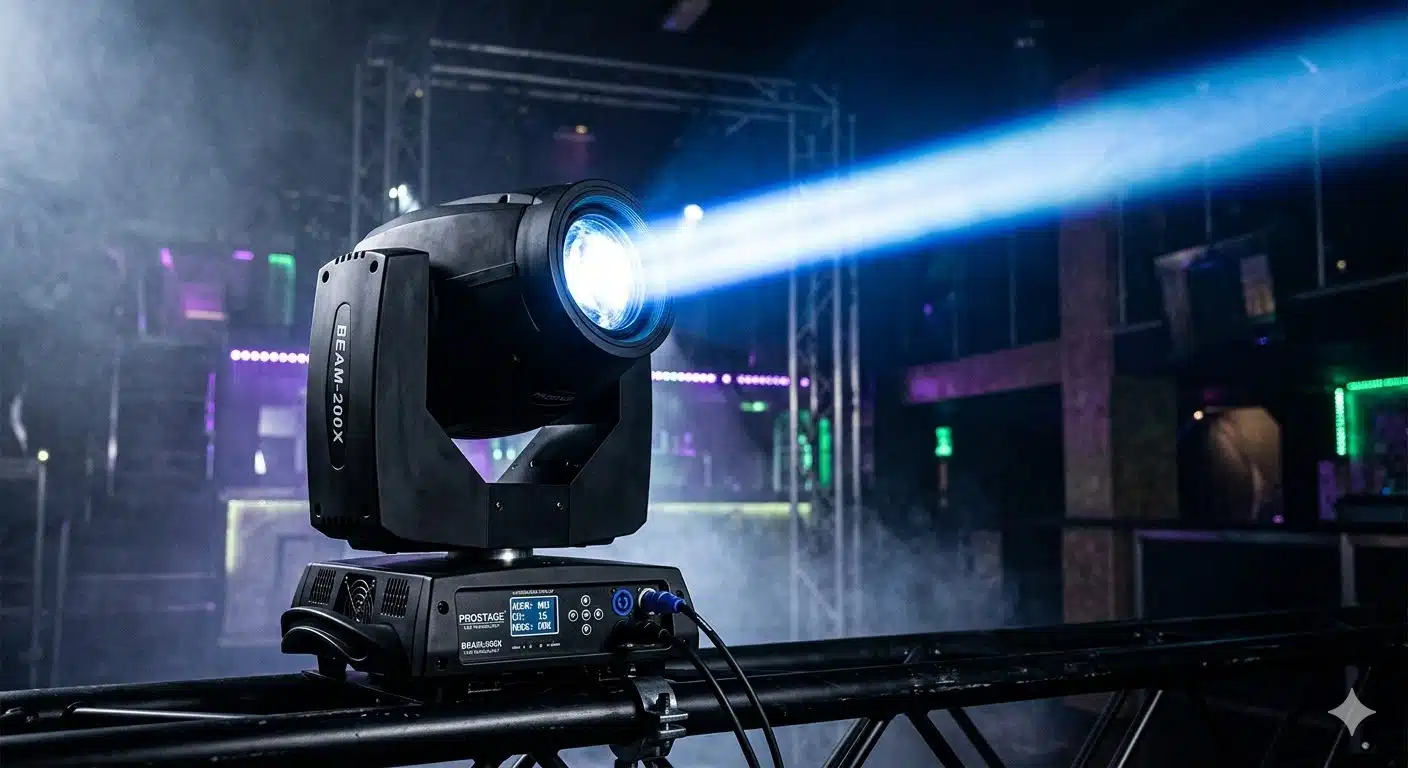
If you are looking for stage lighting suppliers in China, visiting the factory in person is a critical step before finalizing a partnership—beyond just attending trade shows.
At exhibitions, different brands may appear different on the outside, but once disassembled, they often share the same generic public-mold motherboards.
Without a factory visit, it is impossible to determine whether a supplier is a true original light equipment manufacturer (OEM/ODM) with genuine R&D capabilities.
What are the key precautions for a factory visit? What should be on your core checklist? How do you evaluate a factory’s independent R&D strength? This guide provides the answers.
We will conduct a deep dive into stage lighting factories across multiple dimensions, including production strength, quality control, technology, and after-sales support, to help you find high-quality, high-value lighting products.

Ⅰ.Pre-visit: Red Flags (Anti-Deception Guide)
Before stepping through the factory gates, beware of these common “traps”:
The “Shadow Factory”: According to the Guangdong Stage Lighting Industry Cluster Research Report and other data, over 60% of companies registered as “Lighting Equipment Co., Ltd.” in the Guangzhou and Foshan clusters are not R&D-based manufacturers.
A complete production workshop typically requires at least 1,000 square meters—a condition many small workshops lack. Some “shadow factories” use information asymmetry to decorate high-end offices but will never show you their core production lines.
“Parts Assembly”: Some companies claim to be “R&D-based” but actually purchase generic public-mold shells and inferior LEDs, resulting in poor heat dissipation. While the lights may look bright in a showroom, the brightness may suffer a permanent decay of over 18% and experience color shifting after 300 hours of continuous use.
Ⅱ.Stage Lighting Sourcing 2026: Core Inspection Checklist
R&D and Supply Chain Capabilities
R&D Capability: Is there a dedicated stage lighting R&D lab? Do they have the capacity for optical simulation testing and PCB schematic design?
Key Component Procurement: Check the warehouse. Are the LEDs from major brands like Osram, Philips, or Cree? Do the power supplies carry CE/UL/RoHS certifications?
Molds: Do they own their own proprietary molds?
Production Workshop
Anti-Static Measures: The LED SMT room must have anti-static flooring, wrist straps, and ionizing blowers.
Assembly Process: Is the assembly line standardized? Are there clear Work Instructions (WI) at each station?
Heat Dissipation Design: Disassemble a unit to inspect the size of the heat sinks, the brand of the fans, and the airflow path design.
Quality Control and Testing
Aging Test: Is there a dedicated aging rack?
Hard Metric: Is every unit subjected to at least 24–48 hours of continuous full-load aging before shipment?
Waterproof Testing (for Outdoor Lights): Is there a high-pressure spray or immersion test pool?
Motors: For moving heads, test the reset precision and smoothness at low speeds.
Color Consistency: Randomly sample 5–10 units and project them onto a white wall to check for color deviations.
“Soft Power” of Factory Management
Beyond technology, the operational state of the factory determines your order’s yield rate.
Staff Longevity: Ask the assembly line supervisor how many years they have worked at the factory. Stage lighting assembly involves complex precision wiring; a higher ratio of senior technicians (3+ years) leads to lower defect rates.
Management Systems: Factories using professional ERP/MES systems have stronger management capabilities. Relying solely on paper and pen often leads to production scheduling chaos during peak seasons.
Power Supply Security: Ask if the factory has its own generator. Guangdong can experience power rationing during peak summer periods; factories with backup power offer more stable lead times.
Specialized Inspection by Category
Moving Heads: Must check the belt brand and bearing lubrication.
Lasers: Must check the dust-proof sealing grade.
Architectural Lighting (Outdoor): For coastal projects, you must request salt spray test reports and UV resistance test records.
Ⅲ.On-Site Factory Rating Scale
| Dimension | Key Items (Red indicates mandatory) | Score (1-5) | On-site Findings/Notes |
| 1. Production Scale | Number of workers, lines, floor area | ||
| 2. R&D Strength | R&D Lab, self-developed PCBA/Lenses | ||
| 3. Core Components | LED/Power/Motor brands (Major brands?) | ||
| 4. QC Testing | Aging racks (48h / Record cards?) | ||
| 5. Craftsmanship | Anti-static, wiring neatness, shell thickness | ||
| 6. Certifications | CE/CCC/UL originals matching the models | ||
| 7. Delivery Capacity | Raw material inventory (Chips/LEDs) | ||
| 8. Response Speed | Spare parts stock, technical manager’s expertise |
Ⅳ.Professional Questions You Must Ask
“What is the maximum junction temperature (Tj) of your LEDs kept at?”
“To what extent does this light support the RDM protocol?”
“If a power supply or motherboard fails, how many days is your fastest after-sales turnaround?”
“How do you handle LED color consistency (SDCM) issues?”
Additional Questions:
“What are the PF (Power Factor) and THD (Total Harmonic Distortion) values of your driver circuits?”
“What kind of smoothing algorithm do you use for dimming?”
“What is the ‘reset precision’ in degrees for your moving heads at high speeds?”
“How do you handle the ‘breathing effect’ (condensation) in outdoor fixtures?”
“What material is used for your optical lens group, and what is the light transmittance percentage?”
Ⅴ.Transportation Guide to Foshan Factories (Guangdong)
1.✈️ By Air: Primary Choice “Guangzhou Baiyun International Airport (CAN)”
Upon Arrival:
Taxi/Ride-hailing (Recommended): The airport is only 30–40 minutes away from lighting hubs like Lishui and Dali in Nanhai. The cost is approximately 100–150 RMB. This is the most efficient way.
Airport Shuttle: Take the “Airport Express” Foshan Line directly to Qiandeng Lake or the Nanhai Terminal, then take a taxi to the factory.
2. By High-Speed Rail: Select station based on your origin
Guangzhou South Station (Primary Hub): Transfer directly to Foshan Metro Line 2 within the station to enter Foshan city.
Taxi: Approximately 40–60 minutes to the Nanhai cluster.
Foshan West Station (Closest but fewer trains): If your departure city has a direct train to Foshan West, it is only 20–30 minutes by taxi to Lishui or Dali.
3.Anti-Trap Tips
Avoid “Foshan Railway Station”: This is an old station with fewer trains and a dated surrounding area.
Factory Addresses: Addresses usually include “XX Industrial Zone.” When hailing a ride, set the destination to the Factory Name rather than just the street name.
Route Summary:
Fastest: Fly to Baiyun Airport → Taxi directly to Lishui/Dali factories.
Most Reliable: High-speed rail to Guangzhou South → Factory-arranged pickup.
Next step: Would you like me to help you draft an Email Invitation to these factories to schedule your visit?
Recommended Partner: A High-Value Example of Stage Lighting Direct from the Factory Source
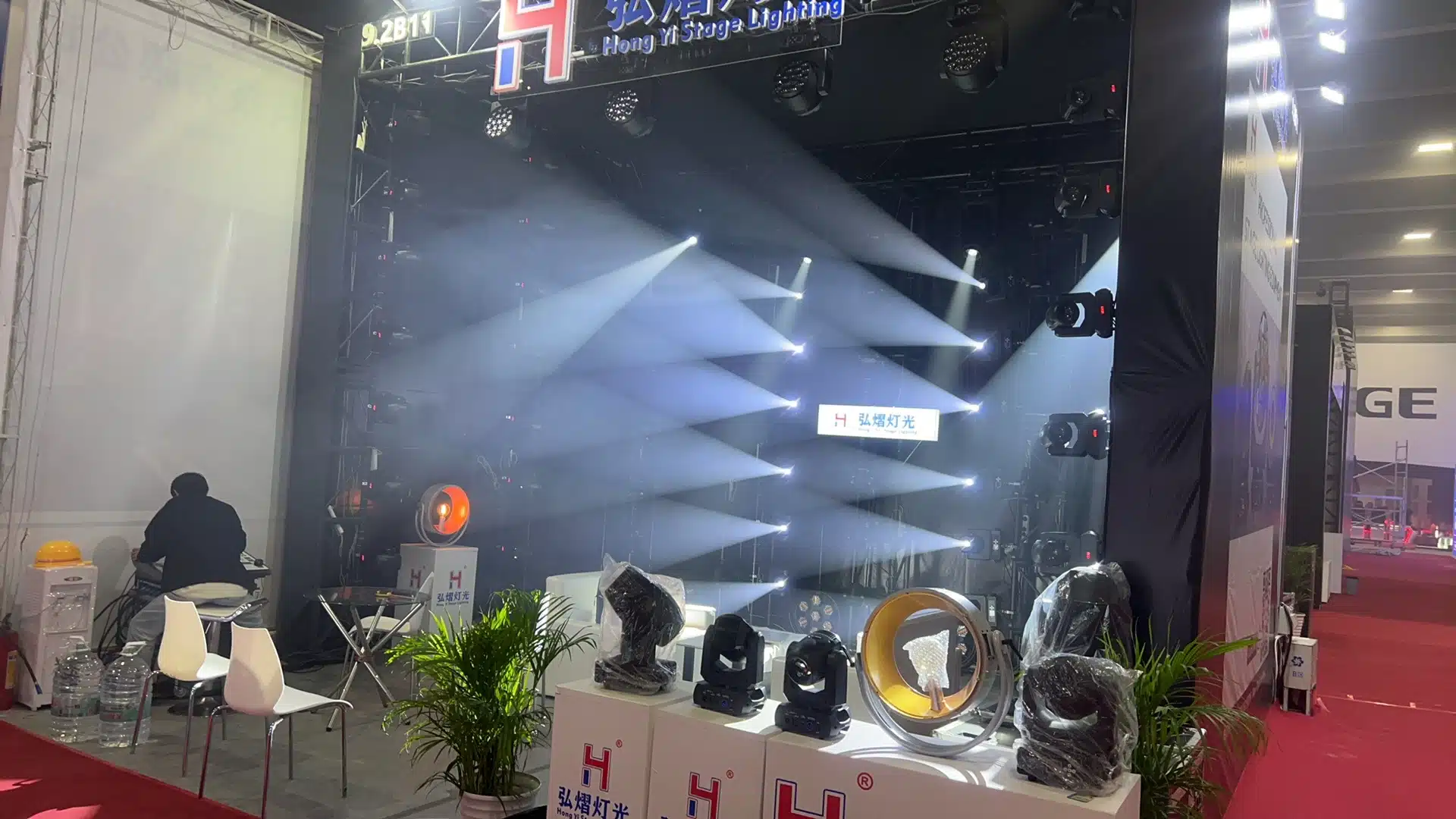
When auditing factories in China, DJclub is a premium stage lighting manufacturer you can’t afford to miss. As a brand under Hongyi Stage Lighting, DJclub boasts a 5,000㎡ modern production base and automated production lines, enabling it to control costs and quality from the source.
With a monthly production capacity of over 5,000 sets, you can procure beam lights, LED PAR lights, and zoom lights with international performance standards at the most competitive factory prices.
100% Compliance and Transparency: All products are CE and RoHS certified, fully compliant with European and American market access requirements.
Since 2015, transparent manufacturing processes and automated quality inspections ensure that every batch of products withstands the most stringent on-site audits.
Choose DJclub to connect directly with the source factory and maximize your procurement profits.
[Schedule an online factory tour / Get the latest factory price list]
About the Author:Eason (Yifan) Chen
Stage Lighting Expert & Digital Strategist
With 15+ years of industry expertise, Eason Chen is a leading authority in stage lighting and digital manufacturing. A regular technical consultant and contributor at premier global trade shows—including Prolight + Sound (Frankfurt & Guangzhou) and LDI (Las Vegas)—he specializes in bridging the gap between cutting-edge DMX protocols and scalable manufacturing efficiency.
More Related Articles
Custom Stage Lighting vs. Off-the-Shelf Fixtures: Which is Right for You?
Multi-Function Hall Stage Lighting Configuration: A Versatile Solution Guide
LED Par Light vs. Moving Head Beam Light: Selection and Combination Guide
Mastering Your Stage Lighting Budget: 5 Sourcing Pitfalls to Avoid
Stage Lighting Maintenance Manual: 6 Secrets to Extending Fixture Lifespan
Nightclub Stage Lighting Buying Guide: How to Save 30% on Your Budget
2026 Guide to Finding Stage Lighting Factories: Secure Direct Factory Pricing
Lighting Procurement Guide: Top Stage Lighting Manufacturing Hubs in China
Where to Find the Best Stage Lighting Factories? Top Global Clusters for Nightclub Lighting in 2026