

Professional Stage Lighting Performance Analysis: How to Select the Best Fixtures via Technical Parameters?

An in-depth exploration of professional stage lighting performance. Why are 16-bit resolution and three-phase motors the keys to silky-smooth movements? We provide expert-level interpretations covering everything from fundamental optical parameters to advanced control protocols.
For stage lighting procurement, understanding the parameter sheet is the first step to becoming an expert in the field.
A stage lighting fixture is a complex system involving optics, electro-acoustics, precision mechanics, and communication protocols. Here are some core parameters you may need to understand further.
Professional Stage Lighting Performance Analysis: How to Select the Best Fixtures via Technical Parameters?Below is a comprehensive interpretation of basic core stage lighting parameters organized for you:
Ⅰ.Parameters Determining Visual Effects
1.Center Illuminance (Lux)
Interpretation: Lux is the intensity of light projected onto the surface of an object at a specific distance.
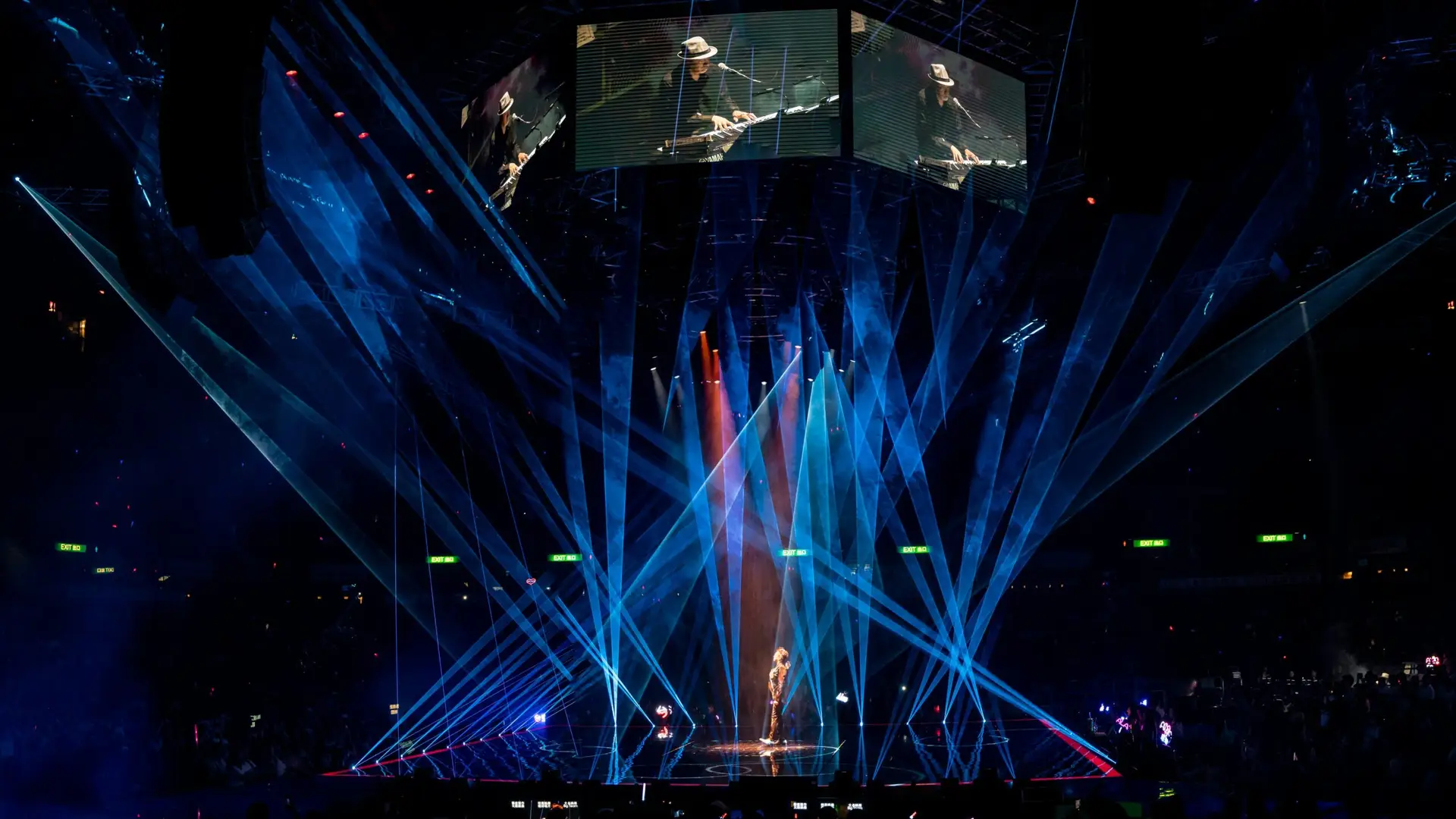
Importance: For Beam and Profile lights, the Lux value at 10 or 20 meters is especially critical. For example, in large-scale concerts, a beam light with high Lux allows the audience to see the expected powerful, “solid pillar-like” beams. When the beam instantly illuminates the singer in the dark, it focuses the eyes of tens of thousands of audience members, maximizing the live atmosphere.
Selection: Excellent fixtures will provide a complete illuminance curve diagram.

2.Luminous Flux (Lumen)
Interpretation: Lumen refers to the total luminous flux emitted by the light source.
Comparison: If two lights have the same Lumen but one has a higher Lux, then the one with higher Lux has an optical lens group that produces a sharper beam.
3.Color Rendering Index (CRI/Ra) & TLCI
CRI (Ra): Measures the ability of light to restore the color of an object (baseline is 100). Ra > 90 is excellent and suitable for naked-eye viewing. If CRI is below 90, the singer’s skin tone will appear pale or “sickly” to the audience. Additionally, high color rendering makes high-end custom costumes and stage sets look more exquisite and textured.
TLCI: Television Lighting Consistency Index. For projects with filming or live-streaming requirements, TLCI > 95 is required.
4.Color Temperature (Kelvin)
Range: Between 2700K (warm yellow) and 8000K (cold blue).
Application: Moving heads are mostly high color temperature (above 6500K), while face lights require adjustable color temperature (3200K – 5600K). The color temperature of stage lights affects the emotional expressiveness of the stage and is tied to the event theme.
Warm Color Temp (2700K – 3200K): Suitable for solos, dramas, or nostalgic segments, creating a sense of warmth.
Cold Color Temp (6000K – 8000K): More common in electronic music concerts, fashion shows, or sci-fi plays, appearing “cooler.”
Note: If multiple moving heads on stage have inconsistent color temperatures due to product quality issues, the audience will immediately notice a “muddled” color sense, which directly affects the stage effect.
Ⅱ.Parameters Determining the Precision of “Motion”
Pan/Tilt Range & Resolution
Angle: Pan is typically 540°; Tilt is typically 270°.
bit Precision: Allows the light head to move smoothly. This relates to the “breathing feel” of camera movement: during lyrical tracks, the light needs to sweep from left to right extremely slowly, matching the rhythm of the music. If it is only 8-bit, the precision is insufficient, and the audience will see the light “jumping” or jittering on the wall, which severely ruins the atmosphere. Smooth movement in slow music provides a comfortable, healing sensation.
Three-Phase Motors: Compared to two-phase motors, three-phase motors have lower noise, faster response, and more accurate positioning. This is vital in environments like small theaters, plays, or concert halls where the audience needs to hear the actors’ lines clearly and is sensitive to small noises. Furthermore, even at EDM festivals or rock scenes, three-phase motors allow the lights to start and stop instantly following the heavy bass rhythm. This extreme crispness in positioning can instantly ignite the audience’s passion.
Zoom Range
Interpretation: Determines the size of the light projection range.
Application: A larger zoom range makes the fixture more versatile and multi-purpose. One could say zoom functions like a movie lens, enabling the switch between “panorama” and “close-up.”
Effect: At a small angle, you seem to see a “laser beam” piercing the darkness. A protagonist illuminated by a thin beam while everything else is swallowed by darkness creates a strong sense of lonely beauty. At a large angle, you are surrounded by gentle atmospheric light, as if enveloped by a grand color.
Ⅲ.Parameters Determining the “Stability” of Performance
Rated Power & Power Factor (PF)
Wattage (W): Represents power consumption. Be careful to distinguish between “Total Power” and “Light Source Power.”
PF Value: The ideal value is 1.0. If PF < 0.9, it indicates low power conversion efficiency, which may cause noise in the audio system or even lead to frequent circuit tripping and performance accidents. If the PF value is below 0.7, it means electrical energy is being wasted—a significant loss for venue operators.
PWM Frequency (Dimming Frequency)
Interpretation: Determines whether the light will flicker under high-speed cameras.
Standard: For video recording purposes, it is recommended to choose products with a PWM frequency exceeding 1200Hz. In today’s self-media era, every audience member might record high-definition short videos with smartphones. If the live lighting shows “black bars” or flickering in the lens, the photos will look ugly, and the social media promotion effect for the venue will suffer.
Control Protocols
DMX512: The basic protocol.
RDM: A must-have! Supports remote modification of fixture address codes, temperature monitoring, and error self-checks via the console. Without RDM, if you find an address code is wrong, you have to spend money to hire people and set up scaffolding to change it—adding to your losses.
Art-Net/sACN: The larger the venue, the higher the overall cabling cost. Supporting network cable transmission protocols can significantly reduce wiring costs and troubleshooting difficulty.
Ⅳ. Parameters Determining Lifespan
Protection Rating (IP Rating)
IP20: Indoor use only.
IP65/IP66: Outdoor waterproof rating, usable in the rain. If you have an open-air stadium or semi-outdoor performance plaza, buying IP20 lights may require disassembly and assembly every time it rains. IP65 lights can be used for both indoor and outdoor music festivals, offering a much higher return on investment (ROI).
Heat Dissipation Design & Noise Level
Heat Dissipation: Fixtures with good heat dissipation have slower LED decay and last longer. Poor heat dissipation leads to extremely high depreciation costs.
Noise: Background noise in theaters and concert halls should be lower than 30dB. High noise in theaters or multi-functional conference rooms will directly lead to complaints from clients and the audience.
Ⅴ.Cost-Effective Selection
Select Based on Main Application Scenarios
Weddings / Small Events: Focus on Wash lights (Par lights). Prefer 4-in-1 or 5-in-1 LED beads with uniform color mixing; complex patterns are not required.
Theaters / Studios: Focus on Profile lights / Spotlights. Emphasize high CRI and ultra-quiet operation.
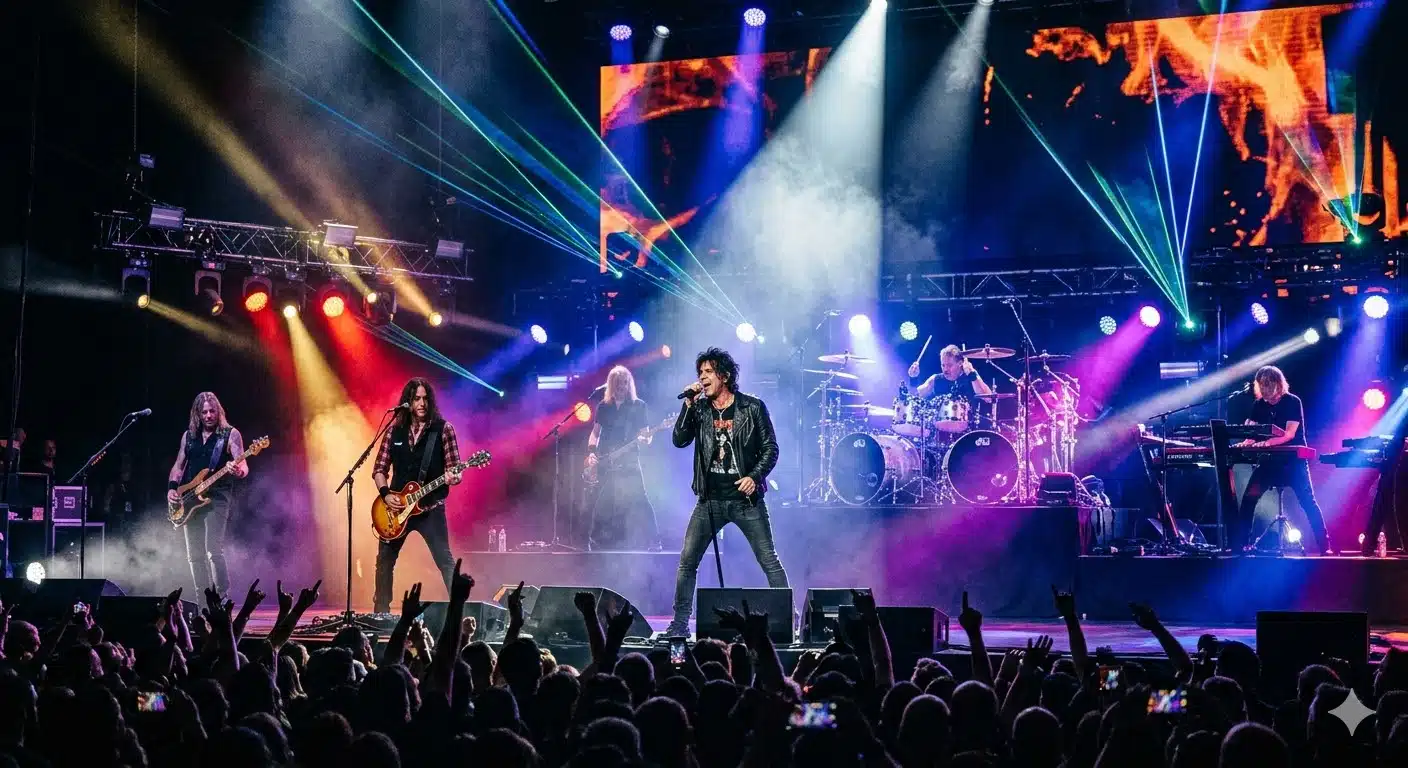
Bars / Concerts/ DJ Club: Focus on Beam lights / 3-in-1 lights. Emphasize speed, strong beam feel, and rich patterns.
Corporate Showrooms / Brand Flagships: Focus on Zoom Leko lights or track LED spotlights. Emphasize high color restoration and integration with the interior design. CRI > 97 will make product colors in the showroom more authentic.
Ballrooms / Multi-function Halls (Fixed Installation): Focus on LED 3-in-1 Moving Heads (Spot + Wash + Beam). Emphasize multi-functional switching, long lifespan, and low maintenance frequency. The zoom range should be large enough for both meeting lighting and dinner atmosphere lighting.
Immersive Restaurants / Escape Rooms / Art Spaces: Focus on Mini Moving Head Pattern Lights or Gobo Projectors. Emphasize small size, quiet operation, and precise pattern projection. Since the audience is very close to the fixtures, choose fanless cooling or silent fan designs.
Outdoor Cultural Tourism / Architectural Landscape Shows: Focus on High-power Waterproof Moving Heads or high-power Wall Washers. Emphasize product tolerance for extreme environments, long-distance projection, IP66 rating, and excellent temperature control feedback.
Cross-Scenario “Pitfall Avoidance” Guide (Advanced):
| Scenario | Core Pitfall to Avoid | Operator’s “Pocketbook” Perspective |
| Temporary Rental | Choose fixtures with flight cases and quick-locks. | Improves setup/teardown efficiency; reduces labor hour costs. |
| High-end Photography | Choose fixtures with PWM > 3000Hz. | Avoids black bars in post-production video; reduces customer refund risks. |
| Schools / Training | Choose fixtures with physical safety cable eyelets. | Campus safety is paramount; hardware safety is above all else. |
| Live Stream Rooms | Choose lights with Stepless Color Temp (CCT). | Meets the optimization needs of different streamers’ skin tones; enhances “sales” quality. |
Avoid Low-Price Traps: Extremely cheap lights may cut costs on fan heat dissipation.
Simple Test: Let the light run at full power for 1 hour. If the noise increases significantly, the failure rate for long-term use will be high.
When comparing various technical specifications, you can choose a stage lighting factory with accurate parameters and stable quality.
As the core brand of Hongyi Stage Lighting, DJclub has ensured a high yield rate for over 5,000 sets of equipment produced monthly since 2015, thanks to its 5,000㎡ automated factory and rigorous QC processes.
100% Compliance: All products (beam lights, LED PAR lights, pattern lights, and zoom lights) are CE and RoHS certified, fully complying with European and American safety and environmental standards.
Strict Manufacturing Standards: Through an industrial-grade quality inspection system, every technical parameter is tested by the market.
Choose DJclub, and let technical parameters translate into reliable live performance.
[Click to get product catalog and price list]
About the Author:Bonnie Li
Stage Lighting Expert & Digital Strategist
With 15+ years of industry expertise, Bonnie Li is a leading authority in stage lighting and digital manufacturing. A regular technical consultant and contributor at premier global trade shows—including Prolight + Sound (Frankfurt & Guangzhou) and LDI (Las Vegas)—he specializes in bridging the gap between cutting-edge DMX protocols and scalable manufacturing efficiency.
More Related Articles
Custom Stage Lighting vs. Off-the-Shelf Fixtures: Which is Right for You?
Multi-Function Hall Stage Lighting Configuration: A Versatile Solution Guide
LED Par Light vs. Moving Head Beam Light: Selection and Combination Guide
Mastering Your Stage Lighting Budget: 5 Sourcing Pitfalls to Avoid
Stage Lighting Maintenance Manual: 6 Secrets to Extending Fixture Lifespan
Nightclub Stage Lighting Buying Guide: How to Save 30% on Your Budget
2026 Guide to Finding Stage Lighting Factories: Secure Direct Factory Pricing
Lighting Procurement Guide: Top Stage Lighting Manufacturing Hubs in China
Where to Find the Best Stage Lighting Factories? Top Global Clusters for Nightclub Lighting in 2026
One thought on “Professional Stage Lighting Performance Analysis: How to Select the Best Fixtures via Technical Parameters?”